
Can menopause cause itchy skin? Answers for midlife women
Yes. Perimenopause and menopause commonly cause dry, itchy skin, a condition clinicians call pruritus. The primary reason is falling or fluctuating oestrogen, which reduces collagen production, sebum output and the skin’s ability to hold moisture. The result is a barrier that lets irritants in and lets water out, leaving skin that feels tight, prickly, or relentlessly itchy. NHS guidance lists skin changes among the recognised symptoms of perimenopause and menopause, so if this is happening to you, you are not imagining it and you are not alone.
What this typically looks and feels like:
- Persistent dryness on the shins, arms, face or scalp
- A crawling or tingling sensation (sometimes called formication) even on skin that looks normal
- Vaginal or vulval itching linked to low oestrogen
- Itch that worsens at night, often disrupting sleep
The good news is that effective options exist, from simple skincare changes you can start today to medical treatments such as HRT and topical oestrogen. This article walks through the biology, the practical steps, and when to ask your GP for help.
Table of Contents
- Why does menopause make your skin so itchy?
- Where does menopause-related itching usually appear?
- How long does menopause-related itching last?
- Practical self-care steps to calm itchy skin at home
- Medical options: HRT, topical oestrogen and when to see your GP
- Lifestyle and supplements that may support your skin
- Key takeaways
- The itch nobody talks about
- Supportive daily care from Kate Grosvenor Lifestyle
- Useful sources and further reading
Why does menopause make your skin so itchy?
Oestrogen does far more for your skin than most people realise. It stimulates collagen production, supports sebaceous gland activity, and helps maintain the lipid-rich barrier that keeps moisture in and irritants out. When oestrogen falls or fluctuates during perimenopause, all three of those functions weaken at once.
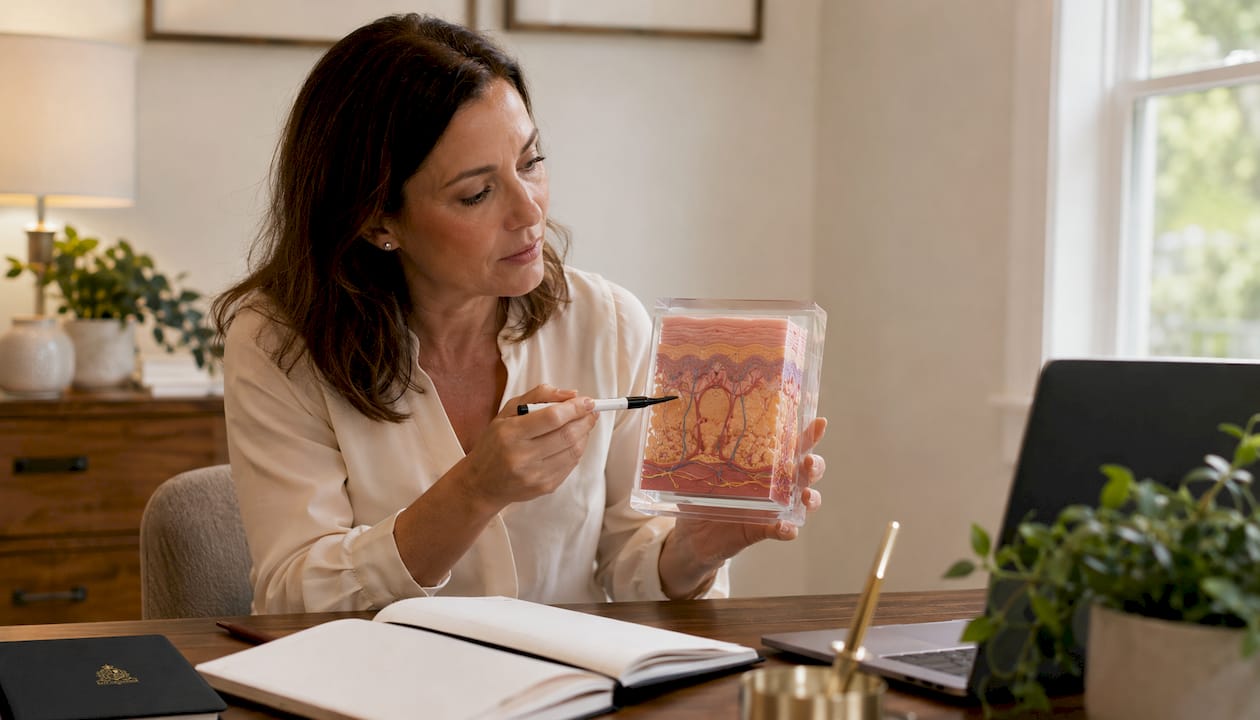
The structural changes happen relatively quickly. Collagen and elastin decline noticeably at the onset of menopause, leaving skin thinner and less resilient. At the same time, sebum production drops, raising transepidermal water loss and leading to xerosis (dry skin), which is one of the most common complaints at this stage of life.
There is also a sensory dimension that goes beyond simple dryness. Oestrogen receptors exist in nerve fibres, and when levels fall, those nerves can become hypersensitive. This produces formication, the unsettling sensation of something crawling on or under the skin, even when the surface looks perfectly hydrated. It is a nerve-related phenomenon, not a hygiene issue, and it is a recognised perimenopause symptom.
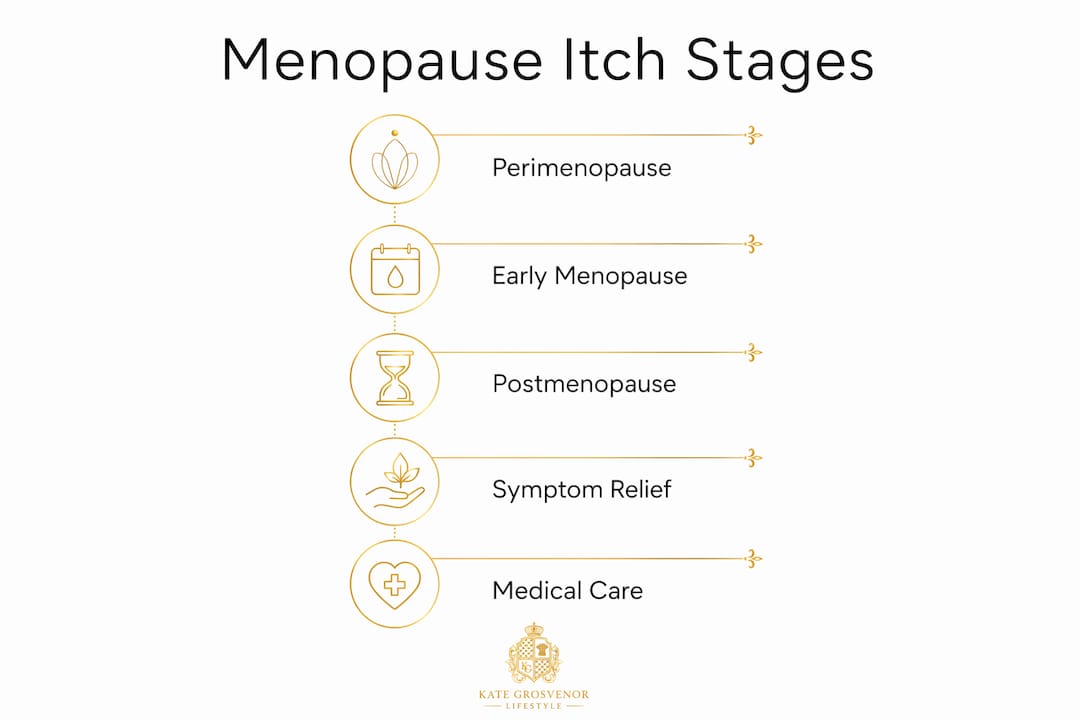
One more layer: oestrogen helps regulate histamine. When hormone levels fluctuate, histamine responses can increase, producing an allergic-type itch with no identifiable external trigger. This is why some women suddenly react to soaps or fabrics they have used for years. Thyroid imbalance and iron deficiency can compound the picture, so if itching is severe or unexplained, those are worth ruling out with your GP.
| Mechanism | What happens | Skin effect |
|---|---|---|
| Reduced collagen and elastin | Skin thins and loses resilience | Fragility, fine lines, easier irritation |
| Lower sebum output | Transepidermal water loss rises | Dryness, tightness, xerosis |
| Weakened barrier function | Irritants penetrate more easily | Sudden sensitivity to soaps, fragrances |
| Nerve hypersensitivity | Oestrogen receptors in nerve fibres become reactive | Formication, tingling, burning |
| Histamine dysregulation | Hormonal fluctuation raises histamine responses | Allergic-type itch without an allergen |
Where does menopause-related itching usually appear?
Itching during menopause tends to show up in predictable places, though the pattern varies from woman to woman. The shins and lower legs are among the most common sites, followed by the arms, back, and face. The scalp can become dry and itchy too, sometimes alongside changes in hair texture, because fluctuating oestrogen affects scalp skin just as it does the rest of the body.

Genital and vaginal itching deserves its own mention. Low oestrogen causes the vaginal tissues to thin and dry out, a condition known as genitourinary syndrome of menopause (GSM) or vaginal atrophy. The vulva and vaginal canal have a high density of oestrogen receptors, so they are particularly sensitive to hormonal change. Vaginal itching, burning and dryness are common GSM symptoms and respond well to topical oestrogen, which is discussed below. If you are experiencing intimate discomfort alongside skin changes, vaginal health support is worth exploring alongside clinical advice.
Common sensations include:
- Dry, tight or rough skin texture
- Prickling or burning without visible cause
- Tingling or a crawling feeling (formication)
- Itch that intensifies after a hot shower or at night
One useful home check: run a clean fingernail very gently across the itchy area. If the skin looks dry and flaky but there is no spreading rash, no weeping, and no clearly defined border, a moisture-barrier problem is the most likely culprit. A rash with distinct edges, blistering, or signs of infection points toward something that needs a GP’s eyes.
Pro Tip: Keep a simple diary for one week: note when the itch is worst (morning, evening, after bathing), where it appears, and what you used on your skin that day. Patterns often emerge quickly and give your GP or dermatologist genuinely useful information.
How long does menopause-related itching last?
There is no single answer, and that uncertainty can feel unsettling. Itching often begins during perimenopause, when hormones are fluctuating rather than simply declining, and it can continue into postmenopause as oestrogen settles at a lower level. For some women, symptoms ease within a few months once hormones stabilise; for others, itching may persist for several years without treatment.
Treatment timescales matter here. Systemic HRT typically takes several months before skin hydration and thickness show meaningful improvement. Topical oestrogen for vaginal symptoms tends to act sooner, often within a few weeks. Skincare changes, such as switching to barrier-repair moisturisers, can bring noticeable relief within days to weeks, even if they do not address the underlying hormonal cause.
| Stage | Typical onset | What to expect |
|---|---|---|
| Perimenopause | Hormones fluctuating; itch may come and go | Variable; can be intermittent and unpredictable |
| Menopause | Oestrogen declining steadily | Dryness and itch often more consistent |
| Postmenopause | Hormones at a lower, more stable level | May ease naturally; may persist without treatment |
| With HRT | Starting systemic HRT | Skin improvement usually seen at 3–6 months |
| With topical oestrogen | Starting vaginal oestrogen | Vaginal symptoms often improve within weeks |
Symptoms that are worsening rather than stabilising, or that are significantly affecting your sleep or daily life, are a signal to seek medical review rather than waiting it out.
Practical self-care steps to calm itchy skin at home
Small, consistent changes to your daily routine can make a real difference. The goal is to stop stripping the barrier further and to actively rebuild it.
Bathing and cleansing
- Keep showers short and use lukewarm water; hot water dissolves the skin’s natural oils quickly.
- Choose soap-free, fragrance-free cleansers. Anything labelled “gentle” or “pH-balanced” is a reasonable starting point.
- Pat skin dry with a soft towel rather than rubbing, then apply moisturiser while the skin is still slightly damp to lock in moisture.
What to look for in a moisturiser
Barrier-repair ingredients do more than simply coat the surface. Ceramides rebuild the lipid structure between skin cells; glycerin draws water into the skin; hyaluronic acid holds moisture at the surface. Barrier-repair formulas containing these ingredients are worth prioritising over basic lotions. Colloidal oatmeal is a gentle, evidence-supported addition for soothing active itch.
What to avoid
- Fragranced soaps, shower gels and fabric conditioners
- Biological washing powder on clothing and bedding
- Very hot baths, which feel soothing in the moment but worsen dryness
- Alcohol and smoking, both of which reduce skin hydration and collagen
For persistent itch, a plain emollient ointment (such as white soft paraffin or an equivalent pharmacy emollient) applied thickly at night can act as an overnight barrier. Short-term use of a mild topical steroid cream, available from a pharmacist, may calm an inflammatory flare, but it is not a long-term solution.
Pro Tip: Night-time itch often worsens because body temperature rises and cortisol drops in the small hours, amplifying the sensation. Wearing loose, breathable cotton or bamboo nightwear, keeping the bedroom cool, and applying a thick emollient before bed can all reduce nocturnal disruption. If sleeplessness is already a problem, addressing itch at night is doubly worth prioritising.
Medical options: HRT, topical oestrogen and when to see your GP
For many women, skincare alone brings partial relief but does not fully resolve the itch. That is because the root cause is hormonal, and addressing it medically often produces the most sustained improvement.
Systemic HRT works by restoring oestrogen to a level that supports collagen, sebum and barrier function throughout the body. Skin hydration and thickness typically improve over 3–6 months. HRT is not suitable for everyone, and the decision involves a conversation with your GP or a menopause specialist who can weigh your personal health history.
Topical oestrogen (vaginal creams, pessaries or rings) targets GSM symptoms locally without significant systemic absorption. It is often recommended even for women who cannot use systemic HRT and can relieve vaginal itching, dryness and discomfort within weeks.
Antihistamines can offer short-term relief when histamine-driven itch is the dominant feature, but as clinicians note:
Long-term control of menopause-related itch usually requires barrier repair or correction of the hormonal deficit — antihistamines address the symptom, not the cause. They are a useful bridge, not a solution.
When to contact your GP or a dermatologist
- Itching that prevents sleep or significantly affects daily life
- A spreading rash, blistering, or signs of skin infection
- Bleeding or severe pain in the genital area
- Itch that does not improve after four to six weeks of consistent home care
- Unexplained or generalised itch with no obvious skin change (this warrants investigation for thyroid, iron or liver/kidney issues, as NICE guidance recommends)
The British Menopause Society and NHS both provide clinician-reviewed guidance on menopause symptoms and treatment pathways. Your GP is the right first port of call; a referral to a menopause clinic or dermatologist is appropriate if symptoms are complex or persistent.
Lifestyle and supplements that may support your skin
What you eat, how you move, and how you manage stress all feed into skin health in ways that are easy to underestimate. Staying well hydrated, eating a diet rich in oily fish, colourful vegetables and healthy fats, and reducing alcohol all support the skin’s ability to hold moisture and repair itself. Stopping smoking is one of the most significant single steps for skin resilience.
Omega-3 fatty acids have a plausible and reasonably well-supported role in skin health. They contribute to the lipid structure of the skin barrier and have anti-inflammatory properties that may reduce the intensity of itch. A daily Omega 3 supplement formulated for perimenopause provides a consistent, convenient source, particularly for women who do not eat oily fish regularly.
B vitamins support the nervous system and skin cell renewal. Vitamin B3 (niacinamide) in particular has a well-documented role in barrier function. A Vitamin B Complex designed for perimenopause can support both skin resilience and the energy and mood changes that often accompany this stage of life.
Supplements support the body’s foundations — they work best alongside good skincare habits and, where appropriate, medical treatment. They are not a substitute for HRT or topical oestrogen when those are clinically indicated.
A few practical notes on supplements:
- Check with your GP or pharmacist before starting, particularly if you take prescribed medicines.
- Quality and formulation matter; choose products with clear ingredient transparency.
- Give any supplement at least eight to twelve weeks before assessing its effect on skin.
Key takeaways
Menopause-related itchy skin is caused by falling oestrogen reducing collagen, sebum and barrier function, and it responds best to a layered approach: consistent barrier-repair skincare, medical treatment where appropriate, and supportive lifestyle measures.
| Point | Details |
|---|---|
| Oestrogen drives the itch | Falling oestrogen reduces collagen, sebum and barrier function, causing dryness and pruritus. |
| Symptoms vary in location | Itching can appear on shins, arms, face, scalp and in the genital area (GSM). |
| Timeline is variable | Itch may last months to years; HRT typically improves skin in 3–6 months, topical oestrogen sooner. |
| See your GP if home care fails | Seek review if itch disrupts sleep, spreads, bleeds, or does not improve after several weeks. |
| Kate Grosvenor Lifestyle support | Omega 3 and Vitamin B Complex offer daily nutritional support for skin and wellbeing during perimenopause. |
The itch nobody talks about
Itchy skin during menopause is one of those symptoms that tends to get dismissed, both by others and sometimes by the women experiencing it. It does not look dramatic. There is often no rash to point to, no obvious explanation. Yet the relentless distraction of it, the broken nights, the sudden sensitivity to clothes you have worn for years, can quietly erode your sense of ease in your own body.
What I find worth saying clearly is this: the biology is real, the mechanisms are well understood, and the options are better than many women realise. Barrier-repair skincare is not a luxury; it is a clinical tool. HRT, where appropriate, can restore more than mood and sleep. And the small daily rituals, the right moisturiser, the cooler shower, the supplement taken with intention, are not trivial. They are the quiet, grounded work of caring for yourself through a transition that asks a great deal.
You deserve to feel comfortable in your skin again. That is not too much to ask.
Supportive daily care from Kate Grosvenor Lifestyle
Skincare changes and medical conversations are the foundation, and alongside them, the right nutritional support can help your body do what it is trying to do. Kate Grosvenor Lifestyle’s Omega 3 for Perimenopause and Vitamin B Complex for Perimenopause are formulated with midlife women in mind, offering daily support for skin, energy and nervous-system resilience during perimenopause and beyond.
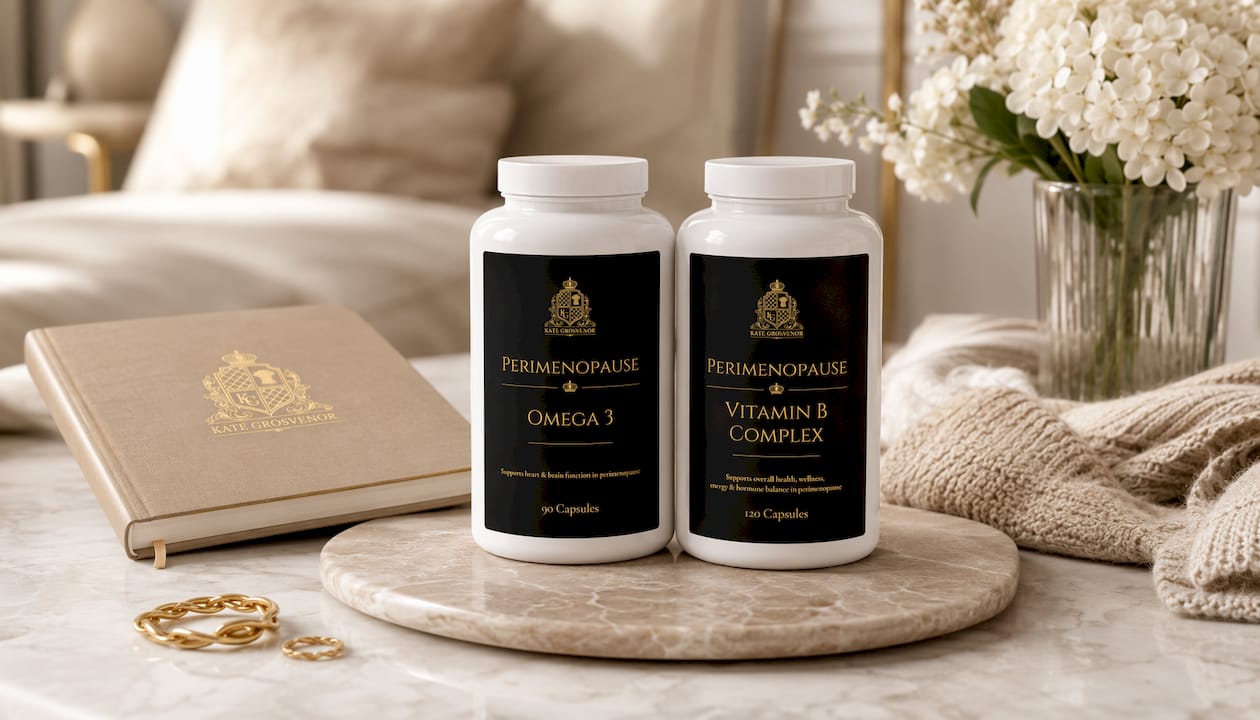
These supplements are designed as supportive daily care, not a replacement for medical treatment. If HRT or topical oestrogen is right for you, these sit comfortably alongside it. As always, check with your GP or pharmacist before starting any new supplement, particularly if you take prescribed medicines.
Visit the Kate Grosvenor Lifestyle shop to find both products, read the full ingredient details, and choose the routine that feels right for where you are right now.
Useful sources and further reading
These are the UK and clinician-reviewed resources worth bookmarking if you want to read further or prepare for a GP conversation.
- NHS: Menopause and perimenopause symptoms — The NHS overview of recognised menopause symptoms, including skin changes; a reliable starting point for understanding what is and is not typical.
- NHS: Itchy skin — Covers causes, self-care and when to seek medical advice for pruritus; useful for distinguishing menopause-related itch from other causes.
- NHS: HRT side effects — Balanced, clinician-reviewed information on what to expect from HRT, including skin-related effects.
- Kate Grosvenor Lifestyle: perimenopause and sleeplessness — Explores the connection between hormonal shifts, night-time symptoms and sleep disruption; directly relevant to nocturnal itch.
- Kate Grosvenor Lifestyle: menopause pins and needles — A deeper look at sensory changes including formication and nerve hypersensitivity during perimenopause.
This article is for general information only and does not constitute medical advice. Please speak with your GP or a qualified clinician about your own symptoms and treatment options.



Leave a comment
This site is protected by hCaptcha and the hCaptcha Privacy Policy and Terms of Service apply.