What does menopause leg pain feel like?
Menopause leg pain is defined as a collection of sensations including involuntary cramps, deep aching, heaviness, burning, and restless urges in the legs, all driven by hormonal shifts that affect muscles and circulation. These sensations are not imagined or exaggerated. Muscle pain and tension affect 40–70% of women during menopause, making it one of the most common yet least discussed symptoms of this life stage. The clinical term for the broader pattern is musculoskeletal syndrome of menopause, a recognised condition that explains why your legs may feel so different from how they once did. Understanding what causes these sensations is the first step toward finding real relief.
What does menopause leg pain feel like in practice?
The sensations vary widely, and that variation is part of what makes menopause limb discomfort so confusing. You might wake at 3am with a calf muscle locked in a hard, painful knot. Or you might lie still in bed and feel a creeping, crawling unease that makes you need to move your legs, even though nothing is visibly wrong.

Nocturnal leg cramps are sudden muscle spasms lasting seconds to minutes, leaving a hard, knotted feeling in the calf or foot. They demand immediate stretching to release. Restless legs syndrome (RLS), by contrast, involves no actual muscle contraction. Instead, you feel a tingling, crawling, or pulling sensation that creates an overwhelming urge to move. The urge of RLS returns after roughly 20–30 minutes of stillness, making sleep feel impossible.
Beyond cramps and RLS, many women describe a third type of sensation: a persistent heaviness or fatigue in the legs, as though they are carrying extra weight with every step. Some describe a burning quality, particularly along the shins or calves. Others notice pins and needles, especially after sitting for long periods. All of these fall under the umbrella of menopause leg pain symptoms, and all share the same root cause: declining oestrogen.
| Type of leg pain | Key sensation | Timing | Relieved by |
|---|---|---|---|
| Nocturnal leg cramps | Hard, knotted muscle spasm | Night, at rest | Stretching the muscle |
| Restless legs syndrome | Crawling, tingling urge to move | Evening or night | Movement (temporarily) |
| Heavy, tired legs | Fatigue, dragging weight | Throughout the day | Elevation, walking |
| Burning or aching | Deep ache or heat in muscles | Variable | Heat, rest, massage |
| Pins and needles | Prickling, numbness | After stillness | Movement, position change |
Pro Tip: Keep a brief nightly note of which sensation you experience and when it peaks. This pattern helps your GP distinguish between cramp, RLS, and circulation-related discomfort, which each need a different approach.
How do hormonal changes during menopause cause leg pain?
Oestrogen does far more than regulate your cycle. It protects muscle tissue, dilates blood vessels, and helps the body manage fluid balance. When oestrogen falls during perimenopause and menopause, all three of those functions are disrupted at once.
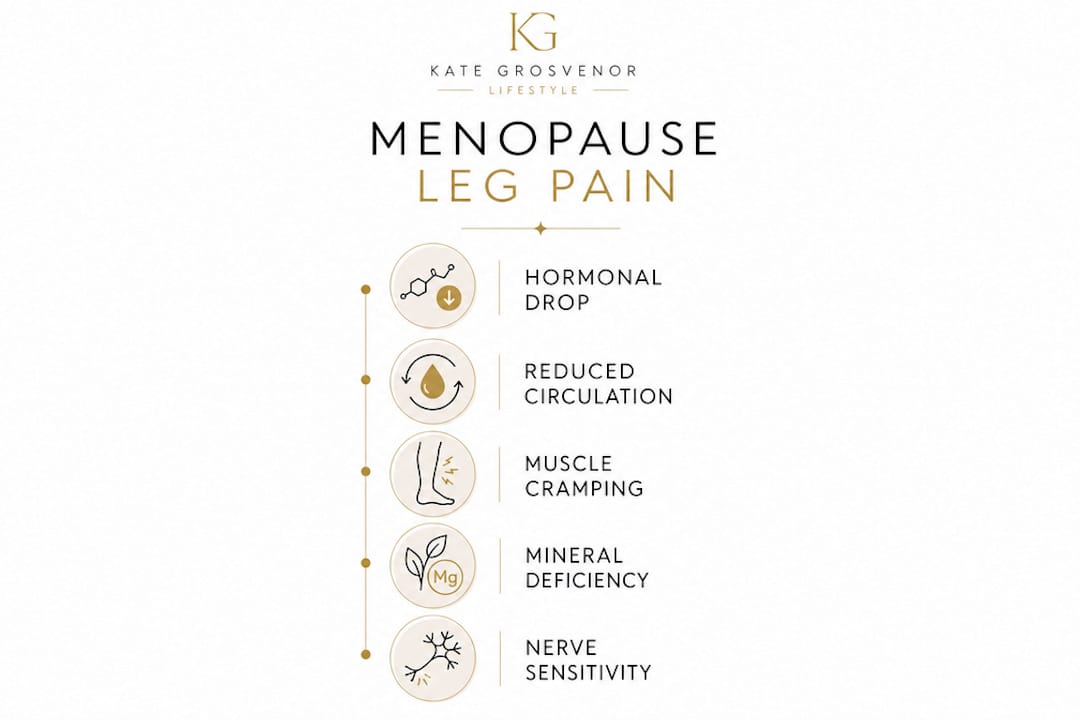
The musculoskeletal syndrome of menopause is now recognised as a distinct clinical entity. Falling oestrogen removes a key muscle protector. Declining progesterone removes a natural muscle relaxant. Rising cortisol, which often accompanies the stress of disrupted sleep and mood changes, amplifies pain signals throughout the body. The result is widespread stiffness, aching, and fatigue that many women describe as feeling “old overnight.”
Circulation is another piece of the puzzle. Declining oestrogen constricts blood vessels, reducing blood flow to the legs and creating that familiar feeling of heavy, tired, or burning limbs. Poor circulation also means slower recovery after exercise or a long day on your feet. Fluid retention, another oestrogen-related change, can add to the sensation of swollen, pressured legs by evening.
Mineral deficiencies compound the problem. Magnesium supports muscle relaxation and nerve function. Iron deficiency, even when not severe enough to show in a standard blood count, is strongly linked to restless legs syndrome. The hormonal changes of menopause can affect how well the body absorbs and uses both minerals, creating a cycle of muscle tension and discomfort. Understanding perimenopause hormonal shifts and their whole-body effects helps explain why leg pain so often arrives alongside fatigue, poor sleep, and mood changes.
How do you know if it is menopause or something else?
Not every leg pain in midlife is menopause-related. Some conditions mimic menopause leg pain symptoms closely but require different treatment entirely. Knowing the difference protects you.
Peripheral neuropathy and vascular problems can produce burning, tingling, and heaviness that look identical to hormonal leg discomfort on the surface. Varicose veins and chronic venous insufficiency cause leg heaviness and aching that worsens with standing. Arthritis produces joint pain and stiffness that is often worse in the morning. Fibromyalgia creates widespread muscle tenderness that overlaps significantly with the musculoskeletal syndrome of menopause.
Seek a GP assessment if you notice any of the following:
- Leg pain that is severe, persistent, or worsening over weeks
- Swelling in one leg only, which may suggest a clot
- Burning or numbness that extends into the feet and does not change with movement
- Significant changes in how you walk or bear weight
- Leg pain accompanied by skin colour changes or ulcers
Correct identification of RLS versus cramps shapes the entire management approach. Dr. Suganya Venkat highlights the key clinical question: is there actual muscle contraction, or a sensory discomfort without contraction? Cramps need stretching and magnesium. RLS may need iron assessment and, in some cases, medication.
Pro Tip: Ask your GP to check your serum ferritin level specifically, not just a standard iron panel. Ferritin can be low enough to drive RLS symptoms even when your haemoglobin looks normal.
What practical steps can ease menopause-related leg pain?
Relief for menopause leg pain comes from several directions at once. No single fix works for everyone, but a layered approach consistently produces the best results.
-
Move gently and regularly. Regular walking, stretching, and gentle strength training maintain muscle mass, improve circulation, and reduce joint stiffness. Even a 20-minute walk each morning makes a measurable difference over weeks. Yoga and Pilates are particularly well suited to this stage of life because they combine flexibility work with low-impact strengthening. Comfortable supportive yoga leggings can make movement feel less daunting when your legs are already uncomfortable.
-
Apply heat and massage. Warmth relaxes muscle fibres and improves local circulation. A warm bath before bed, a heat pad on the calves, or a firm self-massage with a body brush all help reduce the tension that builds through the day. Dry body brushing also supports lymphatic drainage, which can ease fluid retention in the lower legs.
-
Trial magnesium supplementation. Magnesium shows mixed clinical evidence for leg cramp relief, but many women report subjective improvement, and its safety profile is good. Magnesium glycinate or citrate forms are generally better tolerated than oxide. Start with a low dose in the evening and give it four to six weeks before assessing.
-
Adjust your diet. Anti-inflammatory foods, including oily fish, leafy greens, berries, and olive oil, reduce the systemic inflammation that amplifies musculoskeletal pain. Vitamin D supports muscle function and is commonly deficient in the UK, particularly through the winter months. Iron-rich foods such as lentils, red meat, and fortified cereals support RLS management alongside any supplementation.
-
Discuss HRT with your GP. Hormone replacement therapy improves joint lubrication and reduces pain by restoring declining oestrogen. For women whose leg pain is clearly hormonal in origin, HRT can produce significant relief. It is not suitable for everyone, but it deserves an informed conversation rather than dismissal. The VivaPeri MNM Complex approach to managing widespread muscle pain and fatigue offers a useful complement to medical options.
Pro Tip: Elevate your legs for 15 minutes in the evening, ideally above hip height. This simple habit reduces fluid pooling and eases the heavy, pressured feeling that builds through the day.
Key takeaways
Menopause leg pain is a hormonally driven, clinically recognised condition that responds well to a combination of lifestyle changes, targeted supplementation, and, where appropriate, medical support.
| Point | Details |
|---|---|
| Pain takes many forms | Cramps, RLS, heaviness, burning, and pins and needles are all distinct menopause leg pain symptoms. |
| Hormones drive the cause | Falling oestrogen, progesterone, and rising cortisol together disrupt muscles, circulation, and pain signalling. |
| Distinguish before treating | Cramps need stretching and magnesium; RLS needs movement and possibly iron assessment. |
| Seek assessment for red flags | Swelling in one leg, severe burning, or worsening mobility warrants a GP visit to rule out vascular or nerve conditions. |
| Layer your relief strategies | Combining gentle exercise, heat, dietary support, and supplementation produces better results than any single approach. |
What I have learned from listening to women in midlife
By Kate Grosvenor
The thing that strikes me most, after years of working with women in their 40s and 50s, is how often leg pain gets dismissed. Women dismiss it themselves, assuming it is just tiredness or ageing. GPs sometimes overlook it because it does not fit neatly into a single diagnostic box. And yet it is one of the symptoms that most affects daily life, quietly eroding the confidence to walk, exercise, or sleep well.
What I have found is that the women who fare best are the ones who take their symptoms seriously without catastrophising them. They notice patterns. They ask the right questions. They try magnesium for six weeks with genuine curiosity rather than desperation. They bring a symptom diary to their GP appointment rather than trying to recall everything on the spot.
The other thing I want to say clearly: you do not have to accept this as simply “part of getting older.” The musculoskeletal syndrome of menopause is real, it has a name, and it has solutions. Some of those solutions are medical. Many are within your reach today, through movement, warmth, nourishment, and rest. Start with what feels manageable. Build from there. Your legs carry you through everything. They deserve your attention.
— Kate Grosvenor
Support from Kate Grosvenor Lifestyle

At Kate Grosvenor Lifestyle, we have designed our tools and rituals specifically for women navigating the physical and emotional shifts of midlife. Our natural body brush supports circulation and lymphatic drainage, making it a gentle daily ritual for women dealing with heavy or aching legs. Our medical planner insert helps you track symptoms, note patterns, and arrive at GP appointments prepared and confident. These are not quick fixes. They are the kind of grounded, consistent practices that genuinely support your body through this season of change.
FAQ
What does menopause leg pain feel like at night?
At night, menopause leg pain most commonly presents as sudden muscle cramps in the calf or foot, or as the crawling, tingling restlessness of RLS. Both are driven by hormonal changes affecting circulation and nerve sensitivity, and both tend to worsen during periods of stillness.
Can menopause cause leg cramps every night?
Yes. Nocturnal leg cramps are a recognised menopause symptom, linked to declining oestrogen, magnesium imbalance, and poor circulation. Consistent nightly cramps warrant a GP review to rule out other contributing factors such as medication side effects or mineral deficiency.
Is leg heaviness a sign of menopause?
Heavy, tired legs are a common but often overlooked menopause symptom. Falling oestrogen reduces blood vessel dilation, slowing circulation to the lower limbs and creating that dragging, pressured sensation by the end of the day.
How do I know if my leg pain is menopause or something more serious?
Menopause-related leg pain typically affects both legs, shifts with movement, and correlates with other hormonal symptoms. Pain in one leg only, significant swelling, skin changes, or severe mobility loss all require prompt medical assessment to exclude vascular or nerve conditions.
Does HRT help with menopause leg pain?
HRT can reduce menopause-related leg pain by restoring oestrogen, which improves joint lubrication, supports muscle function, and aids circulation. It is not suitable for all women, so a detailed conversation with your GP about your individual health history is the right starting point.



Leave a comment
This site is protected by hCaptcha and the hCaptcha Privacy Policy and Terms of Service apply.