
Menopause pins and needles: causes, relief, and support
That sudden tingling in your hands at 2am. The electric buzz that shoots through your feet for no apparent reason. If you’re in perimenopause or menopause, these sensations are almost certainly paresthesia, the medical term for abnormal nerve sensations including tingling, pins and needles, numbness, burning, and electric shock feelings. They are real, they are neurological, and they are directly connected to the hormonal shifts your body is moving through right now.
Menopause pins and needles happen because estrogen protects the myelin sheath, the insulating layer around your nerve fibres that keeps signals travelling cleanly. When estrogen fluctuates and declines, that insulation thins, signals start to leak, and you feel the result as tingling, zaps, or numbness. The sensations can appear almost anywhere:
- Hands, fingers, feet, and toes (the most common sites)
- Arms and legs
- Face, scalp, and tongue
- Patches anywhere on the body, seemingly at random
The British Menopause Society recognises these symptoms as a genuine part of the menopausal transition. They are alarming when they first appear, but for most women they are benign and manageable. Understanding what is driving them is the first step toward feeling calmer and more in control.
Why does menopause cause pins and needles?
Estrogen does far more than regulate your cycle. It actively maintains nerve signalling throughout both the central and peripheral nervous systems. When levels swing unpredictably during perimenopause, nerve fibres that once transmitted information cleanly begin sending garbled messages. You register those garbled messages as tingling in your hands, or a sudden zap in your leg with no obvious cause.
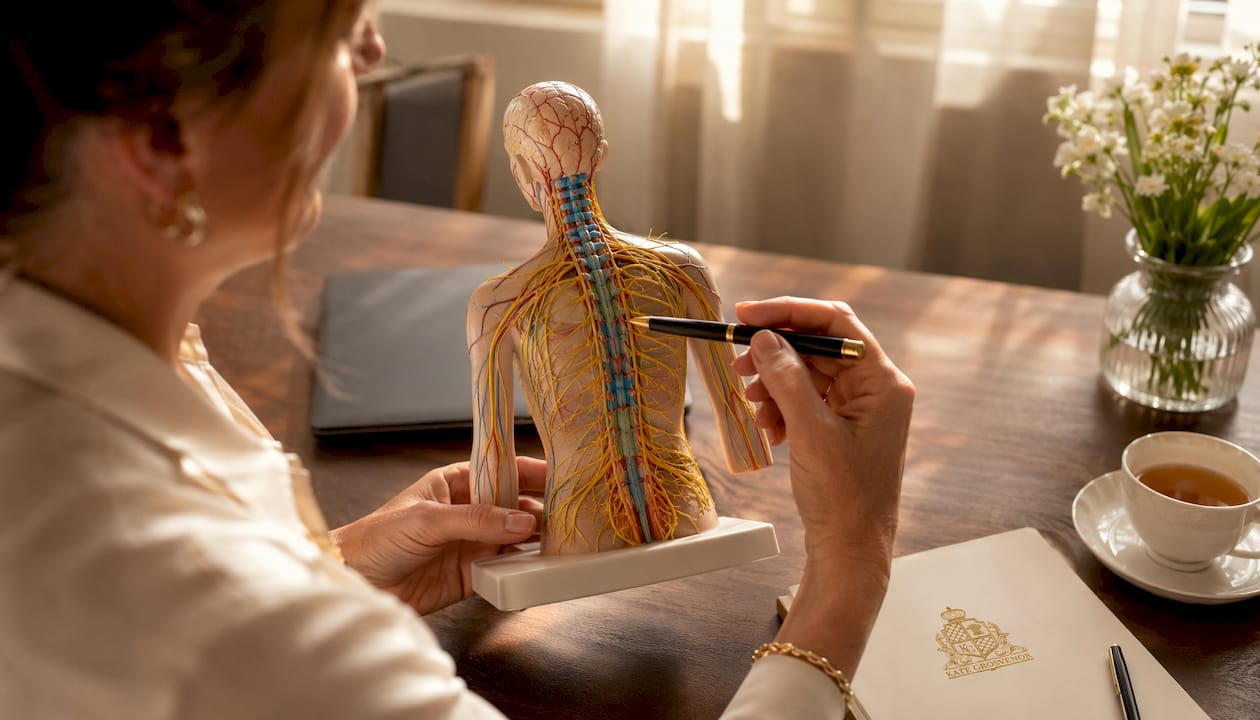
There are two distinct patterns. Peripheral paresthesia affects the hands, feet, arms, and legs, and arises when the peripheral nerves lose their signalling integrity. Central paresthesia affects the face, scalp, and tongue, and produces what many women describe as “brain zaps.” Both share the same root cause: estrogen-driven disruption to the nervous system.
Symptoms often feel worse at night. Lying still reduces circulation to your extremities, and when nerves are already sensitised by hormonal fluctuation, that reduced blood flow tips them into misfiring. Disrupted cortisol rhythms, which are common in perimenopause, compound this by heightening nerve sensitivity in the small hours.
Several other factors can sit alongside hormonal changes and intensify symptoms:
- Vitamin B12 deficiency, which is more common in perimenopausal women due to reduced gastric acid production, and can itself cause persistent tingling
- Thyroid dysfunction, which becomes more prevalent during the menopausal transition and causes peripheral nerve damage
- Carpal tunnel syndrome, which worsens with the fluid retention and soft tissue changes of perimenopause, typically producing tingling in the thumb, index, and middle fingers
Natural ways to ease tingling sensations in menopause
Lifestyle adjustments can make a meaningful difference, particularly when symptoms are mild to moderate. The goal is to support your nervous system and circulation from the ground up.
Regular exercise improves circulation and reduces the frequency of pins and needles, while also supporting broader menopausal symptom management. Even a brisk 20-minute walk each day can shift things noticeably over a few weeks.

Nutrition matters just as much. B vitamins, particularly B1, B6, and B12, are foundational to healthy nerve function. Magnesium supports both nerve and muscle signalling, and deficiency is common in midlife women. Staying well hydrated helps maintain circulation and can ease the crawling sensations that sometimes accompany perimenopause tingling.
Sleep is where your nervous system repairs itself. Prioritising 7–9 hours, and addressing anything that disrupts it, creates the conditions your nerves need to recover. Stress management is equally grounding: chronic stress keeps the nervous system in a heightened state, which worsens paresthesia and makes episodes feel more alarming than they might otherwise.
- Move daily, even gently, to keep peripheral circulation flowing
- Eat a diet rich in leafy greens, wholegrains, eggs, and oily fish for B vitamins and magnesium
- Limit alcohol and caffeine, both of which can worsen nerve sensitivity
- Practise slow, diaphragmatic breathing when an episode strikes, as hyperventilation can trigger tingling in its own right
- Review your sleep position: sleeping with flexed wrists or compressed limbs can provoke symptoms
Pro Tip: Take your magnesium supplement in the evening. Magnesium has a natural calming effect on the nervous system, which can reduce nocturnal tingling and support deeper sleep at the same time.
Can HRT help with nerve symptoms during menopause?
Hormone replacement therapy works by stabilising estrogen levels, and for some women this does reduce nerve-related symptoms, including tingling and burning. When the hormonal fluctuations that disrupt myelin integrity are smoothed out, the nervous system has a more consistent environment in which to function.
That said, HRT is not a straightforward fix for paresthesia specifically, and it carries its own considerations. It comes in several forms, including patches, gels, tablets, and implants, and suitability depends on your personal health history, including factors such as cardiovascular health and family history of certain cancers. Some women also find that tingling is listed among HRT’s own potential side effects during the adjustment period.
HRT is not appropriate for everyone, and the decision should always be made with a GP or menopause specialist who can weigh your individual circumstances. The British Menopause Society provides clear guidance on HRT options and supports informed, personalised decision-making.
When should you see your doctor about tingling in menopause?
Most menopause-related tingling is episodic, bilateral, and resolves within minutes. It follows a hormonal pattern. But some symptoms require prompt medical attention, and it is worth knowing the difference.
Tingling accompanied by one-sided weakness, sudden severe headache, vision changes, speech difficulty, or loss of coordination requires immediate medical attention to rule out stroke or TIA. Hormonal tingling is typically bilateral, episodic, and resolves without accompanying neurological changes. — British Menopause Society
See your GP if you experience any of the following:
- One-sided weakness, numbness, or tingling
- Sudden severe headache unlike any you have had before
- Changes to vision or speech
- Loss of coordination or balance
- Symptoms that are persistent, worsening, or not following a hormonal pattern
Your GP can screen for vitamin B12 deficiency, thyroid dysfunction, diabetes, and other neurological conditions that can mimic or worsen menopausal paresthesia. Early identification of a B12 deficiency, for instance, means it can be corrected before nerve damage becomes more established.
Other nerve-related symptoms you might notice in menopause
Pins and needles rarely travel alone. The same hormonal and neurological shifts that produce tingling often bring a cluster of related sensations, and recognising them as part of the same picture can be genuinely reassuring.
- Dizziness and balance changes, linked to estrogen’s role in the inner ear and brainstem
- Brain zaps, sudden electric shock sensations in the head or body, originating in the central nervous system
- Burning or crawling skin, sometimes called formication, with no visible rash
- Numbness, particularly in the hands and feet, often worse on waking
- Restless legs syndrome, which shares a neurological and hormonal basis with other menopausal nerve symptoms
- Joint aches and stiffness, as estrogen also supports joint and connective tissue health
These symptoms are common, and they tend to track with the degree of hormonal fluctuation. For many women, they ease as the body settles into postmenopause.
Kate Grosvenor Lifestyle’s approach to supporting your nervous system
Your nervous system deserves the same care and attention you give to your sleep, your skin, and your mood. At Kate Grosvenor Lifestyle, the supplement recommendations for menopause nerve symptoms are grounded in the specific nutrients your nerves actually need.
The nervous system is quietly one of the most hormone-sensitive systems in the body. Supporting it with the right nutrients, movement, and rest is one of the most grounding things you can do for yourself during this transition.
Three supplements stand out for women experiencing perimenopause tingling and nerve discomfort:
- Magnesium Complex (top recommendation): supports normal nerve and muscle function, with added vitamin B6 for nervous system health. Particularly helpful if symptoms worsen at night or come with muscle tension and poor sleep.
- Vitamin B Complex: vitamins B1, B6, and B12 all contribute to normal nervous system function. Given that B12 deficiency can itself cause persistent pins and needles, this is one of the most directly relevant supplements for this symptom.
- VivaPeri: supports healthy ageing and cellular energy. A thoughtful addition for women who feel fatigued, run down, or are managing several menopause symptoms at once. You can read more about VivaPeri and NAD+ and why it supports women through this transition.
Pair supplements with daily movement, consistent sleep, and gentle stress practices. The combination creates a foundation that your nervous system can actually rest on.

How do doctors distinguish menopause tingling from other conditions?
Because paresthesia has many possible causes, a GP will usually take a layered approach to diagnosis. The pattern of your symptoms offers the first clues: hormonal tingling tends to be bilateral, episodic, and linked to other menopausal signs such as hot flushes, sleep disruption, or mood changes. Tingling that is one-sided, progressive, or accompanied by weakness points toward a different cause.
Blood tests form the backbone of initial investigation. A full blood count, serum B12 (with methylmalonic acid for functional deficiency), thyroid function including free T3 and free T4, fasting glucose, and vitamin D levels can collectively rule out the most common non-hormonal causes. Hormonal changes can also affect hair and skin through similar mechanisms, so a broader hormonal panel may be relevant.
If symptoms persist or have atypical features, a neurologist may carry out nerve conduction studies to assess peripheral nerve function directly. An MRI may be requested if central nervous system involvement is suspected. The aim is always to confirm that what you are experiencing is genuinely hormonal before attributing it entirely to menopause.
Understanding the risks of common treatments for menopause tingling
Every treatment option carries a profile of benefits and potential drawbacks, and being informed helps you make choices that feel right for your body.
HRT can relieve nerve symptoms for some women, but side effects during the adjustment period can include tingling and burning sensations, which can be confusing. Longer-term considerations include a small increased risk of breast cancer with combined HRT, and cardiovascular factors that vary by delivery method and individual health history. These risks are real but must be weighed against the benefits, ideally with a menopause specialist.
Vitamin B12 supplementation is generally very well tolerated, but very high doses over a long period have been associated with acne-like skin reactions in some people. Staying within recommended amounts is sensible unless a clinician advises otherwise.
Magnesium supplements can cause loose stools at higher doses. Starting with a lower dose and taking it with food usually resolves this. Magnesium glycinate and magnesium malate tend to be gentler on the digestive system than magnesium oxide.
Acupuncture, which some women find helpful for circulation and nerve sensitivity, carries minimal risk when performed by a qualified practitioner registered with the British Acupuncture Council.
Key takeaways
Menopause pins and needles are a neurological response to hormonal change, not a sign of serious disease, and they are manageable with the right combination of nutrition, movement, and targeted support.
| Point | Details |
|---|---|
| Hormonal root cause | Fluctuating estrogen disrupts myelin sheath integrity, causing nerve signals to misfire and produce tingling sensations. |
| B12 and magnesium matter | Deficiency in either nutrient can worsen or mimic menopausal paresthesia; both are worth checking and supplementing. |
| Night symptoms have a reason | Reduced circulation from lying still, combined with disrupted cortisol rhythms, intensifies nerve sensitivity after dark. |
| Know the red flags | One-sided weakness, sudden severe headache, or vision changes alongside tingling require urgent medical assessment. |
| Layered support works | Combining daily movement, quality sleep, and targeted supplements creates a stable foundation for nervous system recovery. |



Leave a comment
This site is protected by hCaptcha and the hCaptcha Privacy Policy and Terms of Service apply.