
Perimenopause and sleeplessness: why you can't sleep
Perimenopause and sleeplessness are directly linked by hormonal changes that disrupt the brain’s natural sleep signals. Up to 60% of women in perimenopause experience significant sleep difficulties, a rate far higher than in premenopausal years. The three key hormones involved are progesterone, oestrogen, and cortisol. Each one shifts in ways that fragment sleep architecture, raise body temperature, and alter the circadian rhythm. Understanding the biology behind this is not just reassuring. It is the first step toward doing something about it.
What hormonal changes cause perimenopause and sleeplessness?
Progesterone is the first hormone to fall, and its loss has an immediate effect on sleep. Progesterone produces a neurosteroid called allopregnanolone, which activates GABA-A receptors in the brain. These receptors act as a natural sedative. When progesterone declines, allopregnanolone drops with it, removing what researchers describe as the body’s built-in sleeping pill. The result is a “wired but tired” feeling: your body is exhausted, but your brain will not settle.

Oestrogen plays a quieter but equally disruptive role. It regulates the thermoneutral zone, the narrow temperature range in which your body sleeps comfortably. As oestrogen fluctuates, that zone narrows. Minor temperature spikes trigger autonomic surges, and vasomotor symptoms such as night sweats pull you out of deep, restorative sleep. Oestrogen also supports serotonin and melatonin production, so its decline reduces the brain’s ability to signal that it is time to wind down.
Cortisol adds a third layer of disruption. Normally, cortisol sits at its lowest point around 3 AM, allowing deep sleep to continue. During perimenopause, this overnight cortisol nadir becomes shallower. The result is an earlier cortisol awakening response, which is why the 3 AM wake-up is the most frequently reported sleep pattern in this stage of life. Standard sleep hygiene advice does not address this cortisol shift at all.
- Progesterone loss removes allopregnanolone, the brain’s natural GABA-A sedative, causing difficulty falling and staying asleep.
- Oestrogen fluctuations narrow the thermoneutral zone, triggering night sweats and fragmenting deep sleep stages.
- Cortisol timing shifts produce an earlier awakening response, typically between 3 AM and 4 AM.
- Melatonin disruption follows oestrogen decline, weakening the brain’s wind-down signal in the evening.
Pro Tip: If you wake consistently between 3 AM and 4 AM feeling alert rather than groggy, this is likely a cortisol pattern rather than anxiety. Treating it as anxiety alone will not resolve it.
What sleep patterns are typical with perimenopause sleep issues?
Perimenopausal sleep disruption tends to fall into three distinct patterns, and many women experience more than one at the same time.
-
Sleep onset insomnia. You lie awake for an hour or more, mind racing, body tense. This pattern is directly linked to low progesterone and the loss of allopregnanolone’s calming effect on the nervous system. It often feels like anxiety, even when nothing specific is worrying you.
-
Sleep maintenance insomnia. You fall asleep without difficulty but wake repeatedly through the night. Women with hot flashes experience an average of four to five awakenings per night, compared to two in women without vasomotor symptoms. Even sub-clinical temperature rises that you do not consciously register as a hot flush can fragment your sleep architecture.
-
Early morning awakening. You wake between 3 AM and 5 AM and cannot return to sleep. This is the cortisol pattern described above. It begins in the late thirties but becomes prevalent through the forties, and it is one of the most underrecognised features of the perimenopausal transition.
Beyond these three patterns, other symptoms compound the picture. Restless legs syndrome and obstructive sleep apnoea both increase in perimenopause as oestrogen and progesterone loss reduces airway muscle tone. These conditions are frequently misdiagnosed as anxiety or depression. Urinary urgency and heart palpitations also pull women out of sleep, adding to the sense that the whole body is unsettled at night. If you recognise several of these patterns together, the cause is almost certainly hormonal rather than purely psychological.
How do sleep disruptions affect your health and daily life?
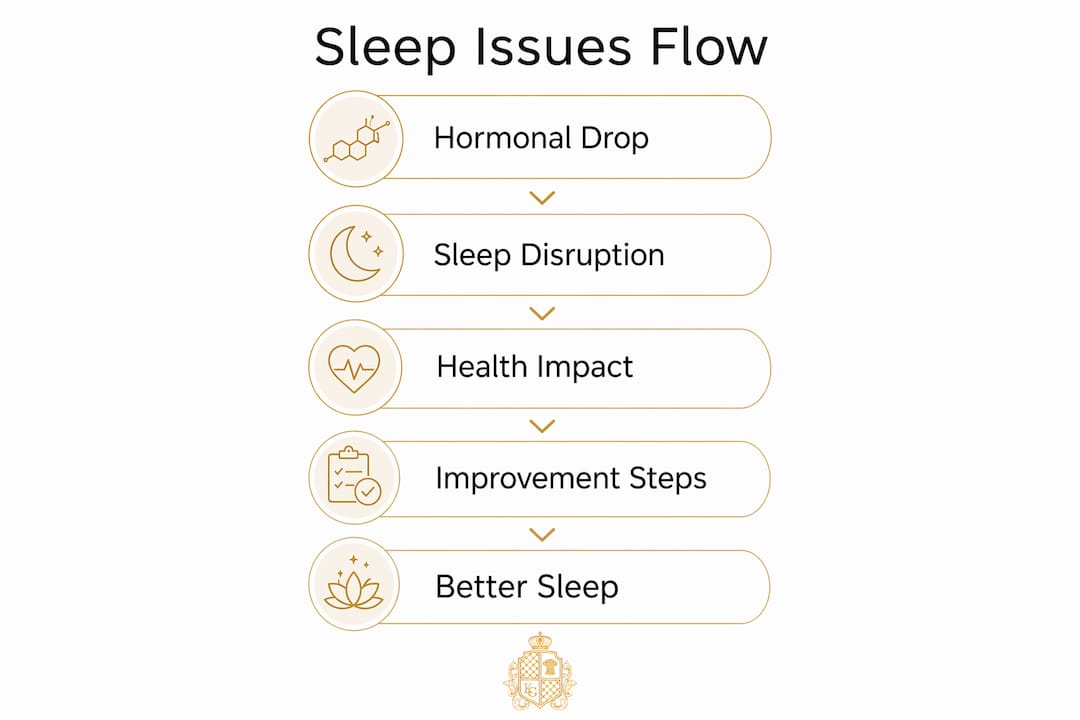
Poor sleep during perimenopause carries real health consequences, and they compound quickly. Insomnia rates rise from 32–46% across the menopausal transition, and persistent insomnia is linked to increased cognitive impairment, mood instability, and cardiovascular risk. That is not a minor inconvenience. It is a meaningful shift in long-term health trajectory.
Sleep fragmentation reduces the time spent in slow-wave sleep and REM sleep. These are the stages where the brain consolidates memory, regulates emotion, and repairs tissue. When they are cut short night after night, the effects show up as brain fog, irritability, and a reduced ability to manage stress. Many women in their forties attribute these symptoms to ageing or overwork, when the root cause is disrupted sleep architecture.
Weight gain is another consequence that often surprises women. Poor sleep raises ghrelin (the hunger hormone) and lowers leptin (the satiety hormone), increasing appetite and cravings. It also worsens insulin sensitivity, making it harder for the body to manage blood sugar. Combined with the metabolic shifts of perimenopause itself, this creates a cycle that is difficult to break without addressing sleep directly.
Pro Tip: Track your sleep patterns for two weeks before speaking to your GP or a menopause specialist. Note the time you wake, how you feel on waking, and any physical symptoms. This data makes a significant difference to the quality of the conversation.
Which strategies actually improve sleep during perimenopause?
Sleep disruptions in perimenopause respond best to a layered approach rather than a single fix. The evidence supports combining environmental changes, behavioural therapies, nutritional support, and, where appropriate, hormonal intervention.
Optimise your sleep environment
Your bedroom temperature is the most immediate lever you can pull. A room temperature of 16–18°C supports the body’s natural temperature drop at sleep onset. Bamboo nightwear and moisture-wicking bedding reduce the impact of night sweats without requiring any hormonal change. Blackout curtains and consistent sleep and wake times anchor the circadian rhythm, which is particularly important when cortisol timing has shifted.
Use CBT-I as your first-line treatment
Cognitive behavioural therapy for insomnia (CBT-I) is the most evidence-based non-pharmacological treatment available. Randomised controlled trials confirm its benefits are durable in perimenopausal and postmenopausal women, and its effects are often comparable or superior to sleep medication. CBT-I addresses the thought patterns and behaviours that maintain insomnia, rather than simply sedating the brain. It is available through NHS referral, accredited therapists, and structured digital programmes.
Consider targeted nutritional support
Magnesium glycinate supports GABA activity in the brain, the same pathway that progesterone once supported through allopregnanolone. It also relaxes muscle tension and reduces the physical restlessness that makes sleep onset harder. Kate Grosvenor Lifestyle’s Magnesium Complex is formulated specifically for women in midlife, supporting both muscle relaxation and sleep quality. PeriCalm works alongside it to calm the nervous system, addressing the “wired but tired” state that low progesterone creates.
Address alcohol and other sleep disruptors
Alcohol before bed fragments REM sleep and raises cortisol in the second half of the night, compounding every perimenopausal sleep problem. It may feel like it helps you fall asleep, but it reliably worsens sleep quality from around 2 AM onwards. Caffeine after midday, bright screens in the hour before bed, and late evening exercise all delay sleep onset in ways that are amplified during perimenopause.
Consider HRT with clinical guidance
Hormone replacement therapy (HRT) improves sleep quality by stabilising the vasomotor symptoms and hormonal disruptions that fragment sleep cycles. The Menopause Society supports HRT for symptomatic women under 60 or within ten years of menopause onset. Progesterone-inclusive HRT is particularly relevant for sleep, given the direct role of progesterone in GABA-mediated sedation. A conversation with a menopause-specialist GP or gynaecologist is the right starting point.
Key takeaways
Perimenopause-related sleeplessness is caused by specific hormonal changes that disrupt sleep architecture, and it responds best to a layered combination of behavioural, nutritional, and hormonal strategies.
| Point | Details |
|---|---|
| Hormonal root cause | Progesterone, oestrogen, and cortisol changes each disrupt sleep in distinct and measurable ways. |
| Three insomnia patterns | Sleep onset, sleep maintenance, and early morning awakening are the most common presentations. |
| Health consequences | Persistent poor sleep raises cognitive, mood, cardiovascular, and metabolic risks over time. |
| CBT-I is first-line | Cognitive behavioural therapy for insomnia has durable, evidence-based results in perimenopausal women. |
| Layered approach works | Combining environment, nutrition, behavioural therapy, and HRT where appropriate gives the best outcomes. |
What I have learned about sleep and perimenopause
The conversation around perimenopausal sleep still frustrates me. Too many women are told to improve their sleep hygiene, handed a leaflet about screens and caffeine, and sent home. Sleep hygiene is not useless. But it was designed for people whose brains are producing normal levels of progesterone and oestrogen. When those hormones have shifted, the rules change.
What I have found, both personally and through years of working with women in midlife, is that the “wired but tired” feeling is one of the most misunderstood symptoms of this transition. Women know something is wrong. They are exhausted. But they cannot settle, and they cannot explain why. The answer is almost always allopregnanolone. Once you understand that your brain has lost its natural GABA support, you stop blaming yourself for not being able to relax.
The other thing I want to say clearly: menopause and restless legs and obstructive sleep apnoea are genuinely underdiagnosed in perimenopausal women. If you are waking gasping, snoring heavily, or experiencing an irresistible urge to move your legs at night, please ask for a referral to a sleep specialist. These are not anxiety symptoms. They are physiological, they are treatable, and they deserve proper investigation.
My honest view is that the women who sleep best through perimenopause are the ones who advocate for themselves. They combine good behavioural foundations with targeted nutritional support, and they have an honest conversation with a clinician about whether HRT is appropriate for them. That combination, rather than any single fix, is what creates lasting change.
— Kate Grosvenor
Supporting your sleep with Kate Grosvenor Lifestyle
Waking at 3 AM, lying tense and exhausted, watching the minutes pass. If that feels familiar, you are not alone, and you are not imagining it.

Kate Grosvenor Lifestyle has formulated three products specifically to support sleep and calm during perimenopause. The Magnesium Complex supports GABA activity and muscle relaxation, addressing the physical tension that makes sleep onset harder. PeriCalm is designed to calm the nervous system and ease the “wired but tired” state that low progesterone creates. For a grounding evening ritual, Cacao, Collagen & Calm combines natural ingredients to support restful sleep and overall wellbeing. Each product is thoughtfully formulated for women in their forties and fifties, and each fits gently into an evening routine you will actually keep.
FAQ
What causes sleeplessness during perimenopause?
Perimenopause-related sleeplessness is caused by declining progesterone, fluctuating oestrogen, and a shift in cortisol timing. These hormonal changes disrupt the brain’s natural sleep signals, narrow the thermoneutral zone, and fragment sleep architecture.
Why do I keep waking at 3 AM during perimenopause?
The 3 AM wake-up is caused by a shallower overnight cortisol nadir, which triggers an earlier awakening response. This cortisol shift is a recognised feature of perimenopause and is not resolved by standard sleep hygiene alone.
Is CBT-I effective for perimenopausal insomnia?
Yes. Cognitive behavioural therapy for insomnia is the first-line non-pharmacological treatment, with randomised controlled trial evidence confirming durable benefits in perimenopausal and postmenopausal women.
Can HRT improve sleep during perimenopause?
HRT, particularly progesterone-inclusive formulations, improves sleep quality by stabilising vasomotor symptoms and restoring some of the hormonal support for GABA-mediated sedation. The Menopause Society supports its use in symptomatic women under 60 or within ten years of menopause.
Does alcohol help or harm sleep in perimenopause?
Alcohol worsens sleep in perimenopause. It may ease sleep onset but fragments REM sleep and raises cortisol in the second half of the night, compounding the disruptions that hormonal changes have already created.



Leave a comment
This site is protected by hCaptcha and the hCaptcha Privacy Policy and Terms of Service apply.