
Burning feet in menopause: causes, relief, and care
That heat rising through the soles of your feet at night, the prickling, the restless discomfort that makes sleep feel impossible. If this sounds familiar, you are not alone, and you are not imagining it. Burning feet during menopause is a recognised, if underreported, symptom rooted in hormonal change, and understanding what is driving it is the first step toward finding some calm.
Why do your feet burn during menopause?
The burning sensation in feet during menopause is clinically known as neuropathic dysesthesia. It arises primarily because declining oestrogen disrupts both nerve function and vascular circulation in the extremities. Symptoms tend to worsen at night, when reduced sensory input from your surroundings makes abnormal nerve signals far more noticeable.
Quick relief strategies to try straight away:
- Soak your feet in cool (not ice cold) water before bed
- Wear breathable, natural-fibre socks and avoid synthetic footwear
- Keep a small fan near the bed to cool the feet during the night
- Avoid known triggers such as spicy foods, alcohol, and prolonged standing
- Elevate your feet slightly when resting to ease vascular pressure
One important note: persistent burning, particularly when accompanied by numbness, weakness, or balance difficulties, warrants a conversation with your GP. Conditions such as diabetes, vitamin B12 deficiency, and hypothyroidism can produce very similar sensations and need to be ruled out before attributing symptoms solely to hormonal change.
How hormonal changes in menopause cause the burning sensation
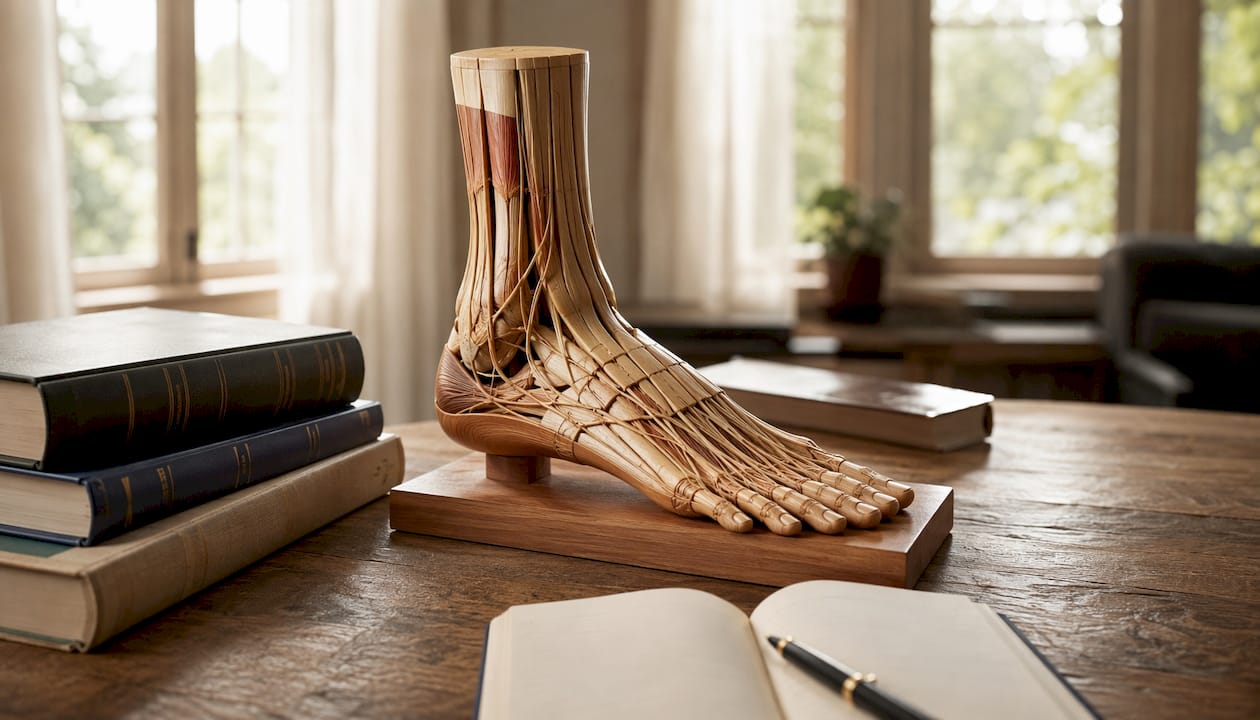
Oestrogen does far more than regulate your cycle. It plays a quiet but vital role in protecting peripheral nerves and keeping blood vessels supple and responsive. When oestrogen levels fall during perimenopause and beyond, that protection begins to waver.
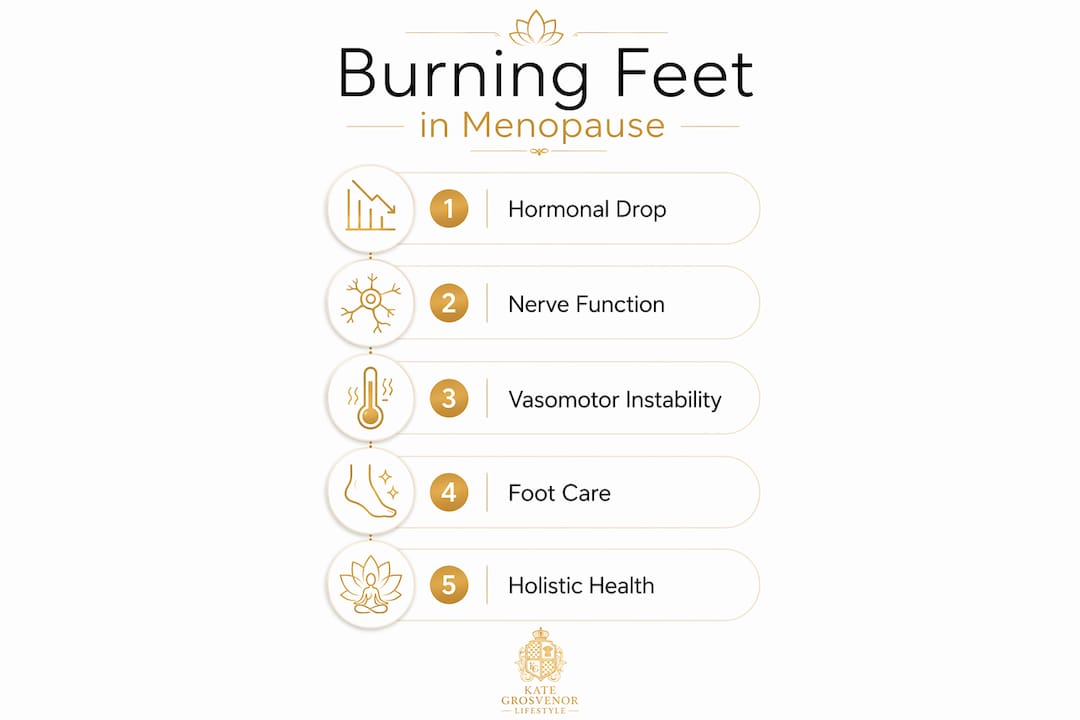
Oestrogen receptors on peripheral nerves modulate pain perception and vascular tone. As oestrogen withdraws, it can alter sodium and potassium channel activity in the nerves, making them more excitable and prone to spontaneous firing. Microvascular circulation in the feet becomes compromised, producing what feels like an ischemic, heat-like ache in the soles.
There is also a central dimension to this. Falling oestrogen lowers the threshold for central sensitisation, meaning your brain processes pain signals more intensely than it otherwise would. Add to this the rise in low-grade systemic inflammation that accompanies menopause, and the result is a nervous system that is, quite literally, running hotter than it should.
Burning feet in perimenopause may also reflect vasomotor instability, the same mechanism behind hot flushes, but expressed in the extremities rather than the chest or face. Episodes of sudden warmth and flushing in the feet, followed by a tingling or burning sensation, often mirror the pattern of a hot flush in miniature.
Other menopause symptoms that often accompany burning feet
Burning feet rarely arrive in isolation. They tend to travel alongside a cluster of other sensory and vasomotor changes, all sharing the same hormonal roots.
- Paraesthesia: Tingling, pins and needles, or numbness in the hands and feet are common in perimenopause, caused by low oestrogen affecting peripheral nerve pathways.
- Hot flushes and night sweats: These increase circulation and trigger vasodilation, sending a wave of heat into the extremities that can intensify foot discomfort.
- Skin dryness: Reduced collagen and declining oestrogen cause the skin on the feet to become drier and less elastic, making hard skin and cracking more likely around the heels.
- Sleep disturbance: The discomfort of burning feet at night feeds directly into disrupted sleep, which in turn amplifies pain perception the following day, creating a cycle that can feel difficult to break.
- Anxiety and heightened stress: Psychological stress during menopause raises central sensitisation, making sensory symptoms feel more intense and harder to dismiss.
Recognising these connections matters. When you see burning feet as part of a broader picture of hormonal change rather than an isolated oddity, it becomes easier to address the whole pattern rather than just one thread of it.
Practical foot care and relief for menopausal burning feet
Managing hot feet during menopause calls for a layered approach: immediate comfort measures, lifestyle adjustments, and, where needed, medical support.
Cooling and comfort:
- Cool foot baths before bed offer genuine, immediate relief for nerve-related burning
- Breathable bamboo or cotton bedding reduces heat retention around the feet; bamboo nightwear is worth considering for the same reason
- Elevating the feet during the evening helps reduce vascular pressure and residual heat
Lifestyle adjustments:
- Staying well hydrated supports circulation and helps the body regulate temperature more effectively
- Reducing alcohol, caffeine, and spicy foods can lessen vasomotor flares that worsen foot burning
- Gentle movement such as walking or yoga improves peripheral circulation without overheating the body
- Stopping smoking, if relevant, significantly improves microvascular health in the extremities
Topical treatments: Capsaicin cream, applied to the soles, works by depleting substance P, a chemical involved in pain signalling, and can reduce the intensity of nerve-related burning over time. Start with a low-strength formulation and apply it consistently.
Medical options: If symptoms are persistent or worsening, your GP may discuss gabapentin, pregabalin, or duloxetine, all of which modulate central pain pathways. Hormone Replacement Therapy (HRT) may also help by restoring neurovascular stability, though it is not a universal recommendation and should be considered as part of a broader risk-benefit conversation with your doctor.
Pro Tip: When choosing footwear, look for wide-toe-box shoes with breathable uppers and cushioned soles. Tight, synthetic shoes trap heat and restrict circulation, both of which worsen menopausal foot pain.

Holistic midlife wellbeing to support your feet and your whole self
Symptom relief is one layer. Beneath it lies a deeper opportunity: using this moment in midlife as a prompt to tend to your whole nervous system, not just your feet.
Nutritional foundations matter more than most women realise. Vitamin B12 deficiency is a recognised cause of peripheral neuropathic symptoms, and women in midlife are at higher risk due to both dietary factors and age-related absorption changes. A quality Vitamin B complex that includes B12 and B6 can support nerve health directly. Magnesium plays a complementary role, supporting nerve conduction and reducing the inflammation that exacerbates neuropathic discomfort; a well-formulated magnesium complex is one of the most practical additions to a midlife supplement routine. Omega-3 fatty acids offer neuroprotective and anti-inflammatory benefits, and omega-3 for perimenopause is worth discussing with a nutritional practitioner if your diet is low in oily fish.
Proactive testing gives you a clearer map. Women in midlife should ask their GP to assess ferritin, B12, thyroid function (TSH, free T3, free T4), HbA1c, and sex hormones if perimenopausal. These markers help distinguish hormonal burning feet from other causes and guide treatment far more precisely than guesswork. Organisations such as Menopause In The Workplace offer CPD-accredited training that supports broader awareness of menopausal symptoms, including sensory ones, which can help women feel more confident advocating for themselves in clinical settings.
Mind-body approaches are not soft options. Cognitive behavioural therapy (CBT) and mindfulness-based practices genuinely modulate pain perception by calming central sensitisation. Acupuncture has shown anecdotal benefit for neuropathic discomfort and is worth exploring alongside conventional care. Even a consistent breathing practice before bed can shift the nervous system from a state of heightened alert into one of greater stillness, and that shift has a real effect on how intensely you feel pain.
Pro Tip: Think of midlife as a window, not a wall. The sensory changes you are noticing now, including restless legs and nerve discomfort, are signals worth investigating rather than symptoms to simply endure. A proactive health assessment at this stage can change the trajectory of the years ahead.

At Kate Grosvenor Lifestyle, we believe that midlife is a time for tending, not just tolerating. Our Vitamin B Complex, Magnesium Complex, and Omega-3 are thoughtfully formulated to support the nerve health, circulation, and anti-inflammatory balance that menopausal women need most. Small, consistent rituals. Real, grounded support.
Key takeaways
Burning feet in menopause is driven by declining oestrogen, which disrupts peripheral nerve function, vascular circulation, and central pain processing, making both targeted relief and nutritional support genuinely effective.
| Point | Details |
|---|---|
| Hormonal root cause | Declining oestrogen alters nerve excitability and microvascular circulation, producing burning and tingling in the feet. |
| Symptoms worsen at night | Reduced sensory input at night makes abnormal nerve signals more perceptible, disrupting sleep. |
| Rule out other causes | Ask your GP to test B12, ferritin, thyroid function, and blood sugar before attributing symptoms to hormones alone. |
| Nutritional support helps | B12, B6, magnesium, and omega-3 all support nerve health and reduce the inflammation that worsens neuropathic discomfort. |
| Cooling and lifestyle changes work | Cool foot baths, breathable footwear, hydration, and gentle exercise offer meaningful day-to-day relief. |



Leave a comment
This site is protected by hCaptcha and the hCaptcha Privacy Policy and Terms of Service apply.