
Joint pain in perimenopause: causes, relief, and what helps
If your joints have started aching in ways that feel unfamiliar, you are not imagining it. Joint pain during perimenopause is one of the most common yet least talked-about symptoms of this transition, affecting 57% of perimenopausal women compared to 40% of premenopausal women. The root cause is falling estrogen, a hormone that does far more than regulate your cycle. It lubricates your joints, calms inflammation, and supports the cartilage that keeps movement comfortable. When it begins to decline, your body notices.
The joints most commonly affected are the knees, hips, spine, and hands, though many women describe a shifting, widespread achiness that moves around rather than settling in one place. Clinicians are increasingly grouping these experiences under the term “musculoskeletal syndrome of menopause,” recognised in 2024 as a distinct cluster of hormonal effects on the joints, tendons, and muscles. Knowing this has a name, and a cause, is the first step toward finding your way back to ease.
Key symptoms you might recognise:
- Morning stiffness that usually eases within 30 minutes
- Aching or tenderness in multiple joints rather than a single spot
- Pain that fluctuates with your cycle or stress levels
- A general sense of physical heaviness or fatigue alongside joint discomfort
- Occasional swelling or warmth, which warrants medical attention
Why does joint pain happen during perimenopause?
Estrogen receptors are woven throughout your joints, cartilage, synovial membranes, ligaments, and tendons. When estrogen levels fall, every one of these tissues feels the shift. Synovial fluid, the natural lubricant inside your joints, decreases. Cartilage becomes less resilient. Inflammatory markers rise, making joints more reactive and tender.
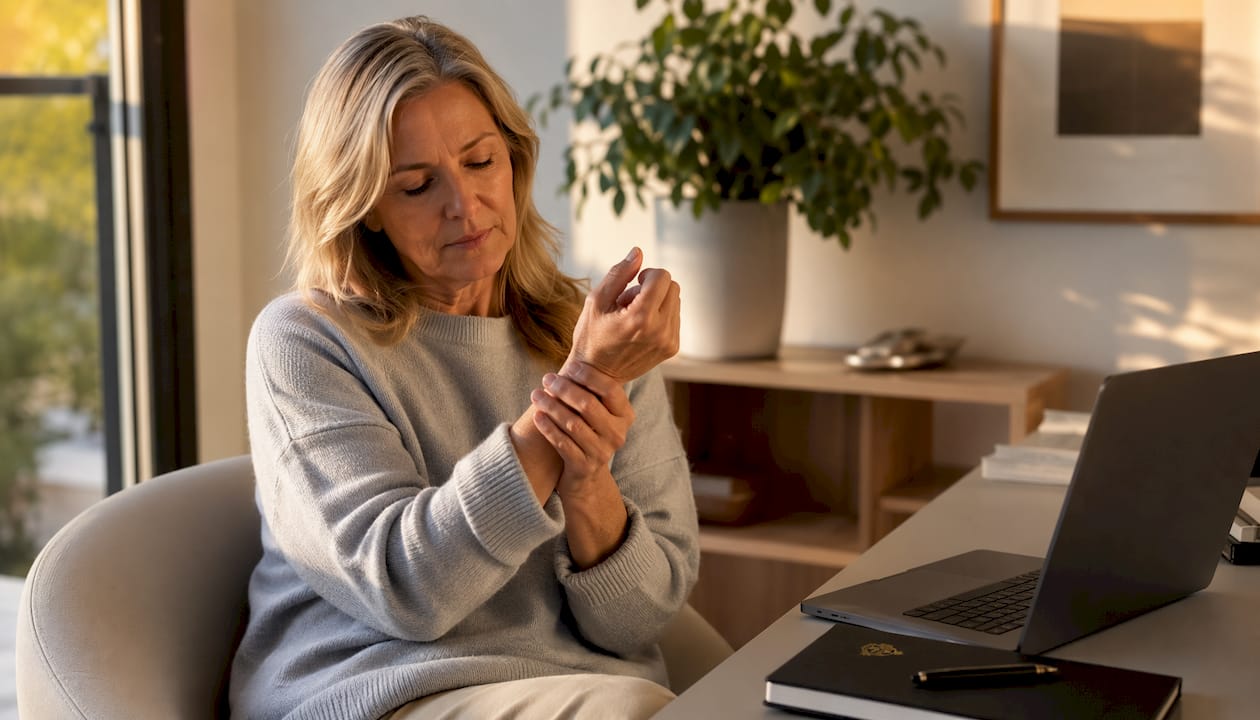
Weight-bearing joints, particularly the knees, hips, and lumbar spine, tend to feel it most. The small joints of the hands are also frequently affected, sometimes mimicking the early presentation of rheumatoid arthritis. This overlap is one reason perimenopause joint issues are so often misattributed or missed entirely.
Alongside the hormonal shift, muscle loss (known medically as sarcopenia) compounds the picture. Less muscle means less support around the joints, which increases strain and discomfort. Poor sleep, which perimenopause also disrupts, raises systemic inflammation further. Stress tightens the body and lowers pain tolerance. These factors do not cause joint pain independently, but they amplify what the hormonal changes have already set in motion.
Conditions worth distinguishing from perimenopause-related joint discomfort include:
- Osteoarthritis: tends to affect one or two joints with a gradual, insidious onset, often linked to prior injury
- Rheumatoid arthritis: symmetrical small-joint involvement, prolonged morning stiffness, and elevated inflammatory markers
- Fibromyalgia: widespread pain with fatigue and cognitive symptoms, but may respond to hormone therapy if the underlying cause is hormonal arthralgia
- Vitamin D deficiency: common in the UK and capable of producing bone and joint pain that mimics hormonal causes
How to manage joint pain during perimenopause
Relief is genuinely possible. The most grounded approach combines movement, nutrition, and, where appropriate, hormonal support. None of these work in isolation, but together they can shift the experience considerably.
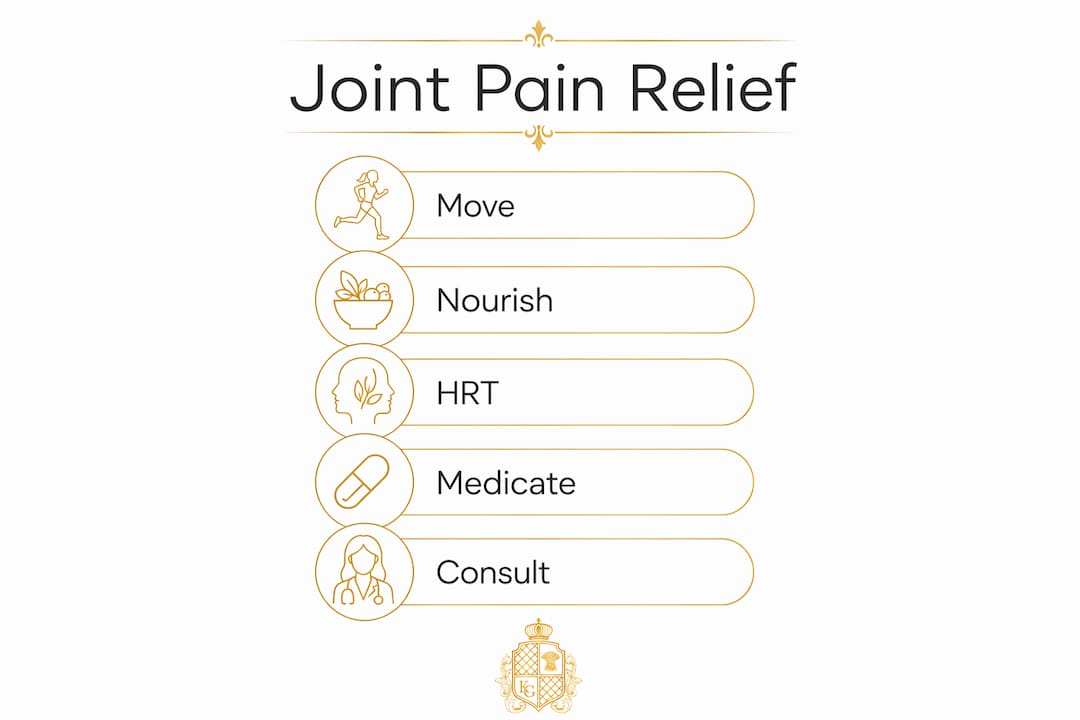
Movement as medicine
Joint pain often limits exercise, which leads to muscle loss, weight gain, and greater strain on already tender joints. Breaking that cycle is one of the most important things you can do. Low-impact, consistent movement keeps joints mobile and builds the muscular support they need.
- Yoga and Pilates: improve flexibility, reduce stiffness, and support the nervous system’s response to pain
- Swimming and aqua exercise: offload joint pressure while building strength
- Resistance training: preserves muscle mass, supports bone density, and reduces joint strain over time
- Walking: gentle, weight-bearing, and accessible, especially when pain is moderate
Pro Tip: If you are new to resistance training, a referral to a physiotherapist for a supervised, progressive home programme can make the difference between a routine that helps and one that inadvertently worsens symptoms.
Nourishing your joints from within
An anti-inflammatory diet is one of the most consistent recommendations from menopause specialists. Colourful fruits and vegetables, oily fish rich in omega-3 fatty acids, legumes, and whole grains all help to calm the low-grade inflammation that perimenopause can stoke. Limiting added sugars and ultra-processed foods reduces inflammatory load further.
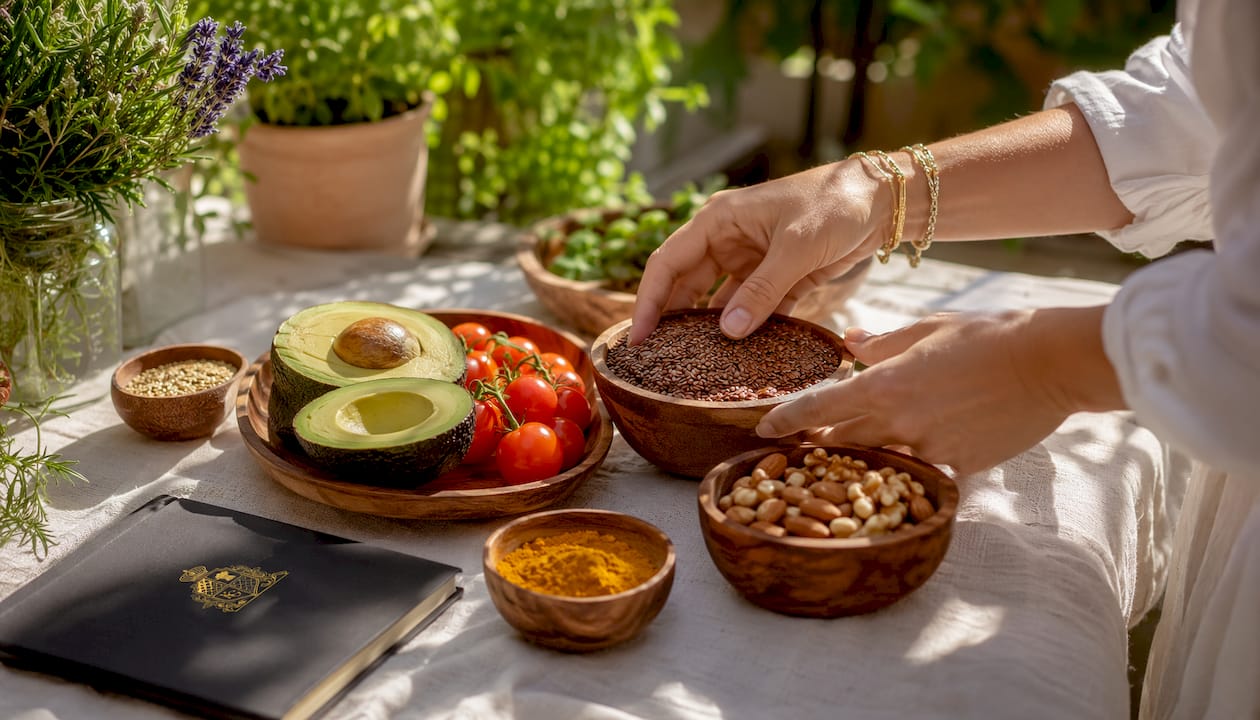
Protein intake deserves particular attention. Adequate protein supports muscle maintenance, which in turn protects joints. Many women in midlife eat less protein than their bodies need, especially if appetite or energy has shifted. A protein-rich breakfast is a simple, grounding place to start.
Omega-3 supplementation is well-supported for joint inflammation. Kate Grosvenor Lifestyle’s Omega 3 for perimenopause is formulated specifically for women in this transition, offering a targeted way to support the body’s inflammatory response alongside dietary changes.
Hormone Replacement Therapy (HRT)
HRT is primarily prescribed for vasomotor symptoms such as hot flushes and night sweats, but it often delivers meaningful relief for joint pain too. In the Women’s Health Initiative, participants who received hormone therapy reported more relief from joint symptoms than those on placebo, though the differences were modest. A smaller randomised trial found that women taking combined HRT reported significantly less joint and muscle pain than the placebo group.
The picture is not straightforward. Estrogen’s effect on inflammation is complex, and outcomes vary depending on the individual, the type of HRT, and whether other conditions are contributing to pain. HRT is not a universal solution for joint discomfort, but for women whose symptoms are clearly tied to estrogen decline, it can be genuinely helpful. The risks and benefits vary by age, health history, and symptom profile, so the conversation with your GP or menopause specialist is worth having.
Non-hormonal pharmaceutical options
Non-steroidal anti-inflammatory drugs (NSAIDs) such as ibuprofen can ease acute joint pain and are available over the counter in the UK. Topical NSAID gels, applied directly to the affected joint, offer localised relief with a lower risk of systemic side effects. Both are best used short-term and under medical guidance rather than as a long-term strategy. Corticosteroids and immunosuppressive agents have no established role in managing menopause-related joint pain.
When should you see a doctor about joint pain?
Not all joint pain during perimenopause is hormonal in origin, and some symptoms call for prompt evaluation. Knowing the difference between what your body is adjusting to and what needs investigation gives you the grounded confidence to act.
Red flag symptoms that warrant medical attention:
- Swelling, warmth, or redness around a joint
- Morning stiffness lasting longer than 30 minutes
- Symmetrical pain in small joints, particularly the fingers and wrists
- Sudden, severe pain in a single joint
- Fever alongside joint symptoms
- Symptoms that worsen progressively rather than fluctuating
During a consultation, your clinician will take a careful history, asking when symptoms began relative to your menopause transition, whether pain is localised or widespread, and what other symptoms you are experiencing. Clinicians assess for signs of inflammatory arthritis before attributing joint pain to estrogen deficiency, since conditions such as rheumatoid arthritis and lupus peak in incidence during perimenopause.
What to bring to your appointment:
- A note of when joint symptoms began and how they relate to your cycle or other menopause symptoms
- A list of all current medications, including statins, which can contribute to muscle and joint aching
- A description of which joints are affected and whether pain is constant or fluctuating
- Any other menopause symptoms you are experiencing, such as sleep disruption, mood changes, or hot flushes
- Questions about HRT suitability if you have not yet discussed it
What the latest research tells us about perimenopause and joint health
The musculoskeletal syndrome of menopause, formally named in October 2024, brings together joint pain, frozen shoulder, tendinitis, and sarcopenia under a single hormonal framework. This matters clinically because it shifts the conversation from “is this arthritis?” to “how is estrogen decline affecting the whole musculoskeletal system?” The syndrome is estimated to affect 57% of perimenopausal women, with a significant portion finding it debilitating.
There is no gold-standard biomarker for menopause-related joint pain. Diagnosis remains one of exclusion, reached after ruling out osteoarthritis, autoimmune disease, and nutritional deficiencies. This complexity means that personalised assessment, rather than a single test, is the only reliable path to clarity.
| Condition | Key distinguishing features | Typical investigation |
|---|---|---|
| Menopause-related arthralgia | Multiple joints, fluctuating, alongside other menopause symptoms | Clinical history, exclusion of other causes |
| Osteoarthritis | Weight-bearing joints, gradual onset, bony changes on imaging | X-ray, physical examination |
| Rheumatoid arthritis | Symmetrical small joints, prolonged morning stiffness, elevated CRP/ESR | Blood tests (RF, anti-CCP), imaging |
| Fibromyalgia | Widespread pain, fatigue, cognitive symptoms, no joint damage | Clinical criteria, exclusion of inflammatory disease |
| Vitamin D deficiency | Bone and joint aching, fatigue, common in UK | Serum vitamin D blood test |
Research into HRT’s specific role in joint health is still developing. Current evidence suggests modest but real benefit for arthralgia linked to estrogen deficiency, with further studies needed to clarify the optimal timing, duration, and formulation. What is clear is that a personalised plan, combining movement, nutrition, and hormonal support where appropriate, consistently outperforms any single intervention.
For women looking to support their bodies through this transition with something grounded and purposeful, PeriEase from Kate Grosvenor Lifestyle brings together science-backed ingredients to ease multiple perimenopausal symptoms, including joint and muscle discomfort, as part of a daily ritual that feels as good as it works.
You might also find it helpful to explore how perimenopause affects the whole body, including the biochemical links between estrogen decline and inflammation, or read about living boldly through midlife and beyond with movement and nourishment at the centre.
Key takeaways
Falling estrogen is the primary driver of joint pain in perimenopause, and a multi-modal approach combining movement, anti-inflammatory nutrition, and hormonal support where appropriate offers the most consistent relief.
| Point | Details |
|---|---|
| Prevalence is higher than most realise | 57% of perimenopausal women experience muscle or joint symptoms, compared to 40% of premenopausal women. |
| Estrogen drives the change | Declining estrogen reduces synovial fluid, weakens cartilage resilience, and raises inflammatory markers throughout the musculoskeletal system. |
| Diagnosis requires exclusion | No biomarker confirms menopause-related joint pain; osteoarthritis, autoimmune disease, and vitamin deficiencies must be ruled out first. |
| HRT can help, but varies | Hormone therapy modestly reduces joint pain in clinical trials, though outcomes depend on individual health profile and other contributing factors. |
| Movement breaks the cycle | Low-impact exercise such as yoga, swimming, and resistance training prevents the spiral of pain, inactivity, muscle loss, and greater joint strain. |



Leave a comment
This site is protected by hCaptcha and the hCaptcha Privacy Policy and Terms of Service apply.