
Perienopause and restless legs: what's really going on
Many women would associate restless legs syndrome (RLS) with poor circulation, or maybe tired legs from standing all day. But RLS is actually a neurological condition defined by an irresistible urge to move the legs, usually accompanied by crawling, aching, or tingling sensations that worsen at rest.
For women in their 40s and 50s, perimenopause and restless legs are closely connected. RLS affects up to 15.7% of midlife women, roughly twice the rate seen in men, and the perimenopause transition is a key reason why. Falling oestrogen disrupts dopamine signalling in the brain, and decades of menstrual blood loss often leave iron stores too low to support healthy nerve function. The result is broken sleep, exhausted mornings, and a symptom that is frequently dismissed as “just stress.” It is not. Understanding what drives it is the first step toward feeling calmer and more rested again.
How do hormonal changes during perimenopause trigger restless legs?
The connection between hormonal shifts and restless legs is rooted in brain chemistry. Oestrogen plays a direct role in regulating dopamine, the neurotransmitter that controls movement and sensory signals in the brain. When oestrogen falls during perimenopause and menopause, dopamine signalling destabilises, and the legs begin to feel restless, particularly in the evening and at night.

Progesterone decline adds another layer. Progesterone supports GABAergic tone, the brain’s natural calming system. When progesterone drops, the motor system becomes more excitable after dark, which is precisely when RLS symptoms tend to peak. This is not coincidence. It reflects a real, measurable shift in neurochemistry.
The timing of symptoms follows a predictable pattern. Circadian declines in dopaminergic tone coincide with the evening hours, and low night-time progesterone reduces GABA inhibition at exactly the same time. The legs become impossible to settle just when you most need stillness.
Hot flushes, night sweats, and elevated cortisol compound the problem. Each one fragments sleep further, and broken sleep amplifies RLS discomfort the following evening. The cycle feeds itself.
“RLS and periodic limb movements are frequently overlooked in menopause-related sleep disturbances. They cause significant non-restorative sleep, fatigue, and cognitive impairment, and are often misattributed solely to hot flushes or insomnia.” Sleep Disturbances in Menopause: Neuroendocrine Mechanisms and Clinical Implications
The key symptoms to recognise include:
- An urge to move the legs that worsens when sitting or lying down
- Crawling, tingling, aching, or burning sensations in the lower legs
- Symptoms that ease temporarily with movement
- Worsening in the evening and at night
- Sleep disruption that leaves you unrefreshed in the morning
Why is iron status crucial in managing restless legs at menopause?
Iron is the cofactor the brain uses to produce dopamine. Without adequate iron, dopamine synthesis falters, and RLS symptoms worsen. This is the most under-recognised piece of the puzzle for menopausal women.
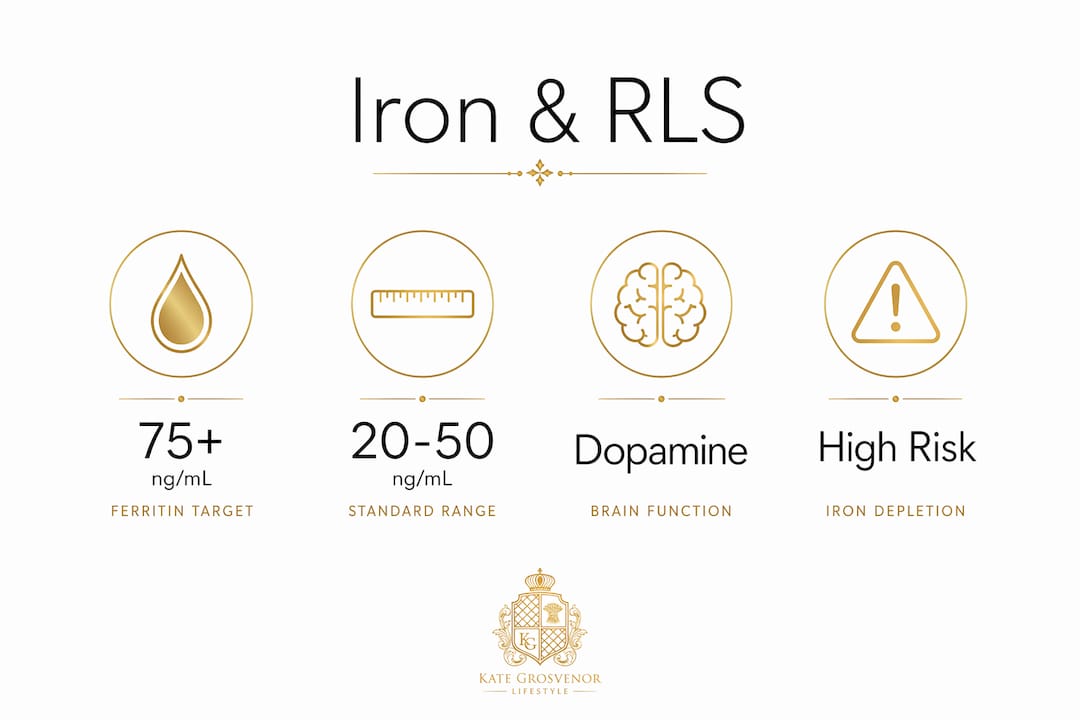
The problem lies in how “normal” is defined. Standard laboratory ranges label ferritin levels of 20–50 ng/mL as acceptable. For RLS management, this is functionally insufficient. Many women receive a normal result on their blood test and are told nothing is wrong, when in reality their iron stores are too low to support healthy dopamine function.
International RLS Study Group guidelines are clear. Target ferritin above 75–100 ng/mL and transferrin saturation above 20% before considering pharmacological treatment. That is a significantly higher threshold than most GPs routinely check for.
The reason so many menopausal women are iron-depleted is straightforward. Decades of menstrual blood loss accumulate into a functionally iron-deficient state that persists into menopause, even without clinical anaemia. Correcting iron levels is the most evidence-backed non-pharmaceutical intervention available for RLS.
| Iron marker | Standard lab “normal” | RLS management target |
|---|---|---|
| Serum ferritin | 12–150 ng/mL | Above 75–100 ng/mL |
| Transferrin saturation | 15–50% | Above 20% |
Oral iron supplements taken with vitamin C improve absorption. Intravenous iron is an option when oral supplementation is poorly tolerated or when levels need to rise quickly. Always work with your GP to confirm your levels before supplementing, as excess iron carries its own risks.
Pro Tip: Ask your GP specifically for serum ferritin and transferrin saturation results, not just a standard full blood count. A result labelled “normal” may still be too low to support RLS relief.
What lifestyle and medical treatments help relieve restless legs during menopause?
Effective management of restless legs during menopause draws on several approaches working together. No single intervention resolves everything, but the right combination can restore calm to your evenings and sleep to your nights.
Hormone replacement therapy
HRT with transdermal oestradiol and micronised progesterone supports dopamine pathway stability and improves sleep architecture. It is not a direct cure for RLS, and it is not licensed specifically for this purpose. What it does is remove some of the hormonal amplifiers that make symptoms worse, creating a steadier neurochemical environment.
Exercise and movement
A 12-week programme of aerobic and resistance exercise has been shown in clinical research to improve RLS severity scores compared to a control group. Exercise improves circulation and supports dopamine signalling. Even a 30-minute walk in the afternoon can reduce evening symptom intensity.
Supplements that support the nervous system
Three supplements are worth considering as part of a broader plan:
- Magnesium. A clinical trial found that magnesium 250mg daily improved RLS severity and sleep quality after two months compared to placebo. Magnesium supports muscle relaxation and calms the nervous system, making it a grounded first choice for women managing restless legs.
- Vitamin B complex. B vitamins support nerve function and energy metabolism. If your dietary intake is low, a B complex supplement can help maintain the nervous system health that underpins symptom management.
- Vitamin D3 and K2. Low vitamin D is common in the UK, particularly from october through to march. Supporting your levels, especially during autumn and winter, contributes to overall nerve and muscle health.
Triggers to reduce
- Caffeine after midday
- Alcohol in the evening
- Certain medications, including some SSRIs and antihistamines, which can worsen RLS
- Irregular sleep schedules
- Prolonged sitting in the evening without movement breaks
When medication is considered
Gabapentinoids such as gabapentin or pregabalin are sometimes prescribed for RLS when lifestyle and nutritional approaches are insufficient. Dopamine agonists are another option, but carry a risk of augmentation, where symptoms worsen over time with continued use. This is a conversation to have carefully with your GP or neurologist.
Pro Tip: Keep a simple symptom diary for two weeks before your GP appointment. Note the time symptoms start, what you were doing, and what helped. This makes the conversation far more productive.
How can targeted testing and supplements support restless legs management?
Personalised care starts with knowing your numbers. Routine blood testing for serum ferritin, transferrin saturation, vitamin D, and vitamin B12 gives you a clear picture of where your body needs support. Without this baseline, supplementation is guesswork.
Once you have your results, supplements can be chosen with purpose rather than hope. At Kate Grosvenor Lifestyle, the approach is to support the specific pathways that menopause disrupts, with formulations designed for women in their Renewal Years.
Key supplements to consider alongside your test results:
- Magnesium Complex supports muscle relaxation and sleep quality. It is the first choice for women experiencing restless legs, particularly if sleep disruption is significant.
- Vitamin B Complex supports nervous system function and helps maintain the neurological balance that RLS disrupts. Particularly useful if your diet is low in B vitamins or your B12 is at the lower end of normal.
- Vitamin D3 & K2 is especially relevant during the darker months or if your blood levels are below optimal. Supporting vitamin D contributes to overall muscle and nerve health.
The synergistic effect of combining these supplements alongside lifestyle changes and, where appropriate, HRT, creates a more stable foundation than any single intervention alone. Supplements are supportive tools, not standalone cures. Always consult your GP or a qualified healthcare provider before beginning a new supplement regimen, particularly if you are taking prescribed medication.
Pro Tip: Retest your ferritin and vitamin D levels after three to four months of supplementation. Progress is often visible in your numbers before you feel it fully in your body.
Key takeaways
Menopause-related restless legs syndrome is a neurological condition driven by falling oestrogen, low progesterone, and iron deficiency, and it responds well to targeted nutritional, hormonal, and lifestyle support.
| Point | Details |
|---|---|
| RLS is neurological, not imaginary | Falling oestrogen disrupts dopamine signalling, causing real, measurable symptoms in midlife women. |
| Iron levels matter more than you think | Target ferritin above 75–100 ng/mL; standard “normal” results often mask RLS-relevant deficiency. |
| Magnesium supports sleep and muscle calm | Clinical evidence supports 250mg daily magnesium to reduce RLS severity and improve sleep quality. |
| HRT reduces symptom amplifiers | Transdermal oestradiol and micronised progesterone stabilise dopamine pathways but do not cure RLS directly. |
| Test before you supplement | Serum ferritin, transferrin saturation, vitamin D, and B12 testing guides effective, personalised support. |
What I’ve learned about restless legs that most women are never told
I want to say something plainly: menopausal RLS is not anxiety, not ageing, and not something you simply have to endure. It is a neurobiological condition with identifiable causes and real solutions. The women I speak with most often arrive having been told their blood tests are fine and their symptoms are stress-related. They are not wrong to feel frustrated.
The iron piece is where I see the biggest gap between what the research says and what women are actually told. A ferritin of 35 ng/mL is labelled normal on a standard report. For a woman with restless legs, it is not nearly enough. Advocating for a higher ferritin target, as the International RLS Study Group recommends, is one of the most practical things you can do for yourself right now.
I also want to be honest about timelines. HRT, iron correction, and supplements all take time to work. Dopamine pathways do not rebalance overnight. Patience is not passive. It is part of the process. What I have seen, again and again, is that women who combine targeted testing with consistent nutritional support and movement find their way back to restful nights. The perimenopause treatment strategies that work are rarely dramatic. They are steady, grounded, and built on understanding what your body actually needs.
Sleep is not a luxury. It is the foundation of everything else. You deserve to reclaim it.
— Kate Grosvenor
Support your legs and your sleep with Kate Grosvenor Lifestyle
If restless legs are stealing your sleep, the right nutritional support can make a quiet but meaningful difference.

At Kate Grosvenor Lifestyle, our supplements are formulated specifically for women in perimenopause and menopause. The Magnesium Complex is our first recommendation for muscle relaxation and calmer nights. The Vitamin B Complex supports nervous system health, particularly if your B vitamin intake is low. And the Vitamin D3 & K2 is worth considering through the autumn and winter months, or whenever your levels need a lift. These supplements work best alongside professional guidance, so please do speak with your GP about testing and treatment options as part of your wider care.
FAQ
What causes restless legs during menopause?
Falling oestrogen disrupts dopamine signalling in the brain, and declining progesterone reduces the nervous system’s natural calming tone. Both changes combine to produce the crawling, aching sensations that characterise RLS, particularly in the evening.
Can low iron cause restless legs in menopause?
Yes. Iron is essential for dopamine production, and many menopausal women have ferritin levels that are labelled normal but are too low for RLS management. International guidelines recommend targeting ferritin above 75–100 ng/mL to support symptom relief.
Does HRT help with restless legs?
HRT with transdermal oestradiol and micronised progesterone can stabilise dopamine pathways and improve sleep quality, which reduces the conditions that amplify RLS. It is not a licensed treatment for RLS and does not directly cure the underlying dopamine deficit.
What is the best magnesium dose for restless legs?
A clinical trial found that 250mg of magnesium oxide daily improved RLS severity and sleep quality after two months compared to placebo. Always consult your GP before starting supplementation, particularly if you have kidney concerns.
How is perimenopause leg pain at night different from RLS?
Perimenopause leg cramps are sudden, painful muscle contractions, often in the calf, and resolve quickly. RLS produces an urge to move with uncomfortable sensations that persist until you walk or stretch. Both can disrupt sleep, but they have different causes and respond to different interventions.


%20with%20poor%20circulation,%20or%20maybe%20tired%20legs%20from%20standing%20all%20day.%20But%20RLS%20is%20actually%20a%C2%A0%20neurological%20condition%20defined%20by%20an%20irresistible%20ur...)
Leave a comment
This site is protected by hCaptcha and the hCaptcha Privacy Policy and Terms of Service apply.