
Menopause bloating relief: your practical 2026 guide
Menopause bloating relief is defined as a set of strategies that reduce fluid retention and digestive discomfort caused by hormonal changes during perimenopause and menopause. About 38% of postmenopausal women experience bloating, with three quarters of them reporting it as a daily issue. That statistic matters because it tells you this is not a minor inconvenience. It is a widespread, physiological response to shifting hormones, mineral imbalances, and slowing digestion. The good news is that balanced nutrition, targeted hydration, and consistent lifestyle habits offer real, lasting relief without relying on medication.
Why does menopause cause bloating?
The root cause of menopausal bloating is hormonal, not simply dietary. As oestrogen and progesterone decline, the kidneys become less efficient at regulating fluid, and the gut slows down. Both changes create the conditions for fluid retention and trapped gas.
Mineral imbalances drive fluid retention more directly than excess water intake. When sodium rises relative to potassium and magnesium, the body holds onto fluid in the tissues. This is why cutting back on water often makes bloating worse, not better.
The gut-brain axis also plays a role. Cortisol, the stress hormone, affects gut motility and fluid retention, slowing digestion and increasing the likelihood of gas and discomfort. Stress and bloating form a feedback loop that many women in midlife recognise all too well.
Common warning signs that bloating needs medical evaluation include:
- Bloating that does not ease after a bowel movement
- Unexplained weight loss alongside persistent bloating
- Blood in stools or significant changes in bowel habits
- Bloating accompanied by pelvic pain or pressure
“The issue is not too much water. It is an imbalance of sodium, potassium, and magnesium that causes the body to hold onto fluid. Drinking more water, not less, actually signals the body to release retained fluid.” — Dr. Sreenivas, dietitian
What dietary changes provide menopause bloating relief?
Food is one of the most direct levers you have. The right dietary shifts can reduce bloating significantly, but the approach matters as much as the intention.
Gradually increasing fibre to 25+ grams per day, combined with adequate hydration, can reduce bloating risk in women over 51 by up to 66%. That is a substantial reduction from a straightforward habit. The key word is gradually. Rapid fibre increases worsen bloating by overwhelming gut bacteria before they can adapt. Start with whole grains such as oats or brown rice, then increase by roughly half a teaspoon of additional fibre per day.
| Food | Effect on bloating |
|---|---|
| Oats, brown rice, quinoa | Support gut motility; introduce gradually |
| Bananas, avocados, sweet potatoes | Potassium-rich; counter sodium retention |
| Leafy greens, pumpkin seeds, almonds | Magnesium-rich; support muscle relaxation |
| Processed foods, crisps, ready meals | High sodium; worsen fluid retention |
| Carbonated drinks, beer | Introduce gas directly into the gut |
| Lactose-containing dairy | Common trigger for gas and discomfort |
| Onions, garlic, beans, wheat | High-FODMAP; ferment in the gut |
Potassium and magnesium intake directly counters sodium-driven water retention and supports muscle relaxation in the gut wall. Foods like bananas, avocados, leafy greens, and pumpkin seeds are practical, everyday sources. These are the electrolytes for water retention that nutritionists consistently recommend for menopausal women.
Common food triggers worth testing through an elimination approach include:
- High-sodium processed foods and takeaways
- Lactose in milk, soft cheese, and ice cream
- Fermentable carbohydrates (FODMAPs) such as onions, garlic, and lentils
- Artificial sweeteners, particularly sorbitol and xylitol
- Carbonated drinks, including sparkling water
Keeping a food and symptom diary for two to three weeks gives you a clear picture of your personal triggers. Patterns emerge quickly when you write them down.
Pro Tip: Swap table salt for herbs and lemon juice in cooking. This single change reduces daily sodium intake without sacrificing flavour, and most women notice a difference in puffiness within a week.
How do lifestyle habits reduce bloating during menopause?
Diet alone rarely resolves menopausal bloating completely. The body needs movement, calm, and rhythm to digest well.

A 10–15 minute post-meal walk mechanically stimulates the intestines, moving gas and stool along the digestive tract. This is more relevant to bloating relief than the calorie-burning effect of exercise. Think of it as giving your gut a gentle nudge rather than a workout.
Stress management is equally important. Cortisol disrupts the gut-brain axis, and chronic low-level stress keeps digestion sluggish. Relaxation rituals such as chamomile tea after dinner may reduce cortisol-driven bloating by improving gut-brain signalling. You can read more about how stress reduction supports gut motility during perimenopause.
A simple post-meal routine to build into your day:
- Finish eating and sit quietly for five minutes before standing.
- Take a 10–15 minute gentle walk, ideally outdoors.
- Avoid lying down for at least 90 minutes after your main meal.
- Sip warm water or herbal tea rather than cold carbonated drinks.
- Practise three slow, deep breaths before your next meal to activate the parasympathetic nervous system.
Mindful eating also makes a measurable difference. Chewing food to an applesauce consistency reduces swallowed air and slows fermentation in the gut, improving bloating symptoms within days. Slow, deliberate eating also activates the parasympathetic nervous system, which shifts the body into a calmer, more efficient digestive state.
Pro Tip: Put your fork down between bites. It sounds simple, but this one habit extends meal duration naturally and reduces the amount of air you swallow without any conscious effort.
How do you identify your specific bloating pattern?
Not all bloating is the same, and recognising your pattern is the fastest route to targeted relief. Bloating timing is a reliable diagnostic signal. Waking up with a swollen abdomen points to fluid retention, often linked to salt intake or hormonal fluctuations overnight. Bloating that builds through the day and peaks by evening tends to be gas or constipation-related.
Use these self-checks to identify your pattern:
- Morning bloating on waking. Review sodium intake the previous day and consider whether hormonal fluctuations are the primary driver.
- Bloating that worsens after specific meals. Track which foods precede symptoms and test an elimination approach for two to four weeks.
- Bloating alongside constipation. Prioritise fibre, hydration, and movement before considering other interventions.
- Bloating that eases after a bowel movement. Gas and stool transit are the likely causes; dietary and movement strategies apply directly.
- Persistent bloating regardless of food or timing. Seek clinical advice to rule out thyroid dysfunction, coeliac disease, or inflammatory conditions.
Testing common sensitivities follows a straightforward sequence. Remove lactose for two weeks, then reintroduce it. If symptoms return, dairy is a trigger. Repeat the process for gluten and high-FODMAP foods. This methodical approach gives you clarity without unnecessary long-term restriction.
Stool quality is a useful guide throughout. Stools that are hard, pellet-like, or infrequent signal constipation as a contributing factor. Loose, urgent stools after certain foods suggest sensitivity rather than retention. Both patterns respond well to the dietary and lifestyle strategies above, but they need slightly different emphasis.
Key takeaways
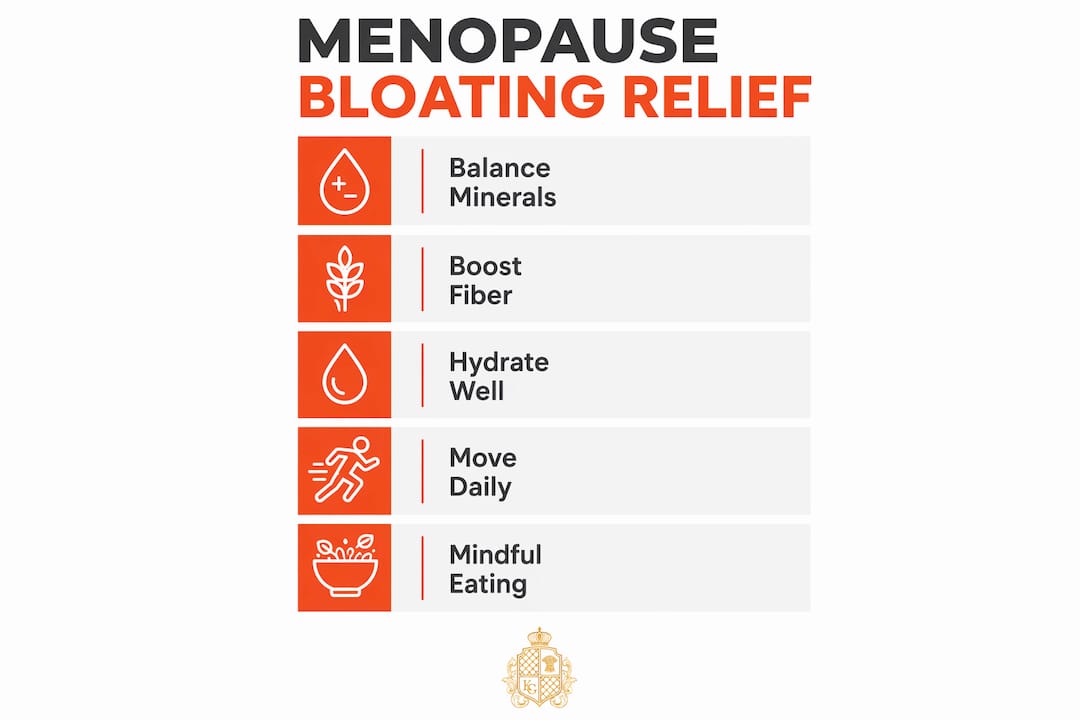
Menopause bloating relief requires restoring mineral balance, improving gut motility, and building consistent daily habits rather than seeking a single quick fix.
| Point | Details |
|---|---|
| Mineral balance drives fluid retention | Prioritise potassium and magnesium-rich foods to counter sodium and reduce water retention. |
| Fibre increase must be gradual | Add fibre slowly from whole grains to avoid worsening bloating through gut bacterial overload. |
| Post-meal movement matters | A 10–15 minute walk after eating mechanically stimulates the gut and reduces gas by bedtime. |
| Bloating timing guides your approach | Morning bloating signals fluid retention; evening bloating points to gas or constipation. |
| Mindful eating reduces swallowed air | Chewing thoroughly and eating slowly activates calmer digestion and eases symptoms within days. |
What I have learned about menopause bloating after years of working with women in midlife
The most common misconception I encounter is that bloating is simply about eating the wrong foods. Women arrive having cut out entire food groups, feeling restricted and frustrated, and still bloating. The reality is more layered than that.
What I have seen work consistently is not a dramatic overhaul. It is the accumulation of small, steady habits: drinking water throughout the day rather than in large gulps, walking after meals, chewing slowly, and managing stress with the same seriousness as diet. These are not glamorous interventions. They are grounding ones.
The mind-body connection is genuinely underestimated here. When cortisol stays elevated, the gut stays sluggish, regardless of how clean your diet is. Calm is not a luxury during menopause. It is a physiological requirement for good digestion.
My honest advice is this: resist the urge to fix everything at once. Choose one habit, practise it for two weeks, and notice what shifts. Your body is not broken. It is adapting. And with the right support, it adapts beautifully.
— Kate Grosvenor
Supporting your body through the Renewal Years
Menopause bloating responds well to consistent, gentle care. The strategies above give you a strong foundation, and the right tools can make those daily rituals easier to keep.

At Kate Grosvenor Lifestyle, we design products specifically for women navigating perimenopause and menopause. Our Natural Body Brush supports lymphatic flow and circulation, which plays a direct role in reducing fluid retention and that heavy, puffy feeling. Dry body brushing takes three minutes and fits naturally into a morning routine. For women who find that tracking symptoms and self-care intentions keeps them grounded, our Self Love Daily Journal Insert offers a gentle structure for noticing patterns and staying connected to how you feel each day. Both are available at Kate Grosvenor Lifestyle.
FAQ
What causes bloating during menopause?
Declining oestrogen and progesterone reduce the kidneys’ ability to regulate fluid, while imbalances in sodium, potassium, and magnesium cause the body to retain water in the tissues. Slowing gut motility and elevated cortisol from stress also contribute.
Does drinking more water help with menopause bloating?
Yes. Adequate hydration signals the body to release retained fluid, making it more effective than reducing water intake. Drinking consistently throughout the day, rather than in large amounts at once, works best.
Are there natural remedies for menopausal bloating?
Effective natural remedies for menopausal bloating include gradually increasing dietary fibre, eating potassium and magnesium-rich foods, taking post-meal walks, practising mindful eating, and managing stress through calming rituals such as chamomile tea.
How quickly can dietary changes reduce bloating?
Chewing food thoroughly and slowing meal pace can improve symptoms within days. Dietary changes such as reducing sodium and increasing fibre typically show noticeable results within two to three weeks of consistent practice.
When should I see a doctor about menopause bloating?
Seek medical advice if bloating is persistent regardless of food or timing, accompanied by unexplained weight loss, blood in stools, or pelvic pain. These signs may indicate thyroid dysfunction, coeliac disease, or another condition requiring clinical assessment.



Leave a comment
This site is protected by hCaptcha and the hCaptcha Privacy Policy and Terms of Service apply.