
Menopause muscle pain: causes, symptoms, and relief
Menopause muscle pain is defined as a hormonally driven musculoskeletal condition caused by the decline of oestrogen and progesterone, leading to reduced muscle mass, increased inflammation, and heightened pain sensitivity. Clinicians now recognise this as the musculoskeletal syndrome of menopause, a unified condition rather than a collection of unrelated aches. Around 70% of perimenopausal women experience these symptoms, which is a striking figure. It means the widespread aching, stiffness, and fatigue you feel is not imagined, not simply ageing, and not something you must simply endure. Understanding this is the first step. It opens the door to real, grounded relief.
What causes muscle pain during menopause?
Oestrogen does far more for your muscles and joints than most people realise. It supports collagen synthesis, maintains joint lubrication, and preserves lean muscle mass. When oestrogen declines, all three functions weaken simultaneously. The result is stiffer joints, slower muscle recovery, and a body that feels heavier and more fragile than it did a few years ago.
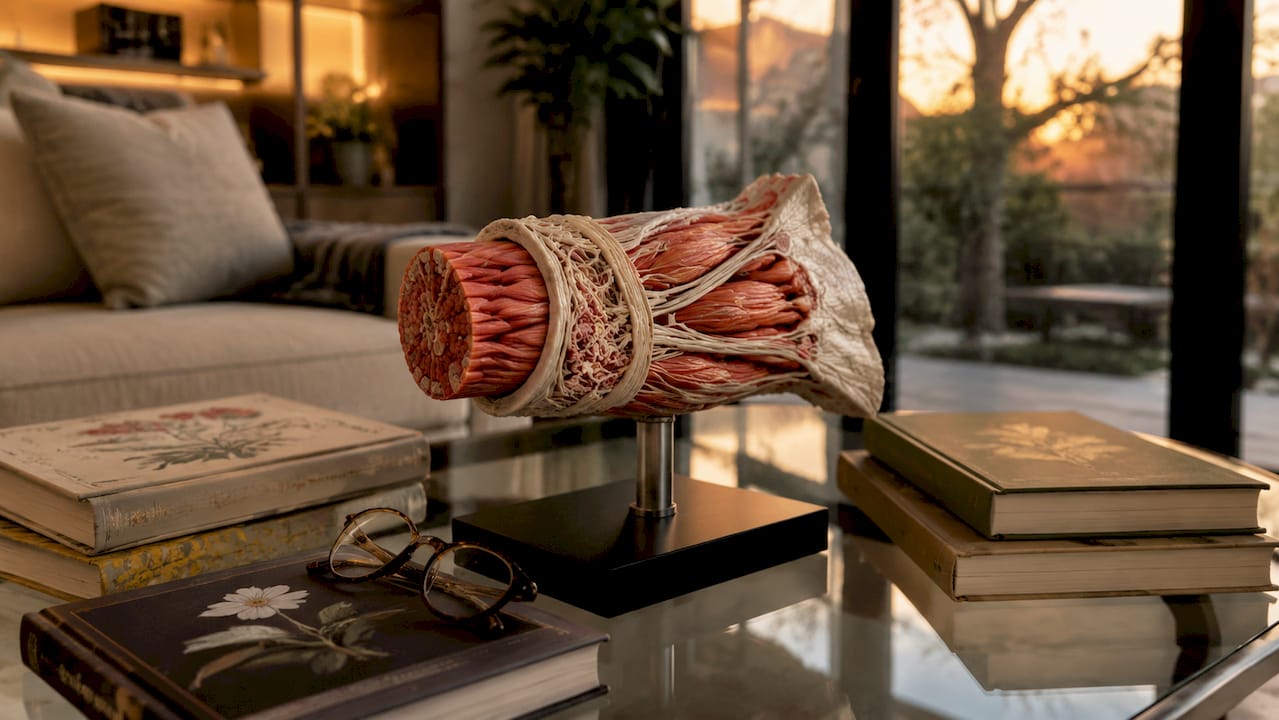
Progesterone plays an equally important role. Progesterone withdrawal reduces GABA receptor modulation, the brain’s primary calming signal, leading to chronic muscular tension. This tension concentrates most noticeably in the upper trapezius and neck muscles. You may notice a persistent tightness across your shoulders that no amount of rest seems to shift. That is not stress alone. It is a physiological response to hormonal change.
Cortisol adds another layer of difficulty. As oestrogen falls, cortisol rises, amplifying pain sensitivity and driving inflammation throughout the body. This is why menopause body aches can feel disproportionate to any physical activity you have done. The longitudinal SWAN study found that women lose approximately 0.6 kg of lean muscle mass per year during perimenopause and early menopause. That rate of loss affects metabolism, physical function, and the body’s ability to absorb and buffer everyday physical stress.
| Hormonal change | Physiological effect | Symptom experienced |
|---|---|---|
| Declining oestrogen | Reduced collagen and joint lubrication | Joint stiffness, slower recovery |
| Progesterone withdrawal | Reduced GABA activity | Chronic upper body tension |
| Rising cortisol | Amplified pain signals, increased inflammation | Widespread aching, fatigue |
| Muscle mass loss | Reduced metabolic and physical resilience | Weakness, delayed recovery |
This combination of factors is what makes muscle pain during menopause distinct from ordinary ageing or overuse injury. The mechanisms are hormonal, systemic, and interconnected.
How does the musculoskeletal syndrome of menopause show up?
The musculoskeletal syndrome of menopause is the clinical term for the cluster of symptoms that affect women aged 40–60 as hormones shift. Harvard Health notes that clinicians often treat these symptoms in isolation, missing the unified hormonal picture. Recognising the pattern matters because it changes how you approach treatment.
Common symptoms include:
- Joint pain and stiffness, particularly in the hands, knees, and hips, often worse in the morning
- Frozen shoulder, which occurs four times more frequently in women aged 40–60 than in men of the same age
- Diffuse muscle aches, sometimes described as menopause flu like body aches, with no clear physical cause
- Fatigue that worsens muscle pain, creating a cycle of poor sleep and increased sensitivity
- Localised tension in the neck, shoulders, and upper back, often unrelieved by rest or stretching
Symptoms tend to fluctuate throughout the day. Stiffness is typically worst on waking, eases slightly by mid-morning, and may return with prolonged sitting or stress. This pattern differs from osteoarthritis, which tends to worsen with sustained activity, and from fibromyalgia, which involves broader sensory sensitivity and specific tender points.
Sleep disruption amplifies everything. Poor sleep raises cortisol, which in turn raises pain perception. This is why aching muscles during menopause can feel so relentless. The body never fully resets overnight.
Pro Tip: Track shoulder stiffness specifically. Shoulder mobility often improves before general muscle pain does when hormone therapy begins, making it a reliable early marker of treatment progress.
What treatment options work for menopause muscle pain?
Hormone replacement therapy (HRT) is the most direct biological treatment for menopause muscle pain. It works by restoring oestrogen levels, which reduces inflammation, improves joint lubrication, and supports muscle recovery. Many women notice a meaningful reduction in aching muscles within the first few months of starting HRT. The response is not instant, but it is consistent when the therapy is well matched to the individual.
Progressive resistance training is the second most important intervention. Lifting weights, using resistance bands, or practising bodyweight exercises two to three times per week preserves lean muscle mass and reduces systemic inflammation. Light cardio alone is not sufficient. The muscle must be challenged to adapt, and that adaptation is what protects you from further decline.
Nutrition shapes the inflammatory environment your muscles live in. Omega-3 fatty acids, found in oily fish such as salmon and mackerel, reduce inflammatory markers. An anti-inflammatory diet built around vegetables, legumes, and whole grains supports tissue repair. Protein intake matters too. Aim for adequate protein at each meal to give your muscles the building blocks they need.
Magnesium is the supplement with the strongest evidence base for this condition. Magnesium at clinical doses reduces delayed onset muscle soreness and fibromyalgia-related tenderness during the menopause transition. A Magnesium Complex formulated for perimenopause can support muscle relaxation and improve sleep quality, which in turn lowers pain sensitivity.
Physiotherapy offers targeted relief that exercise alone cannot always provide. A 2024 systematic review confirmed that manual therapy, postural retraining, and breathing exercises significantly reduce chronic muscle tension in menopausal women. Breathing retraining is particularly valuable because anxiety-driven breathing pattern changes sustain upper body tension by keeping the accessory breathing muscles in a state of constant low-level contraction.
| Treatment category | Key benefit | Important consideration |
|---|---|---|
| HRT | Addresses root hormonal cause | Requires GP assessment and monitoring |
| Resistance training | Preserves muscle mass, reduces inflammation | Must be progressive, not just light movement |
| Magnesium supplementation | Reduces soreness and tension, supports sleep | Choose a well-formulated perimenopause product |
| Physiotherapy | Relieves chronic tension, improves posture | Most effective when combined with other approaches |
| Anti-inflammatory nutrition | Reduces systemic inflammation | Consistency over weeks, not days, produces results |
Pro Tip: Consistency in resistance training is the deciding factor. Two sessions per week, maintained over three months, produces measurable improvements in muscle strength and pain levels. Sporadic effort does not.
How can you support your muscle health day to day?
Daily habits create the conditions in which treatment can work. Small, consistent choices accumulate into meaningful change over weeks and months. The following steps give you a grounded framework to build from.
- Move every day, even gently. A 20-minute walk supports circulation, reduces stiffness, and regulates cortisol. It is not a replacement for resistance training, but it keeps the body from seizing up between sessions.
- Add resistance training twice a week. Squats, glute bridges, and wall press-ups are safe starting points at home. Progress gradually by adding repetitions before adding weight.
- Prioritise protein at every meal. Eggs, Greek yoghurt, lentils, and fish all contribute to muscle repair. Spreading protein across the day is more effective than concentrating it in one meal.
- Reduce refined sugar and processed foods. These drive inflammation, which worsens body aches. Swap ultra-processed snacks for nuts, seeds, or fruit.
- Practise a wind-down routine before bed. Dim lights an hour before sleep, limit screens, and try five minutes of slow diaphragmatic breathing. Lower cortisol at night means better sleep and less pain the following day.
- Check your posture during desk work. Rounded shoulders and a forward head position sustain the upper body tension that progesterone withdrawal creates. Set a reminder to roll your shoulders back and breathe deeply every hour.
- Seek professional support when symptoms persist. If aching muscles are disrupting your sleep or daily function, speak to your GP about HRT, and ask for a physiotherapy referral. Pain that does not respond to lifestyle changes alone deserves clinical attention.
For additional support with restless legs and muscle discomfort at night, which often accompanies the musculoskeletal syndrome of menopause, the same principles of magnesium, movement, and sleep hygiene apply.
Key takeaways
Menopause muscle pain is a hormonally driven condition that responds best to a combination of HRT, progressive resistance training, targeted nutrition, and consistent daily movement.
| Point | Details |
|---|---|
| Root cause is hormonal | Declining oestrogen and progesterone drive muscle loss, tension, and amplified pain. |
| Muscle loss is measurable | Women lose approximately 0.6 kg of lean muscle per year during perimenopause without intervention. |
| HRT addresses the cause | Hormone therapy restores oestrogen, reducing inflammation and improving muscle recovery. |
| Resistance training is non-negotiable | Light cardio alone is insufficient; progressive strength work preserves lean mass. |
| Magnesium and nutrition matter | Clinical magnesium doses reduce soreness; an anti-inflammatory diet lowers systemic inflammation. |
What I have learned from working with women through this
The thing that strikes me most, having worked with so many women navigating this stage, is how often muscle pain is the symptom that finally brings them to seek help. Not hot flushes, not mood changes. The aching. The feeling of waking up stiff and exhausted before the day has even begun.
What I have also noticed is how quickly women accept it as inevitable. They assume it is ageing, or that they have simply overdone it at the gym, or that they need to rest more. The truth is that rest alone does not fix a hormonal problem. And accepting the pain as permanent means missing the window where intervention makes the biggest difference.
The women I see who fare best are those who combine approaches. HRT creates the hormonal foundation. Resistance training builds the physical one. Magnesium and good nutrition reduce the daily burden of inflammation. None of these works as well in isolation as they do together. Your body is not broken. It is responding to a very real change, and it responds just as readily to the right support.
If your aching muscles are affecting your sleep, your mood, or your confidence, please do not wait. Speak to your GP. Ask about the musculoskeletal syndrome of menopause by name. You deserve a clinician who sees the whole picture, not just one symptom at a time.
— Kate Grosvenor
Supporting your muscles with Kate Grosvenor Lifestyle
Muscle pain during menopause responds to the right nutritional support, and two products from Kate Grosvenor Lifestyle are formulated specifically with this in mind.
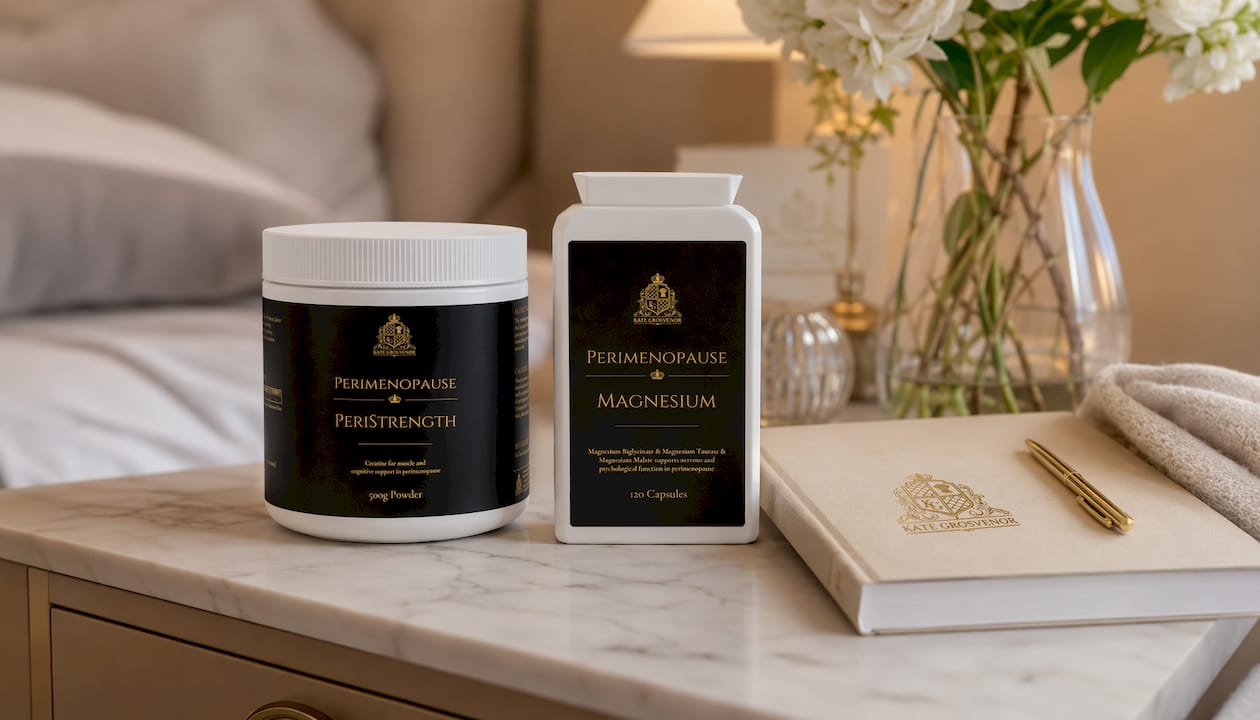
PeriStrength is a creatine supplement designed for perimenopausal women, supporting muscle strength, energy, and cognitive clarity during a time when all three can feel depleted. Creatine is one of the most researched compounds for preserving lean muscle mass, and PeriStrength brings that evidence base into a formula suited to midlife women. Alongside it, the Magnesium Complex for perimenopause works to ease muscle tension, support deeper sleep, and reduce the soreness that accumulates through hormonal change. Together, they complement the lifestyle and medical strategies covered in this article, giving your body a calmer, more grounded foundation to build from.
FAQ
What is the musculoskeletal syndrome of menopause?
The musculoskeletal syndrome of menopause is the clinical term for the cluster of joint pain, muscle aches, stiffness, and fatigue caused by declining oestrogen and progesterone. It affects approximately 70% of perimenopausal women and is distinct from normal ageing or arthritis.
How do I stop menopause body aches?
The most effective approach combines HRT to address the hormonal root cause, progressive resistance training to rebuild muscle, and magnesium supplementation to reduce soreness and tension. Physiotherapy and an anti-inflammatory diet provide additional relief.
Why do my muscles ache during menopause but not after exercise?
Menopause muscle aches arise from hormonal changes rather than physical overuse. Declining oestrogen reduces muscle recovery capacity, while rising cortisol amplifies pain signals, producing widespread aching that is unrelated to how much or how little you have moved.
Is frozen shoulder a sign of menopause?
Frozen shoulder occurs four times more frequently in women aged 40–60 than in men of the same age, and it is recognised as a hallmark symptom of the musculoskeletal syndrome of menopause. If you develop shoulder stiffness in this age range, hormonal factors are worth discussing with your GP.
Can magnesium help with muscle pain during menopause?
Clinical doses of magnesium reduce delayed onset muscle soreness and fibromyalgia-related tenderness during the menopause transition. A well-formulated magnesium supplement supports muscle relaxation and improves sleep quality, both of which lower pain perception over time.



Leave a comment
This site is protected by hCaptcha and the hCaptcha Privacy Policy and Terms of Service apply.