Perimenopause and frozen shoulder: what you need to know
Frozen shoulder, clinically known as adhesive capsulitis, is a painful stiffening of the shoulder joint that disproportionately affects women aged 40–60, precisely the window when perimenopause unfolds. Frozen shoulder affects about 3% of the population, with prevalence peaking in women aged 40–60 during perimenopause and menopause. That is not coincidence. Declining estrogen during perimenopause weakens joint capsule elasticity, raises systemic inflammation, and creates the conditions in which adhesive capsulitis can quietly take hold. The NHS recognises frozen shoulder as a significant cause of pain and disability, and clinical experts increasingly view it as part of a broader hormonal and musculoskeletal picture rather than a simple joint injury.
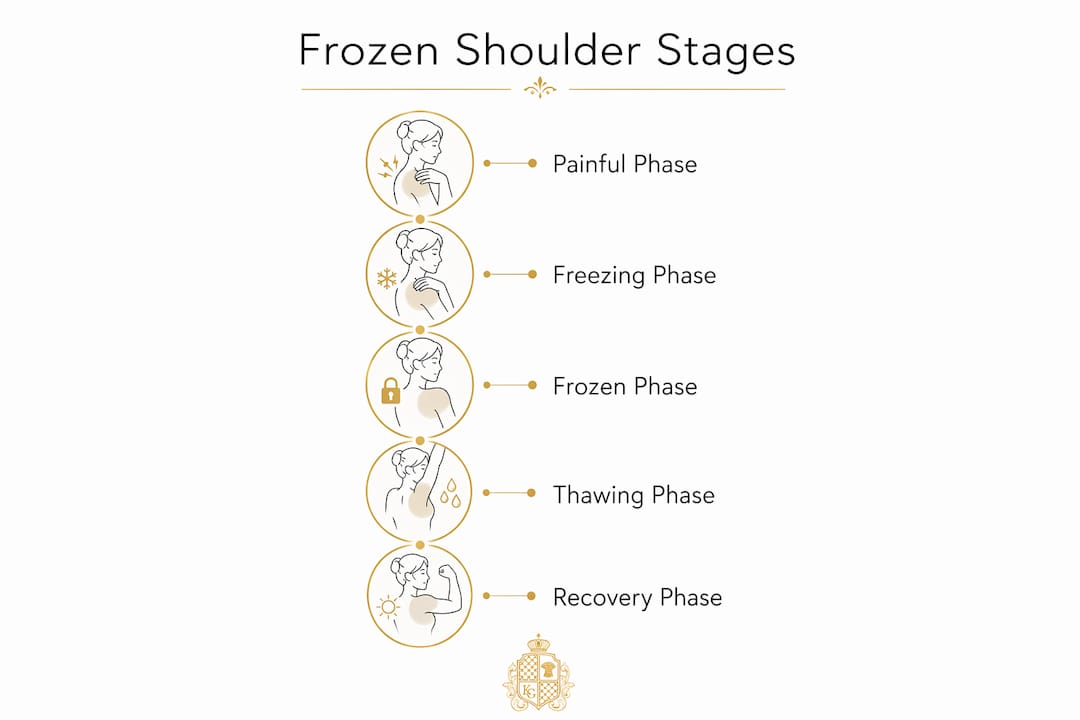
The condition moves through three stages: a painful freezing phase (roughly 2–9 months), a stiff frozen phase (4–12 months), and a gradual thawing phase that can extend beyond 12–24 months. Understanding where you are in that arc matters enormously for choosing the right response.
Key symptoms and who is most affected:
- Deep, aching shoulder pain, often worse at night
- Progressively restricted range of motion in all directions
- Difficulty with everyday movements: reaching overhead, fastening a bra, putting on a coat
- Women aged 40–60 in perimenopause or menopause
- Those with thyroid conditions, diabetes, or a history of shoulder immobility
Pro Tip: Seek medical advice early. Catching frozen shoulder in the freezing phase, before significant capsular contraction sets in, gives you the best chance of a shorter, less disabling recovery.
Table of Contents
- Why perimenopause makes you more vulnerable to frozen shoulder
- How frozen shoulder is diagnosed in perimenopausal women
- Treatment options for frozen shoulder, including HRT
- Exercises and lifestyle adjustments that support recovery
- How frozen shoulder affects your quality of life during perimenopause
- Prevention strategies for women in perimenopause
- Prognosis and potential complications of frozen shoulder in perimenopause
- Key takeaways
- What I’ve learned about frozen shoulder and perimenopause
- Supporting your shoulder health through perimenopause with Kate Grosvenor Lifestyle
Why perimenopause makes you more vulnerable to frozen shoulder
The connection between perimenopause and frozen shoulder runs deeper than many women are told. Estrogen receptors are present throughout the musculoskeletal system, including in joint capsules, tendons, ligaments, and cartilage. As estrogen declines during perimenopause, the anti-inflammatory and antifibrotic protection it provides begins to fade. The result is a systemic environment that favours capsular fibrosis and inflammation, the two hallmarks of frozen shoulder.
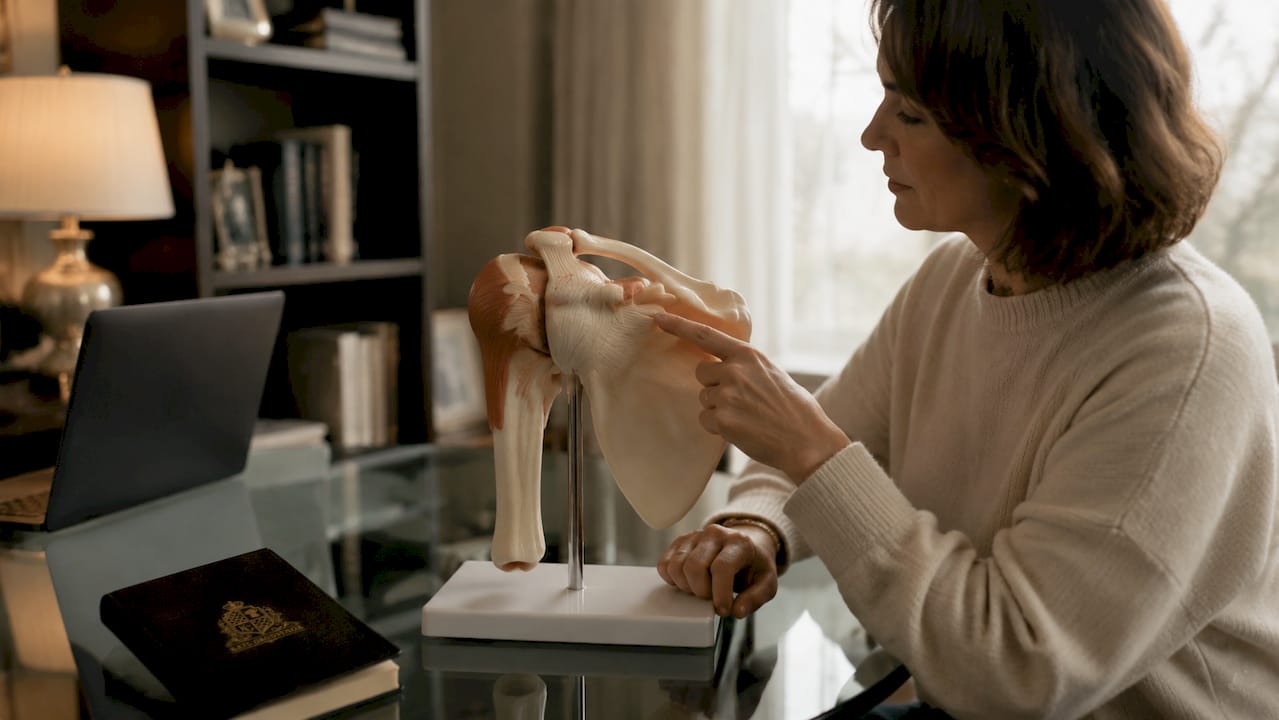
Many women are surprised to learn that their shoulder pain is not the result of an injury. Clinical research increasingly frames frozen shoulder in perimenopausal women as a systemic, hormonally driven condition rather than a localised joint problem. Estrogen also supports metabolic homeostasis, and its decline is associated with increased insulin resistance and visceral adiposity, both of which compound systemic inflammation.
Contributing causes and risk factors:
- Falling estrogen reducing joint capsule flexibility and increasing fibrotic activity
- Thyroid dysfunction, particularly hypothyroidism, which worsens inflammation and impairs recovery
- Diabetes: around 10–20% of people with diabetes develop frozen shoulder
- Sedentary behaviour and reduced muscle mass in midlife
- Prolonged shoulder immobility following illness, surgery, or injury
- Systemic low-grade inflammation sustained by poor diet, stress, and disrupted sleep
Statistic: Around 70% of women report musculoskeletal symptoms during menopause, making joint and shoulder pain one of the most common yet under-discussed aspects of this transition.
How frozen shoulder is diagnosed in perimenopausal women
Diagnosis begins with a careful conversation. Your GP or physiotherapist will ask when your symptoms started, how they relate to your perimenopausal timeline, and whether you have other menopause symptoms such as hot flushes, sleep disruption, or mood changes. This context matters because joint pain in menopause often presents alongside other estrogen-deficient symptoms, and ruling out other causes is part of the process.
A physical examination assessing your shoulder’s range of motion in multiple directions is the cornerstone of diagnosis. Frozen shoulder typically restricts movement in all planes, which distinguishes it from rotator cuff injuries that usually limit specific movements only.
Diagnostic steps and red flags:
- Full symptom history, including onset relative to perimenopause
- Physical examination of shoulder range of motion and strength
- Ruling out rotator cuff tears (MRI if needed), osteoarthritis, and inflammatory arthritis
- Blood tests to check thyroid function, blood glucose, and inflammatory markers
- X-ray to exclude bone abnormalities or dislocation
- Red flags requiring urgent referral: sudden severe pain, significant swelling, fever, or unexplained weight loss alongside shoulder symptoms
There are no biomarkers specific to frozen shoulder, so diagnosis is largely clinical. If your symptoms began during perimenopause and you have other hormonal signs, mention this clearly to your clinician. It shapes both the diagnosis and the treatment approach.
Treatment options for frozen shoulder, including HRT
Treatment for frozen shoulder works in phases, and patience is genuinely part of the prescription. The goal shifts from pain relief in the early stages to restoring mobility and then rebuilding strength as inflammation settles.
Pain management typically begins with non-steroidal anti-inflammatory drugs (NSAIDs) such as ibuprofen or naproxen to quiet inflammation and ease discomfort. Corticosteroid injections into the shoulder joint can provide meaningful short-term relief during the freezing phase, creating a window in which gentle movement becomes more tolerable.
Hormone Replacement Therapy (HRT) is worth discussing with your GP if you are in perimenopause. Clinical evidence, including data from the Women’s Health Initiative, shows that women receiving HRT reported greater relief from musculoskeletal symptoms compared with those on placebo, though the effect was modest. HRT is not a standalone treatment for frozen shoulder, but it may reduce the hormonal drivers of joint inflammation and improve your overall response to rehabilitation. As one expert put it, “Estrogen is a catalyst, but not the only factor. If you give back the hormones, it can mitigate much of this.”
Physical therapy remains the cornerstone of recovery. Stretching the joint capsule gradually, under guidance, is more effective than pushing through pain. Strengthening exercises come later, once inflammation has reduced.
Treatment overview:
- NSAIDs for pain and inflammation management
- Corticosteroid injections for acute pain relief in the freezing phase
- HRT to address hormonal drivers of joint inflammation
- Physiotherapy: capsular stretching progressing to strengthening
- Hydrodilatation (injection to expand the joint capsule) in resistant cases
- Surgery (arthroscopic capsular release) for a small minority who do not improve conservatively
Statistic: The NHS confirms that most cases of frozen shoulder resolve with conservative treatment over time, with surgery needed only in a small percentage of cases.
Pro Tip: During the freezing phase, focus on pain relief rather than aggressive stretching. Forced movement during active inflammation can worsen capsular irritation and prolong recovery.
Exercises and lifestyle adjustments that support recovery
Recovery from frozen shoulder asks you to move gently and consistently, not forcefully. During the frozen and early thawing phases, gentle pendulum swings, supported arm raises, and wall-walking exercises help maintain what range of motion you have without provoking inflammation. A physiotherapist can guide you through a progressive programme tailored to your current stage.

Lifestyle choices carry real weight here. An anti-inflammatory diet rich in colourful vegetables, oily fish, and whole grains supports the body’s ability to manage joint inflammation. Limiting added sugars and processed foods reduces the systemic inflammatory load that can slow recovery. Sleep matters too. Restorative sleep keeps inflammation in check and lowers pain perception, which is why addressing night pain early, whether through positioning aids or pain relief, is part of the recovery picture.
Targeted supplementation can offer meaningful support alongside these foundations. Omega 3 for perimenopause provides essential fatty acids with well-established anti-inflammatory properties, supporting joint health from within. Magnesium Complex for perimenopause supports muscle function, reduces tension, and can ease the sleep disruption that frozen shoulder so often brings.
Practical lifestyle adjustments:
- Gentle range-of-motion exercises daily, guided by a physiotherapist
- Anti-inflammatory foods: oily fish, berries, leafy greens, olive oil
- Omega 3 supplementation to support joint and inflammatory health
- Magnesium Complex to ease muscle tension and improve sleep quality
- Warm heat before movement to loosen the joint; ice after to reduce post-exercise inflammation
- Adequate protein intake to preserve muscle mass during midlife
- Consistent, restorative sleep as a non-negotiable part of recovery
Pro Tip: Avoid aggressive stretching during the inflammatory freezing phase. Excessive force at this stage can exacerbate pain and extend the timeline. Let pain be your guide, and work with a physiotherapist who understands the hormonal context.
How frozen shoulder affects your quality of life during perimenopause
Frozen shoulder is not simply a shoulder problem. When it arrives during perimenopause, it lands alongside hot flushes, disrupted sleep, mood shifts, and fatigue. The cumulative weight of that can feel genuinely heavy.
The NHS acknowledges that frozen shoulder can cause significant disability in practice, even though it is not formally classified as a disability. For many women, the impact reaches into every corner of daily life.
Common quality-of-life impacts:
- Disrupted sleep from night pain, compounding existing perimenopausal insomnia
- Difficulty with work tasks requiring arm movement or sustained posture
- Reduced ability to exercise, which can worsen mood and energy levels
- Emotional strain from a condition with a slow, uncertain timeline
- Withdrawal from social activities due to pain and limited mobility
Thyroid dysfunction, which is more prevalent in perimenopausal women, can compound all of this. Subclinical hypothyroidism intensifies inflammation and impairs the body’s response to rehabilitation, making recovery feel slower and more frustrating than it needs to be. If you have not had your thyroid function checked recently, it is worth raising with your GP.
Understanding that this is a systemic condition, not a personal failing or simple overuse injury, can itself be a source of quiet relief. You are not imagining it. And with the right support, it does resolve.
Prevention strategies for women in perimenopause
Prevention is not always possible, but you can meaningfully reduce your risk. Keeping your shoulder moving regularly is one of the most protective things you can do. Prolonged immobility, whether from a desk-bound lifestyle, a previous injury, or illness, is one of the clearest precursors to frozen shoulder.
Resistance exercise is particularly valuable during perimenopause. It preserves muscle mass, supports bone density, and maintains the joint stability that declining estrogen can erode. Low-impact strength training, swimming, yoga, and Pilates all support shoulder mobility without placing excessive load on the joint. For women navigating midlife self-discovery, building movement into daily rhythms rather than treating it as a chore tends to make it sustainable.
Managing systemic inflammation through diet, sleep, and stress reduction also lowers the baseline risk. Addressing thyroid health and blood glucose regulation, if relevant to you, removes two of the most significant complicating factors. And if you notice early shoulder stiffness or aching, seek advice promptly rather than waiting to see whether it passes.
Prognosis and potential complications of frozen shoulder in perimenopause
The honest truth about frozen shoulder is that it takes time. Most women recover fully, but the timeline spans months to years rather than weeks. The thawing phase alone can last 12–24 months or longer, and some women are left with a small degree of permanent stiffness that does not significantly affect function.
Complications are uncommon but worth knowing. Women with diabetes, hypothyroidism, or significant metabolic imbalance tend to experience more intense pain, greater capsular stiffness, and slower responses to treatment. Bilateral frozen shoulder, affecting both shoulders either simultaneously or sequentially, occurs in a minority of cases and extends the overall recovery period considerably.
The prognosis is generally positive with appropriate, phase-matched treatment. Pushing too hard too soon, particularly with aggressive stretching during the inflammatory phase, is one of the few things that genuinely prolongs recovery. A patient, grounded approach, working with your body’s rhythms rather than against them, tends to yield the best outcomes. For women navigating midlife health challenges more broadly, this same principle of steady, supported progress applies across the board.
Key takeaways
Frozen shoulder during perimenopause is a hormonally influenced, systemic condition that responds best to phase-appropriate treatment, lifestyle support, and patience.
| Point | Details |
|---|---|
| Hormonal link is real | Declining estrogen in perimenopause weakens joint capsule elasticity and raises inflammation, increasing frozen shoulder risk. |
| Staged progression matters | The condition moves through freezing (2–9 months), frozen (4–12 months), and thawing (12–24+ months) phases, each requiring a different approach. |
| Multi-modal treatment works | Combining pain relief, physiotherapy, anti-inflammatory nutrition, and HRT where appropriate gives the best outcomes. |
| Lifestyle support counts | Omega 3 and Magnesium Complex supplementation, alongside sleep and diet, support recovery from within during perimenopause. |
| Kate Grosvenor Lifestyle | Offers targeted supplements and guides designed specifically for women navigating perimenopause, including joint health support. |
What I’ve learned about frozen shoulder and perimenopause
The thing that strikes me most about frozen shoulder in perimenopause is how often women are told it is simply an injury, or that they just need to push through the stiffness. Neither framing serves them well.
What the evidence actually shows is that this condition, in women aged 40–60, is frequently rooted in systemic hormonal change. Estrogen’s decline does not just affect hot flushes and sleep. It reshapes the entire musculoskeletal environment, and the shoulder joint is particularly vulnerable. Treating frozen shoulder without acknowledging that hormonal context is a bit like trying to address a leaking roof by mopping the floor. You are managing the symptom, not the source.
The other thing I feel strongly about is the emotional dimension. Frozen shoulder is slow. It asks for a quality of patience that feels almost impossible when you are already navigating the wider upheaval of perimenopause. The women who tend to do best are those who receive an honest timeline from the outset, who understand that a gradual, phase-appropriate approach is not giving up but rather working intelligently with the body’s own healing rhythms. That understanding, paired with the right nutritional and hormonal support, changes the experience considerably. If you have not yet explored The UncompliKated Guide to Perimenopause, it offers exactly that kind of grounded, science-literate perspective for this stage of life.
Supporting your shoulder health through perimenopause with Kate Grosvenor Lifestyle
Frozen shoulder during perimenopause calls for more than a single solution. It calls for a thoughtful, layered approach that addresses the hormonal, nutritional, and lifestyle factors all at once. That is precisely what Kate Grosvenor Lifestyle is built around.
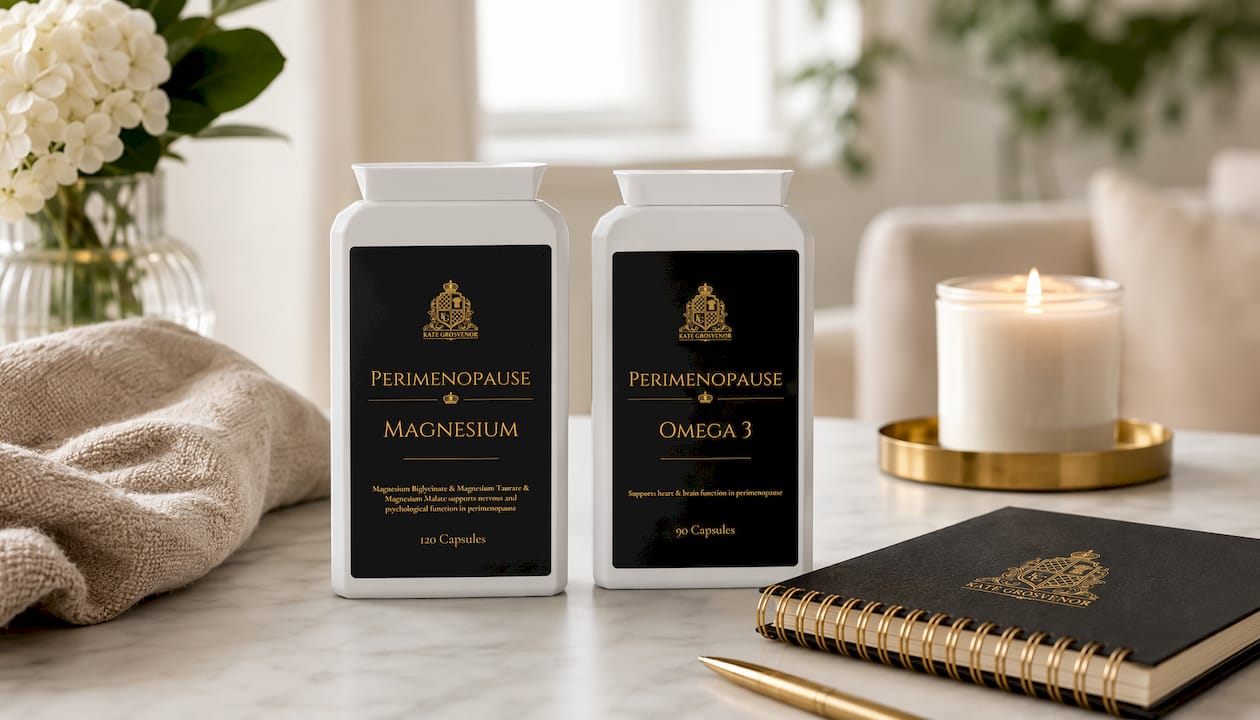
For women in their Renewal Years, the Omega 3 for perimenopause supplement provides targeted anti-inflammatory support for joint health, while the Magnesium Complex eases muscle tension and supports the restorative sleep your body needs to heal. Alongside these, the UncompliKated Perimenopause Workbook offers structured, science-literate guidance to help you track symptoms, understand your hormonal patterns, and build a daily routine that genuinely supports recovery. Every product is formulated with midlife women in mind, and every resource is designed to make this season feel less overwhelming and more within your reach. Browse the full collection at Kate Grosvenor Lifestyle and find the support that fits where you are right now.


Leave a comment
This site is protected by hCaptcha and the hCaptcha Privacy Policy and Terms of Service apply.