
Collagen in coffee: what midlife women need to know
Collagen peptides dissolve into your morning coffee without losing their effectiveness. A randomised, cross-over study in healthy volunteers confirmed that the bioavailability of collagen peptides is similar whether dissolved in water or coffee, with the area under the curve for key bioactive peptides showing equivalence between both drinks. Coffee temperatures of typical brewing heat sit well below the threshold at which collagen proteins begin to degrade, so your morning brew poses no risk to the supplement at all.
Key findings from the research:
- Collagen peptides are absorbed into the bloodstream as effectively in coffee as in water
- Coffee brewing temperatures do not denature or damage collagen peptides
- Bioactive peptides such as Pro-Hyp, Hyp-Gly, and Gly-Pro-Hyp showed similar pharmacokinetic profiles in both beverages
- Approximately 40% of collagen is absorbed in peptide-bound form, regardless of the liquid used
Your morning ritual just got a little more grounded.
Table of Contents
- Why collagen matters so much for women in perimenopause and menopause
- How to add collagen to your morning coffee ritual
- What collagen cannot do on its own
- Lifestyle habits that protect and support your collagen
- How much collagen should you take each day?
- Key takeaways
- Your next step with Kate Grosvenor Lifestyle
Why collagen matters so much for women in perimenopause and menopause
Collagen production declines naturally with age, and the hormonal shifts of perimenopause accelerate that process. Knowing which types support which tissues helps you choose wisely.
- Skin elasticity and hydration. Types I and III collagen are particularly beneficial for skin health in women aged 40–60, supporting elasticity, hydration, and a reduction in fine lines.
- Joint comfort and mobility. Type II collagen is found in cartilage and has been shown in studies to improve joint comfort and reduce stiffness, which is especially relevant during menopause.
- Bone density. Research among postmenopausal women showed improvements in spinal bone mineral density after one year of consuming 5g of Type I collagen peptides daily.
- Hair strength. Collagen peptides may reduce hair breakage and support thickness, though evidence is still building and more research is needed.
- Muscle support. Collagen contributes to overall protein intake, which, combined with resistance training, helps preserve muscle mass during midlife hormonal changes.
Choosing a supplement that combines Types I, II, and III gives you the broadest support across skin, joints, and bones. Our guide to top collagen options for midlife women walks you through what to look for.
How to add collagen to your morning coffee ritual
The good news is that this is genuinely simple. Collagen peptides dissolve best in warm liquids, and a well-formulated powder will blend into your coffee without clumping or changing the flavour noticeably.
- Brew your coffee as usual, then let it settle for a moment.
- Add 5–10g of collagen peptides (roughly one scoop) and stir gently until fully dissolved.
- For a creamier texture, use a small milk frother or handheld whisk.
- If you prefer matcha, the same approach applies: sift your matcha collagen powder, whisk with a small splash of warm water first, then top up with your liquid of choice.
- Collagen sachets and collagen pouches are ideal for travel or busy mornings when measuring feels like one step too many.
Pairing your collagen coffee with a quiet five minutes before the day begins turns a supplement into a ritual. That consistency is where the real benefit lives.
Pro Tip: If you enjoy matcha and collagen together, use unflavoured collagen peptides so the grassy, earthy notes of the matcha come through cleanly. Flavoured powders can clash and make the drink feel artificial.

What collagen cannot do on its own
Collagen is a valuable addition to your diet, but it is not a complete protein. It lacks tryptophan and does not provide the full amino acid profile your body needs for mood regulation, energy, and muscle maintenance. Think of it as one thread in a larger weave, not the whole cloth.
- Complement collagen with complete protein sources such as eggs, fish, legumes, or dairy throughout the day.
- Combine collagen supplementation with fibre and healthy fats to support stable blood sugar and sustained energy during perimenopause.
- A scoop of collagen in your coffee is not a substitute for breakfast. A balanced morning meal still matters.
- Collagen supports protein intake goals, but whey and casein are generally more effective for muscle growth specifically.
Keeping this in perspective means you get the genuine benefits without expecting more than the supplement can offer.
Lifestyle habits that protect and support your collagen
Supplementation works best when the rest of your daily rhythms support it. Several habits either protect your existing collagen or help your body produce more.
- Vitamin C and zinc are essential cofactors for collagen synthesis. Foods like citrus, kiwi, pumpkin seeds, and shellfish support these pathways naturally.
- Sun protection is one of the most direct ways to slow collagen breakdown in skin. A daily SPF, even on overcast days, makes a quiet but consistent difference.
- Sleep quality matters deeply. Collagen repair and skin regeneration happen largely overnight, so protecting your sleep is protecting your skin. Our 7 things that drain your collagen guide covers this in detail.
- Caffeine in moderation does not interfere with collagen effectiveness. Being mindful of overall intake is sensible during perimenopause, particularly if sleep or anxiety is already disrupted.
- Gentle movement such as walking, yoga, or resistance training supports joint health and circulation, both of which complement collagen’s structural work.
How much collagen should you take each day?
The generally recommended dose for midlife women is 5–10 grams per day, taken consistently over weeks and months rather than in large, occasional amounts. Consistency matters far more than quantity. One scoop in your morning coffee, every day, is more effective than a double dose three times a week.
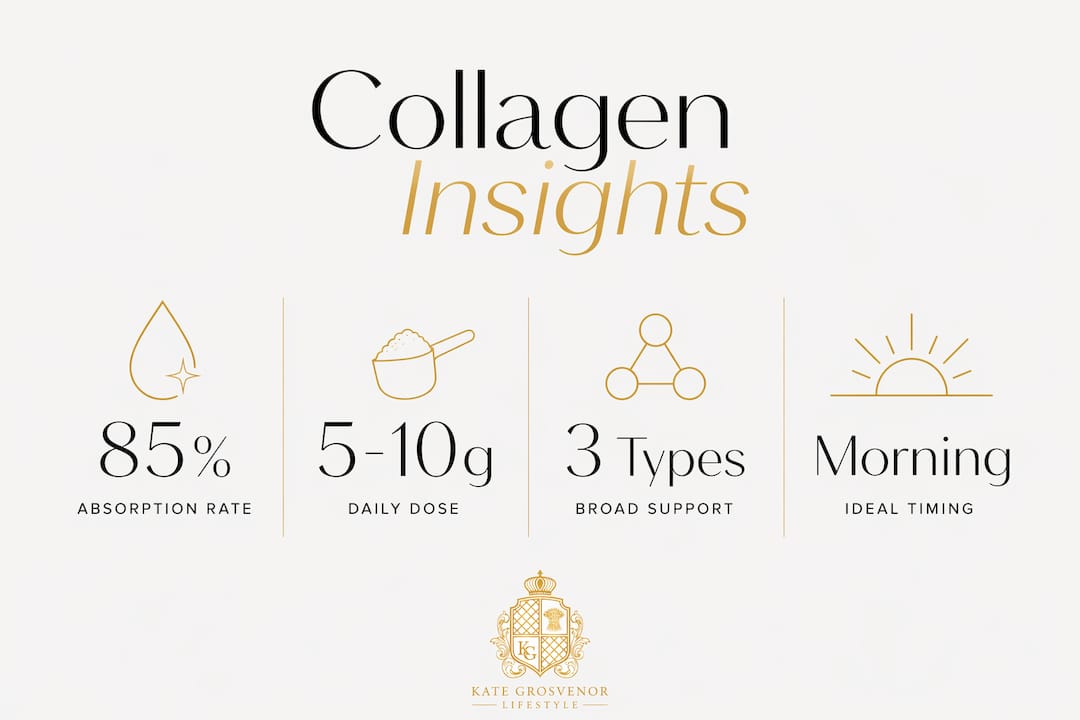
Timing is flexible. Morning suits most women because it anchors the habit to an existing ritual. If you find evenings easier, that works too. What matters is that you take it.
Key takeaways
Adding collagen to coffee is both safe and effective, with bioavailability equivalent to water, making your morning cup a genuinely useful vehicle for midlife supplementation.
| Point | Details |
|---|---|
| Coffee does not reduce absorption | Collagen peptide bioavailability is similar in coffee and water, confirmed by a randomised study. |
| Dosage for midlife women | 5–10 grams per day, taken consistently, supports skin, joint, and bone health. |
| Collagen is not a complete protein | Pair it with complete protein sources, fibre, and healthy fats for balanced nutrition. |
| Lifestyle amplifies results | Vitamin C, zinc, sun protection, and good sleep all support collagen synthesis and protection. |
| Kate Grosvenor Lifestyle | Offers collagen supplements and perimenopause guides designed specifically for women aged 40–60. |
Your next step with Kate Grosvenor Lifestyle

Kate Grosvenor Lifestyle exists for exactly this moment in your life. The supplements, guides, and rituals here are designed for women in their 40s and 50s who want clear, science-grounded support without the noise. Whether you are starting with collagen for the first time or looking to build a more intentional morning routine, The UncompliKated Perimenopause Workbook gives you a practical, calm framework for doing exactly that. You might also find comfort in the daily self-love journal insert, a gentle anchor for the mornings when you need a still point before the day begins. Visit Kate Grosvenor Lifestyle to find what feels right for where you are now.



Leave a comment
This site is protected by hCaptcha and the hCaptcha Privacy Policy and Terms of Service apply.