
Collagen and vitamin D for perimenopause: your guide
Yes, you can take collagen and vitamin D together. Not only is it safe, but the two nutrients genuinely complement each other, particularly for women navigating perimenopause and menopause. Collagen supplies the organic scaffold that gives bones their flexibility and skin its resilience; vitamin D supports calcium absorption and the mineralisation that hardens that scaffold. The NHS and the Scientific Advisory Committee on Nutrition (SACN) both recognise vitamin D as a priority nutrient for UK adults, and the clinical evidence for pairing it with collagen peptides is growing steadily. The practical starting point: take vitamin D3 with a fat-containing meal each day, take hydrolysed collagen peptides consistently, and consider a formula that combines vitamin D3 with K2 if bone health is a priority. Kate Grosvenor Lifestyle formulates specifically around these principles for women aged 40–60.
Table of Contents
- How do collagen and vitamin D work together in midlife?
- What does the clinical evidence actually show?
- How to choose collagen and vitamin D supplements in the UK
- Practical dosing, timing and safety for UK women
- Everyday habits that strengthen what supplements can do
- Kate Grosvenor Lifestyle: formulated for this exact stage
- Key takeaways
- A note on evidence-led choices in midlife
- Where this guidance comes from
How do collagen and vitamin D work together in midlife?
Bone is not simply a mineral block. It is a living matrix: roughly one-third organic protein (mostly collagen) and two-thirds mineral. Collagen provides the tough, flexible scaffold; vitamin D ensures enough calcium is absorbed to mineralise it. When oestrogen declines during perimenopause, bone turnover accelerates and both the scaffold and its mineral content come under pressure simultaneously. Addressing only one side of that equation leaves the other exposed.
Here is how each nutrient contributes:
- Collagen (scaffold role): Supplies glycine, proline, and hydroxyproline, the amino acids that build and repair bone matrix, skin dermis, cartilage, and connective tissue. Hydrolysed collagen peptides are absorbed orally and appear in circulation within roughly an hour of dosing, where they may act as signalling molecules that stimulate osteoblasts.
- Vitamin D3 (mineralisation role): Regulates calcium absorption in the gut and supports calcium deposition into bone. D3 raises serum 25(OH)D more effectively than D2, which is why D3 is the preferred supplemental form.
- Skin and joints: Vitamin D supports skin cell repair and healthy inflammatory responses; collagen maintains the dermal matrix and cushions cartilage. Both are relevant to the skin changes and joint discomfort many women notice from their mid-forties onward.
- Muscle function: Vitamin D supports muscle contraction and balance; collagen peptides, particularly when paired with resistance exercise, contribute to muscle performance and may reduce fall risk.
Pro Tip: Take vitamin D3 with a meal that contains healthy fat — eggs, avocado, or a handful of nuts — to improve absorption. Pairing your collagen with a vitamin C-rich food or drink supports your body’s own collagen synthesis, since vitamin C is a required co-factor for the enzymes that cross-link collagen fibres.

What does the clinical evidence actually show?
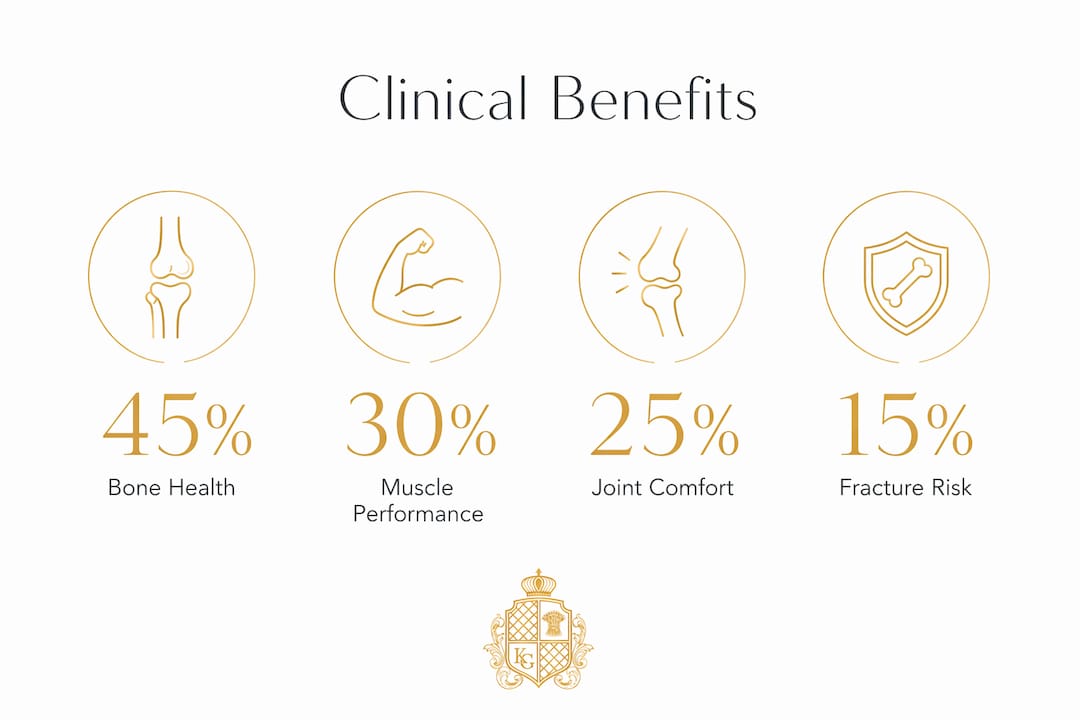
The evidence base is meaningful, though still maturing. Randomised controlled trials and a recent meta-analysis point consistently in the same direction: adding collagen peptides to calcium and vitamin D produces greater gains in bone mineral density and more favourable changes in bone turnover markers than calcium and vitamin D alone.
One well-designed trial in postmenopausal women with osteopenia used 5 g collagen peptides alongside 500 mg calcium and 400 IU vitamin D3 daily. After 12 months, the collagen group showed significant increases in trabecular bone mineral content and volumetric density compared with the control group. A shorter three-month trial found that the bone formation marker P1NP decreased by 13.1% in the collagen plus calcium plus vitamin D group, suggesting a shift toward more balanced bone remodelling.
A recent meta-analysis pooling data from multiple RCTs reported moderate standardized mean differences for bone mineral density gains when collagen peptides were combined with vitamin D and calcium in middle-aged and postmenopausal women, with clinically important improvements at the spine and femoral neck.
The pooled meta-analysis findings also noted benefits for muscle performance, particularly when supplementation was paired with resistance exercise.
A few honest caveats: trials vary in collagen type, dose, and duration; long-term fracture data remain limited; and NHS/SACN baseline recommendations for vitamin D are set for population health, not therapeutic bone treatment. Higher doses used in some trials should only be pursued under clinical supervision.
How to choose collagen and vitamin D supplements in the UK
Prefer hydrolysed collagen peptides and vitamin D3; if bone health is a priority, look for a formula that also includes vitamin K2. Beyond those fundamentals, label reading matters.
- Collagen form: Hydrolysed peptides (sometimes labelled “collagen peptides”) are smaller chains, more readily absorbed than whole collagen protein. For a deeper look at how different collagen formats compare, the Kate Grosvenor Lifestyle blog covers the options clearly.
- Collagen source: Marine collagen is typically from fish skin; bovine from cattle hide. Neither is vegan. Check allergen labelling if you have a fish allergy.
- Vitamin D form and dose: D3 (cholecalciferol) is the preferred form. Labels may show IU or micrograms (µg): 400 IU equals 10 µg, 1,000 IU equals 25 µg.
- Co-factors: Vitamin K2 directs calcium into bone rather than soft tissue. Vitamin C supports collagen cross-linking. Magnesium participates in vitamin D activation. A formula that includes these alongside D3 is more complete.
- Third-party testing: Look for products with a certificate of analysis (COA) from an independent laboratory, clear batch/lot information, and UK or EU ingredient labelling.
Pro Tip: When checking a vitamin D label, divide the IU figure by 40 to get micrograms quickly. So 800 IU = 20 µg. SACN’s baseline recommendation for UK adults is 10 µg (400 IU) daily, particularly from October through March.
Practical dosing, timing and safety for UK women
Follow NHS and SACN baseline guidance as your starting point, and use the collagen peptide doses studied in clinical trials unless a clinician advises otherwise.
| Nutrient | Typical daily dose | Tolerable upper intake | Notes |
|---|---|---|---|
| Vitamin D3 | 10–25 µg (400–1,000 IU) | — | Higher therapeutic doses need GP supervision |
| Collagen peptides | 5 g/day | No established upper limit | Dose used in key RCTs; consistent daily intake matters |
| Vitamin K2 | — | No established upper limit | Relevant if taking anticoagulants — check with GP |
| Calcium (dietary) | — | — | Prefer dietary sources; supplement only if intake is low |
Timing: Take vitamin D3 with a meal containing fat. Collagen timing is flexible — morning in a warm drink or smoothie works well for consistency. Some women find adding it to coffee or a morning ritual the easiest way to stay regular.
If you are taking anticoagulant medication such as warfarin, speak to your GP before adding vitamin K2, as it can affect how the medication works. Similarly, if you are on prescription bone-density treatments or HRT, check with your doctor before starting higher-dose vitamin D supplementation.
Signs of vitamin D excess (rare but worth knowing) include nausea, fatigue, and confusion. If you have been supplementing at higher doses for several months, a simple blood test for serum 25(OH)D from your GP will confirm your status. This is especially relevant in the UK, where low sunlight exposure from October to March means many women are deficient without realising it.
Everyday habits that strengthen what supplements can do
Supplements work best as part of a broader daily rhythm, not as a substitute for it. Diet, movement, and sleep are the foundation; collagen and vitamin D build on top.
- Resistance and weight-bearing exercise: Two sessions a week of strength training are associated with greater muscle performance benefits from collagen peptide supplementation. Walking, yoga, and Pilates also count toward bone-loading activity.
- Dietary protein: Aim for protein at every meal to supply the amino acids collagen synthesis depends on. Roughly 1.2 g per kilogram of body weight daily is a reasonable target for active women in midlife.
- Vitamin C-rich foods: Citrus fruit, berries, peppers, and leafy greens all support endogenous collagen production. A small glass of orange juice alongside your collagen shake is a simple habit.
- Calcium from food: Dairy, fortified plant milks, tinned sardines with bones, and leafy greens are reliable sources. Supplement only the gap, not the whole requirement.
- Sensible sun exposure: Ten to twenty minutes of midday sun on bare arms and legs several times a week during summer months supports vitamin D synthesis. Sunscreen applied afterwards protects skin without negating the benefit.
- Avoid smoking and limit alcohol: Both accelerate collagen breakdown and impair bone density. For a fuller picture of what drains collagen, the Kate Grosvenor Lifestyle blog covers the key factors.
- Sleep: Seven to nine hours supports tissue repair, cortisol regulation, and the overnight processes through which bone remodelling occurs.
For arthritis-prone joints or anyone building back after injury, pairing supplementation with arthritis-friendly resistance training can make the difference between supplements that sit on a shelf and ones that genuinely shift how you feel.
Kate Grosvenor Lifestyle: formulated for this exact stage
Women in perimenopause and menopause need supplements that reflect the science, not just the trend. Kate Grosvenor Lifestyle’s Vitamin D3 & K2 Perimenopause Vitamins pair D3 with K2 in a formula designed specifically for women aged 40–60, addressing both calcium absorption and its safe direction into bone rather than soft tissue. The brand’s Perimenopause Premium Collagen Peptides deliver hydrolysed peptides at a clinically relevant dose, with clear UK labelling and transparent sourcing.
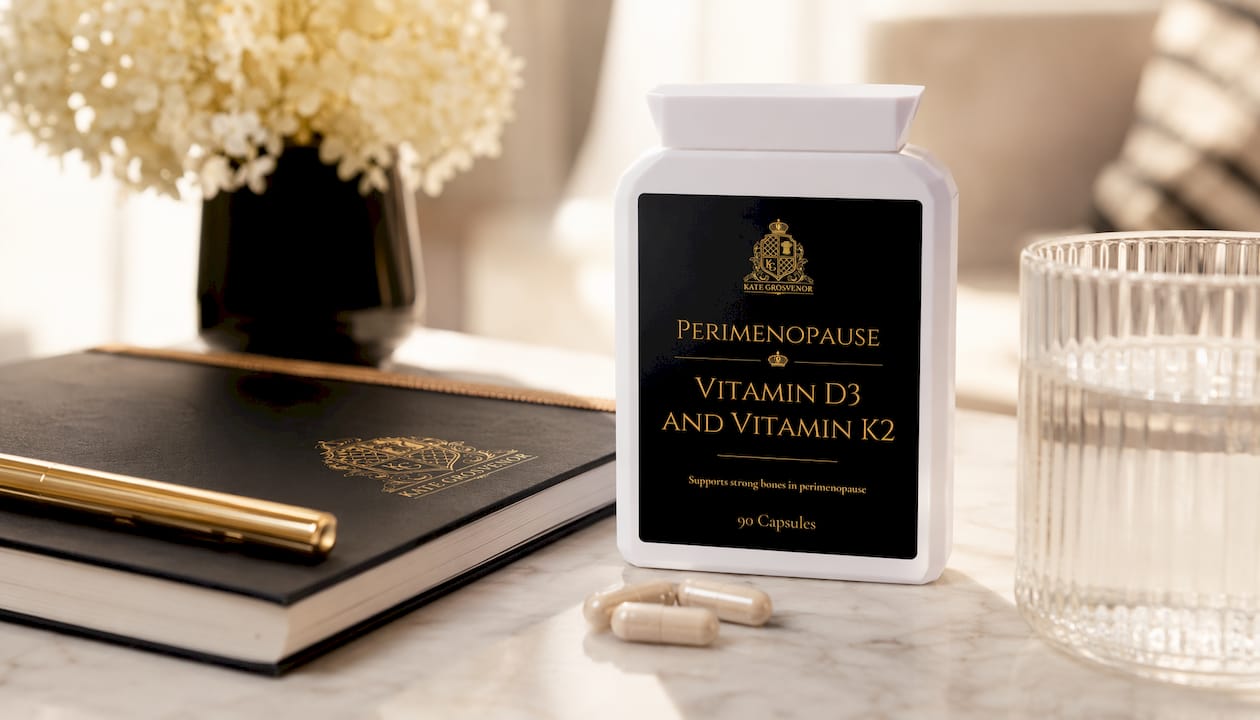
Both products are available with a subscription option, so your daily ritual stays uninterrupted. Visit the Vitamin D3 & K2 Perimenopause Vitamins product page to review the full formulation details and find the option that fits your routine.
Key takeaways
Taking collagen and vitamin D3 together is safe, well-supported by clinical evidence, and particularly relevant for women aged 40–60 whose oestrogen decline accelerates both bone turnover and collagen loss.
| Point | Details |
|---|---|
| Safe to combine | Collagen and vitamin D3 work through different pathways and do not interfere with each other’s absorption. |
| Clinical evidence | Trials using collagen peptides with calcium and vitamin D3 showed significant bone mineral density gains and a notable reduction in the bone formation marker P1NP over several months. |
| UK dosing baseline | SACN recommends 10 µg (400 IU) vitamin D3 daily for UK adults; check higher doses with your GP. |
| Timing and co-factors | Take D3 with a fat-containing meal; add K2 for bone health, vitamin C for collagen synthesis, and magnesium for D3 activation. |
| Kate Grosvenor Lifestyle | The Vitamin D3 & K2 Perimenopause Vitamins and Perimenopause Premium Collagen Peptides are formulated for women aged 40–60 with clinically relevant doses and clear UK labelling. |
A note on evidence-led choices in midlife
The conversation around supplements for women in their forties and fifties has a tendency to swing between two extremes: either everything is a miracle, or nothing works unless you eat a perfect diet. Neither is honest, and neither is particularly helpful when you are standing in a pharmacy trying to make a sensible decision.
What the research actually shows is more nuanced and, I think, more encouraging. Collagen peptides and vitamin D3 are not magic. But when they are dosed correctly, paired with K2, and taken alongside a diet that includes adequate protein and vitamin C, the clinical evidence for bone mineral density and bone turnover markers is genuinely meaningful. The key word is alongside. Supplements are most effective when they sit within a daily rhythm that includes movement, real food, and rest.
What I find most overlooked in the general guidance is the perimenopause-specific context. Bone loss accelerates in the years around the menopause transition, often before women are aware it is happening. Starting a collagen and vitamin D3 routine in perimenopause, rather than waiting for a diagnosis, is one of the quieter, more grounded choices a woman can make for her future self. It does not require a dramatic overhaul. A consistent morning ritual, a twice-weekly resistance session, and a supplement formulated for this stage of life are enough to begin.
Where this guidance comes from
- Effect of calcium and vitamin D supplementation with and without collagen peptides on bone turnover in postmenopausal women with osteopenia (PMC, 2020) — Three-month RCT showing a 13.1% reduction in P1NP with collagen added to calcium and vitamin D.
- Effect of calcium and vitamin D supplementation with and without collagen peptides on volumetric and areal bone mineral density, bone geometry and bone turnover in postmenopausal women with osteopenia (ScienceDirect, 2021) — Twelve-month RCT demonstrating significant trabecular BMD gains with 5 g collagen peptides plus standard supplementation.
- Efficacy of collagen peptide supplementation on bone and muscle health: a meta-analysis (Frontiers in Nutrition, 2025) — Pooled analysis reporting SMDs of 0.40–0.56 for BMD gains and muscle performance benefits when collagen is combined with vitamin D and calcium.
- Efficacy of collagen peptide supplementation on bone and muscle health: a meta-analysis (PMC, 2025) — Confirms greater muscle performance benefits when collagen supplementation is paired with resistance exercise.
- NHS/SACN vitamin D guidance — UK population-level recommendations for daily vitamin D intake and safe upper limits.
The NHS recommends that adults in the UK consider taking a daily supplement containing 10 µg (400 IU) of vitamin D, particularly during autumn and winter, when sunlight is insufficient for skin synthesis.



Leave a comment
This site is protected by hCaptcha and the hCaptcha Privacy Policy and Terms of Service apply.