
What to take for menopause anxiety: practical options
If anxiety has crept into your days and nights since perimenopause began, you are not imagining it, and you are not alone. The most effective first step depends on what is driving the anxiety: if hot flushes, night sweats and broken sleep are at the root, a GP-reviewed trial of HRT is often the most direct route. If anxiety feels more primary, CBT and/or an SSRI or SNRI may be the better starting point. Most women benefit from a layered plan that combines more than one approach.
Here is where to begin:
- Hot flushes or night sweats alongside anxiety? Ask your GP about HRT. NICE guidance NG23 recommends it as a primary option for vasomotor symptoms, and settling those symptoms often calms anxiety too.
- Anxiety feels primary, with few vasomotor symptoms? Self-refer to NHS Talking Therapies for CBT, or ask your GP about an SSRI or SNRI.
- Anxiety is moderate to severe and affecting daily life? A combined plan (HRT where appropriate, CBT, and possibly medication) tends to produce the most sustained relief, as supported by FIGO recommendations for individualised, layered care.
- Supplements and lifestyle measures support all of the above but are not replacements for clinical assessment.
This guide walks through each option in depth, from prescription treatments to daily rituals, so you can go to your GP informed and grounded.
Table of Contents
- How does HRT help with menopause anxiety?
- What non-hormonal prescriptions can help with menopause anxiety?
- Does CBT actually work for menopause anxiety?
- Lifestyle changes that calm menopause anxiety quickly
- Which supplements and herbal remedies are worth considering?
- When should you see your GP about menopause anxiety?
- What to do when anxiety spikes right now
- Why a combined approach usually works best
- Key takeaways
- What actually helps: a perspective on layered care
- Daily rituals from Kate Grosvenor Lifestyle to support your calm
How does HRT help with menopause anxiety?
Oestrogen does not simply regulate temperature. It influences serotonin, GABA and noradrenaline pathways, all of which shape mood and anxiety. When oestrogen levels fall during perimenopause, that neurochemical stability shifts, and the result can feel like a constant low hum of dread, sudden panic, or a brittleness that was not there before.

HRT works primarily by stabilising oestrogen levels, which reduces vasomotor symptoms. Fewer hot flushes means fewer sleep disruptions; better sleep means a calmer nervous system. NICE NG23 recommends HRT as the primary treatment for vasomotor symptoms and acknowledges its role in relieving associated mood and anxiety changes.
Common formulations used in the UK:
- Transdermal oestradiol (patches, gels, sprays): preferred in many cases because it bypasses first-pass liver metabolism, which matters for women with certain metabolic or thrombotic risk factors.
- Oral micronised progesterone (Utrogestan): for women with a uterus, this is added to protect the womb lining. Crucially, it metabolises to allopregnanolone, a neuroactive steroid with calming properties. Many synthetic progestogens do not follow this pathway, which is one reason clinicians often prefer it for women whose anxiety is prominent.
- Combined MHT: oestrogen plus progestogen in various delivery forms, tailored to individual history and preference.
Safety and contraindications to discuss with your GP:
- Personal or family history of hormone-receptor-positive breast cancer
- History of blood clots or thrombophilia (transdermal routes carry lower thrombotic risk than oral oestrogen)
- Unexplained vaginal bleeding
- Active liver disease
Most women see vasomotor improvement within a few weeks of starting HRT. The downstream effect on anxiety and sleep typically follows over the same period, though some women need a longer period before mood fully stabilises. Your GP should review you at three months and then annually.
What non-hormonal prescriptions can help with menopause anxiety?
When HRT is unsuitable, insufficient, or when anxiety is the primary concern rather than a secondary effect of vasomotor symptoms, prescription medicines offer a well-evidenced alternative. SSRIs and SNRIs are the first-line pharmacological options for moderate-to-severe anxiety during the menopausal transition, recommended across clinical consensus guidance.
First-line agents your GP may discuss:
- SSRIs (such as sertraline, escitalopram, citalopram): reduce anxiety and low mood; typically take four to six weeks to show full benefit.
- SNRIs (such as venlafaxine, duloxetine): also reduce vasomotor symptoms in some women, making them useful when both anxiety and hot flushes are present but HRT is not an option.
- Pregabalin or buspirone: occasionally used for anxiety where SSRIs are not tolerated, though these are less commonly first-line.
Drug interactions and safety notes:
- St John’s wort interacts with SSRIs and SNRIs, raising the risk of serotonin syndrome. Never combine them without medical supervision.
- St John’s wort also reduces the effectiveness of several other medicines, including some contraceptives and anticoagulants.
- Starting any antidepressant may bring a brief increase in anxiety in the first one to two weeks; this usually settles.
- Common side effects include nausea, disrupted sleep and reduced libido, most of which ease after the first month.
- If anxiety remains severe after six to eight weeks at an adequate dose, ask your GP about referral to a psychiatrist or specialist menopause clinic.
Pro Tip: Ask your GP specifically whether venlafaxine might suit you if you have both anxiety and hot flushes but cannot take HRT. It addresses both pathways and is supported by clinical evidence for vasomotor symptoms.
Does CBT actually work for menopause anxiety?
Yes, and the evidence is solid. NICE NG23 recommends CBT as an evidence-based option for anxiety, low mood, sleep problems and even hot flushes associated with menopause. CBT helps you identify the thought patterns and behaviours that keep anxiety running, and gradually replace them with responses that feel steadier.
Menopause-specific CBT addresses the particular thought loops that perimenopause can trigger: catastrophising physical symptoms, hypervigilance about health, and the identity shifts that midlife can bring. CBT for insomnia (CBTi) is a separate but related approach that targets the sleep disruption that feeds anxiety.
How to access CBT in the UK:
- NHS Talking Therapies (formerly IAPT): self-refer online at NHS Talking Therapies without needing a GP referral first. Waiting times vary by area.
- GP referral: your GP can refer you directly, which may open access to more specialist services.
- Private CBT: look for therapists accredited by the British Association for Behavioural and Cognitive Psychotherapies (BABCP). Expect to pay £60–£120 per session privately, though this is not publicly listed as a fixed rate.
- Guided self-help: NHS Talking Therapies also offers lower-intensity options including workbooks and guided online programmes, which suit milder anxiety well.
A standard course of CBT runs multiple sessions, with many people noticing meaningful change midway. For insomnia specifically, CBTi typically involves several sessions and tends to produce more durable results than sleep medication.
Pro Tip: Keep a simple symptom log for two weeks before starting therapy. Note when anxiety peaks, what preceded it, and whether a hot flush or heart palpitation came first. This helps your therapist distinguish panic attacks from vasomotor events, which require different techniques.
Lifestyle changes that calm menopause anxiety quickly
These are not soft suggestions. Lifestyle measures are foundational, and the evidence supports them. The Menopause Charity recommends stabilising blood sugar as a direct strategy for reducing cortisol spikes that worsen anxiety: balanced meals with protein and complex carbohydrates, limiting high-sugar and processed foods, and drinking roughly 1.5–2 litres of water daily.
Sleep hygiene matters more during perimenopause than at almost any other life stage, because sleep loss amplifies anxiety directly. A St George’s NHS guide on menopause recommends a consistent bedtime, a cool and dark bedroom, and moisture-wicking bedding to reduce night-sweat disruption. Avoiding screens for an hour before bed and keeping the bedroom for sleep only are small changes that compound quickly. For menopause sleep problems, a structured CBTi programme tends to outperform sleep aids over time.

Movement is one of the most reliable mood regulators available. Aerobic exercise (brisk walking, swimming, cycling) raises endorphins and reduces cortisol. Resistance training supports bone density and confidence. Gentle mind-body practices such as yoga and Pilates combine movement with breath regulation, which directly calms the nervous system. Aim for a regular amount of moderate physical activity each week, as recommended by NHS guidelines.
Stress regulation practices worth building into your day:
-
Paced breathing: inhale for four counts, exhale for six. Even five minutes lowers heart rate measurably.
-
Progressive muscle relaxation: tense and release each muscle group from feet to face; takes about ten minutes and is particularly useful before bed.
-
Structured mindfulness practices such as MBSR courses deliver more sustained anxiety reduction than sporadic app use, particularly for higher-severity symptoms.
Pro Tip: Run a two-week experiment: track your anxiety level (1–10) each evening alongside what you ate, how much you moved, and how you slept. Patterns emerge quickly, and you will arrive at any GP or therapy appointment with genuinely useful data.
Which supplements and herbal remedies are worth considering?
Supplements sit in a different category from prescription medicines. The evidence is more variable, the quality of products differs widely, and interactions with prescription drugs are a real concern. That said, several options have enough supporting data to be worth a conversation with your GP or pharmacist.
Evidence summary:
- Magnesium: the St George’s NHS guide notes magnesium glycinate before bed may support sleep, and magnesium plays a role in nervous system regulation. Evidence is modest but the safety profile is good at standard doses.
- Vitamin B complex: B vitamins support neurological function and energy metabolism. Evidence for anxiety specifically is mixed, but deficiency is common in midlife and worth addressing. A Vitamin B Complex for Perimenopause formulated for this life stage can be a practical starting point.
- Omega-3: systematic reviews and FIGO evidence summaries note variable but promising evidence for mood support. Anti-inflammatory effects may also benefit the broader hormonal picture.
- Ashwagandha: a randomised, double-blind, placebo-controlled study found ashwagandha root extract reduced climacteric symptoms in perimenopausal women. Evidence is promising but limited; quality of products varies considerably.
- Probiotics: emerging evidence links gut microbiome health to mood regulation, but clinical guidance for menopause-specific anxiety is not yet established.
Safety checklist before starting any supplement:
- St John’s wort interacts with SSRIs, SNRIs, anticoagulants and several other medicines. Do not take it alongside prescription antidepressants.
- Ashwagandha may interact with thyroid medications and immunosuppressants.
- Always tell your GP and pharmacist about every supplement you take, particularly if you are on prescription medicine.
- Look for products with batch testing, clear dosing information, and ideally a clinical review behind the formulation.
Kate Grosvenor Lifestyle’s Magnesium Complex for Perimenopause is formulated specifically for this life stage, as is PeriCalm, which is designed to support calm and symptom balance. The Perimenopause Cacao, Collagen & Calm blend offers a grounding daily ritual that combines collagen support with calming ingredients. These are adjuncts to clinical care, not replacements for it.
Pro Tip: When choosing a supplement, check whether the brand publishes batch-testing results and lists the exact form of each ingredient (magnesium glycinate rather than magnesium oxide, for example). The form matters as much as the dose.
When should you see your GP about menopause anxiety?
Sooner than you think. Many women wait months, sometimes years, managing anxiety alone before seeking help. A GP appointment is the right step when anxiety is affecting your sleep, your relationships, your work, or your sense of self.
What to bring to your appointment:
- A two-week symptom diary: note anxiety levels, hot flushes, sleep quality, and any triggers
- A full list of current medications and supplements
- Your menstrual history: cycle changes, last period, any irregular bleeding
- A note on how anxiety is affecting daily life (work, relationships, activities you have stopped)
- Any relevant personal or family psychiatric history
How your GP will approach the assessment:
Blood tests are not routinely used to diagnose menopause in women over 45, per NHS guidance, though they may be used in specific circumstances. Your GP will likely use a mental health screening tool, ask about vasomotor symptoms, and consider your full picture before recommending a path.
How treatment decisions are typically made:
- If anxiety co-occurs with significant vasomotor symptoms, a trial of HRT is often the first step.
- If anxiety appears primary with few physical symptoms, CBT and/or an SSRI or SNRI is usually recommended.
- Combined plans are common and often more effective than a single approach.
- Follow-up is typically at three months, with adjustments as needed.
If your GP is not familiar with menopause-specific care, you can ask for a referral to a specialist menopause clinic. The British Menopause Society website lists accredited clinics across the UK.
What to do when anxiety spikes right now
Acute anxiety during perimenopause can feel overwhelming, particularly when it arrives without warning. These techniques work in the moment and do not require any equipment.
Immediate tools:
- Paced breathing (4-6 pattern): inhale for four counts, exhale for six. Repeat for five minutes. This activates the parasympathetic nervous system and slows heart rate.
- Box breathing: inhale for four, hold for four, exhale for four, hold for four. Repeat four times.
- Progressive muscle relaxation: starting at your feet, tense each muscle group for five seconds, then release. Work upward to your face.
- 3-step grounding: name five things you can see, four you can touch, three you can hear. This interrupts the anxiety loop by anchoring you in the present moment.
Distinguishing panic from hot flushes: Both can cause racing heart, sweating and a sense of dread. A hot flush typically starts with heat in the chest or face and resolves within a few minutes. A panic attack tends to build with catastrophic thoughts and a fear of losing control. Knowing the difference helps you choose the right response: cooling strategies for a flush, breathing and grounding for a panic attack.
When to seek urgent help:
- Thoughts of suicide or self-harm: call 116 123 (Samaritans, free, 24 hours) or go to your nearest A&E.
- Severe chest pain or collapse: call 999.
- Anxiety so severe you cannot function: call NHS 111 or your GP’s out-of-hours service.
For stress management strategies that build longer-term resilience alongside these immediate tools, a structured approach tends to hold better than crisis-only coping.
Why a combined approach usually works best
The evidence for layered care is now clear. FIGO recommendations support an individualised approach that combines lifestyle change, psychosocial therapies and hormone therapy for mental health during menopause. Single-modality treatment often leaves gaps.
A 12-week randomised controlled trial with 195 participants found that combined oestradiol and escitalopram produced more pronounced reductions in anxiety and depression scores than either treatment alone. This mirrors what clinicians observe in practice: treating the physical drivers (vasomotor symptoms, sleep disruption) while simultaneously addressing the psychological patterns that anxiety creates tends to produce faster and more durable results.
A pragmatic treatment flow:
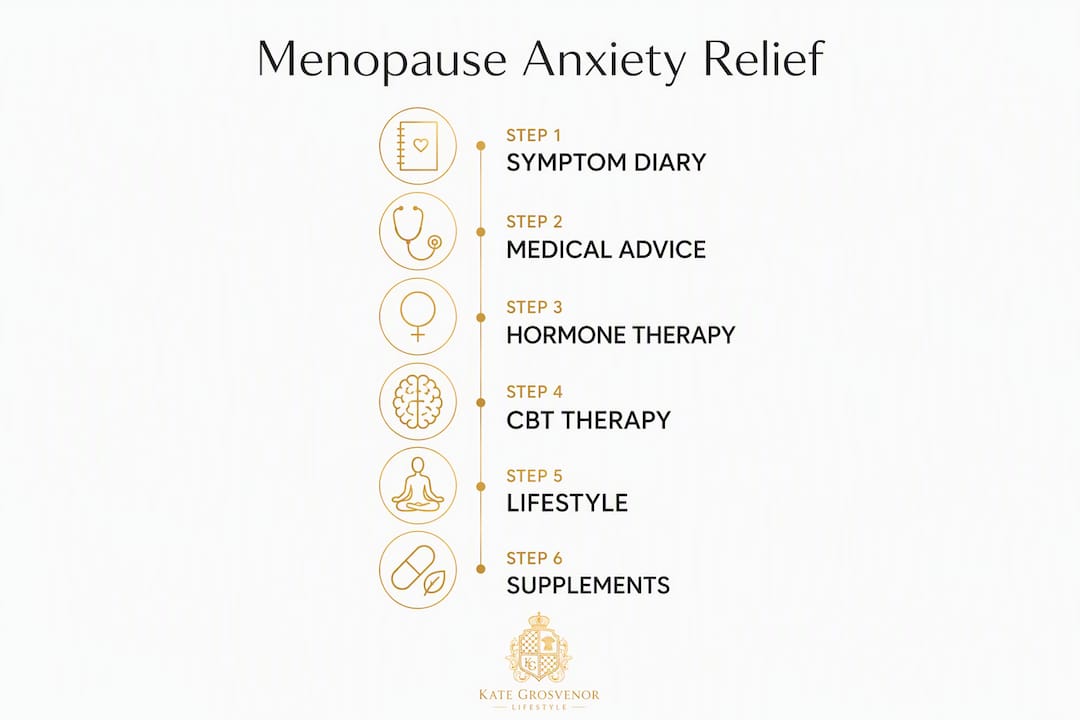
- Step 1 — Assessment: track symptoms for two weeks; book a GP appointment with your diary.
- Step 2 — Treat physical drivers: if vasomotor symptoms are significant, discuss HRT. Expect vasomotor improvement within weeks; mood and sleep improvement typically follows.
- Step 3 — Add CBT: whether or not HRT is used, CBT addresses the anxiety habits that persist even after physical symptoms ease.
- Step 4 — Consider SSRI/SNRI: if anxiety remains moderate to severe after steps 2 and 3, or if HRT is not suitable, an SSRI or SNRI becomes the pharmacological anchor.
- Step 5 — Sustain with lifestyle and supplements: sleep hygiene, movement, diet stability, and well-chosen supplements maintain the gains made by clinical treatment.
The Psychopharmacology Institute notes that clinicians often use a simple flowchart: assess whether anxiety aligns with vasomotor symptoms, and if so, trial HRT with follow-up before moving to primary anxiety pathways. This is not a rigid sequence; many women move through several steps simultaneously under clinical guidance.
Key takeaways
A layered plan combining HRT (where vasomotor symptoms are present), CBT, and lifestyle measures is the most evidence-supported approach to managing anxiety during perimenopause and menopause.
| Point | Details |
|---|---|
| Start with a symptom diary | Track anxiety, hot flushes, sleep and triggers for two weeks before your GP appointment. |
| HRT for vasomotor-driven anxiety | NICE NG23 recommends HRT as a primary option when hot flushes and night sweats are driving anxiety. |
| CBT is evidence-based | NICE recommends CBT for menopause-related anxiety, sleep problems and hot flushes; self-refer via NHS Talking Therapies. |
| Combined therapy works best | A 12-week RCT with 195 participants found combined hormone and antidepressant therapy reduced anxiety more than either treatment alone. |
| Kate Grosvenor Lifestyle supplements | Magnesium Complex, PeriCalm and Perimenopause Cacao, Collagen & Calm are adjuncts to clinical care; always check interactions with your GP. |
What actually helps: a perspective on layered care
There is a tendency, in articles like this one, to present each treatment option as a neat, separate choice. In practice, the women who find the most relief tend to be those who resist the urge to find the one thing and instead build a small, consistent stack of support. HRT settles the physical noise. CBT quiets the mental commentary that anxiety leaves behind even after the hot flushes ease. Lifestyle measures, particularly sleep and movement, hold the whole structure steady.
What gets underestimated is the timeline. Most women expect to feel better within days of starting any treatment. The reality is that HRT may take two to three months to fully stabilise mood; CBT typically shows meaningful change by the fourth or fifth session; SSRIs need four to six weeks at a therapeutic dose. Patience is not passive. It is the active decision to stay with a plan long enough to let it work.
The other thing worth saying plainly: anxiety during perimenopause is not a character flaw or a sign that you are not coping well enough. It is a physiological response to a significant hormonal shift, and it deserves the same clinical attention as any other symptom. Seeking help is not a last resort. It is the most grounded thing you can do.
Daily rituals from Kate Grosvenor Lifestyle to support your calm
Alongside clinical care, a thoughtful daily ritual can make a real difference to how steady you feel from one day to the next. Kate Grosvenor Lifestyle formulates supplements specifically for women in perimenopause and menopause, designed as gentle adjuncts to the clinical options covered in this guide.
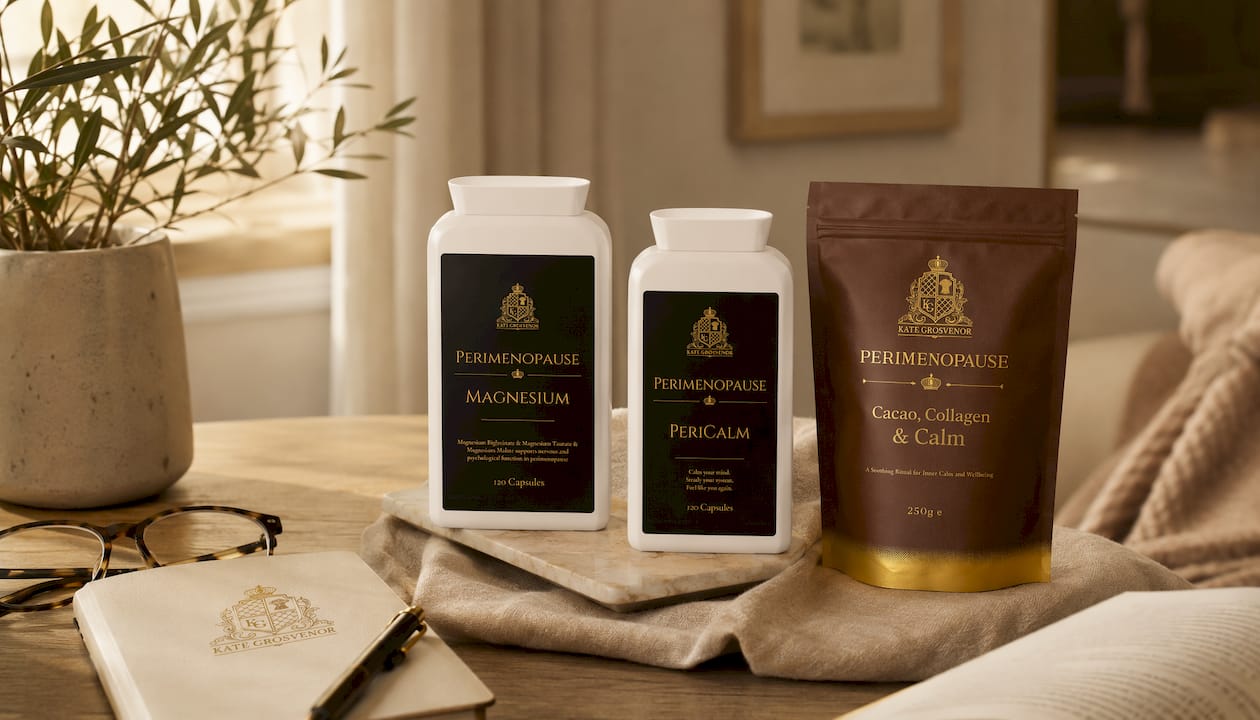
The Magnesium Complex for Perimenopause supports nervous system regulation and sleep quality, using forms of magnesium chosen for absorption. PeriCalm is designed to support calm and hormonal balance as a daily supplement. The Perimenopause Cacao, Collagen & Calm blend brings a grounding evening ritual that combines collagen with calming botanicals, a small act of self-care that anchors the end of the day.
These products are sold by Kate Grosvenor Lifestyle and are intended as adjuncts, not replacements, for medical care. If you are taking any prescription medicine, including SSRIs, SNRIs or anticoagulants, please check with your GP or pharmacist before adding any supplement. Browse the full perimenopause supplement range to find what fits your current needs.
Authoritative UK sources and further reading
The following resources are for further reading and do not replace clinical advice. Always confirm your own situation with a qualified healthcare professional.
- NICE NG23: Menopause diagnosis and management: the primary UK clinical guideline for menopause treatment, including HRT, CBT and pharmacological options.
- NHS: Menopause and perimenopause treatment: accessible overview of treatment options available through the NHS.
- NHS: Things you can do to help menopause symptoms: practical lifestyle guidance from the NHS.
- NHS Talking Therapies: find and self-refer to your local NHS CBT service.
- The Menopause Charity: UK-based charity with evidence-based resources, symptom guides and GP support tools.
- British Menopause Society (BMS): lists accredited menopause specialists and clinics across the UK; search via their website.
- FIGO recommendations for mental health at menopausal age: international evidence summary supporting combined, individualised care.
- Helplines: Samaritans 116 123 (free, 24 hours); NHS 111 for urgent non-emergency care; 999 for emergencies.
This article provides general information and is not a substitute for professional medical advice. Please discuss your individual circumstances with your GP or a qualified menopause specialist.


Leave a comment
This site is protected by hCaptcha and the hCaptcha Privacy Policy and Terms of Service apply.