Anxiety in perimenopause: what's really happening
Yes, perimenopause can cause or worsen anxiety, and for many women it does so without warning. Around 4 in 10 women experience mood symptoms during the perimenopausal transition, including anxiety that can feel entirely new or far more intense than anything they have known before. The good news is that this is a recognised, treatable condition, and you have real options.
If this sounds familiar, here is where to begin:
- Start a brief daily symptom diary: note the time, severity, any hot flushes, your sleep quality, and where you are in your cycle.
- Contact your GP if anxiety is affecting your ability to work, sleep, or care for yourself. Bring your diary.
- Seek urgent help if you are having thoughts of self-harm or feel unable to function at all.
The sections below explain why this happens, how to recognise it, and what UK-based treatment and self-care options are available to you.
Key takeaways
Anxiety in perimenopause is a recognised, hormonally driven condition that responds well to the right combination of clinical care and daily lifestyle support.
| Point | Details |
|---|---|
| Hormones drive the anxiety | Oestrogen and progesterone fluctuations affect serotonin and GABA, raising anxiety risk for around 4 in 10 women. |
| HRT and CBT are first-line UK options | NICE and the Royal College of Psychiatrists recommend both over antidepressants alone for hormone-related mood disturbance. |
| Combination therapy often works best | A 2026 NMA of 131 RCTs found combination approaches generally outperformed single treatments across mood, anxiety, and sleep outcomes. |
| Lifestyle changes are genuinely therapeutic | Sleep hygiene, exercise, magnesium, and social support all reduce anxiety and should accompany medical care. |
| Kate Grosvenor Lifestyle supports your daily rituals | PeriCalm, Magnesium Complex, and Cacao, Collagen & Calm are designed as adjunctive daily rituals alongside clinical care. |
Table of Contents
- Why does perimenopause trigger anxiety?
- How anxiety in perimenopause usually feels
- How GPs assess perimenopausal anxiety and when to seek help
- Can HRT ease anxiety? What the evidence and NICE guidance say
- Non-hormonal treatments: CBT, SSRIs/SNRIs and other options
- Lifestyle measures that genuinely help with perimenopausal anxiety
- What UK guidance and 2026 research tell us
- Your two-week action plan and GP question list
- Supportive supplements from Kate Grosvenor Lifestyle
- Sources
Why does perimenopause trigger anxiety?
Anxiety in perimenopause has a clear biological root. As oestrogen and progesterone begin to fluctuate, they pull on the very neurotransmitters that regulate mood and calm: serotonin, GABA, and a neurosteroid called allopregnanolone. When progesterone drops, allopregnanolone levels fall with it, reducing the brain’s natural calming signal. Oestrogen fluctuations affect serotonin availability. The result is a nervous system that is, quite literally, less buffered against stress.
The pathway looks something like this: hormonal fluctuation reduces neurotransmitter stability, which lowers the threshold for anxiety, which is then amplified by sleep loss and vasomotor symptoms. Hot flushes and night sweats are not just uncomfortable; they activate the body’s stress response, raise cortisol, and fragment sleep. Poor sleep then feeds anxiety the following day, creating a cycle that can feel impossible to break. Perceived stress is a critical mediator of this cycle, with social support and psychological distress both shaping how severe symptoms become.
Psychosocial factors add another layer. Perimenopause often coincides with significant life pressures: ageing parents, teenagers leaving home, career transitions, relationship changes. These stressors do not cause hormonal anxiety, but they do amplify it. Women with lower social support or higher baseline stress tend to experience more severe psychological symptoms during this phase, which is why stress management and connection are therapeutic pillars, not optional extras.
Key biological drivers at a glance:
- Falling progesterone reduces allopregnanolone, lowering the brain’s GABA-mediated calm.
- Oestrogen fluctuations disrupt serotonin pathways, affecting mood regulation.
- Night sweats and hot flushes activate the stress response and raise cortisol.
- Sleep disruption compounds anxiety the following day.
- Perimenopause is linked to a higher incidence of mood disorders compared with earlier reproductive periods.
How anxiety in perimenopause usually feels
The symptomatic profile of hormonally driven anxiety tends to be distinctive. You may notice sudden surges of physical dread, a racing heart, or a sense of impending something without any clear cause. Free-floating worry, the kind that latches onto whatever is nearest, is common. So are panic-like episodes that arrive at night, often waking you from sleep alongside a hot flush.
Emotional signs include irritability, a low threshold for overwhelm, tearfulness, and a sense of dread that arrives without warning. Physical signs include palpitations, trembling, chest tightness, breathlessness, and sweating that is not always linked to a hot flush. Cognitive signs include catastrophic thinking, difficulty concentrating, brain fog, and a sense of unreality.
Perimenopausal anxiety vs a primary anxiety disorder
The distinction matters because it shapes treatment. Perimenopausal anxiety tends to be new or markedly worsened after the age of 40, often tracks with the menstrual cycle or vasomotor symptoms, and may have no prior history of anxiety. A primary anxiety disorder such as generalised anxiety disorder (GAD) or panic disorder typically predates perimenopause, is not cycle-linked, and does not fluctuate with hot flushes or sleep disruption in the same way. That said, perimenopause can worsen a pre-existing anxiety disorder, so the two are not mutually exclusive. NHS guidance notes that anxiety is a recognised perimenopausal symptom and that severe or persistent symptoms always warrant clinical assessment.
How GPs assess perimenopausal anxiety and when to seek help
Your GP will look for the pattern behind your symptoms. Timing matters: did anxiety begin or worsen in your early-to-mid forties? Does it track with your cycle, with poor sleep, or with hot flushes? Do you have a history of premenstrual dysphoric disorder (PMDD) or postnatal depression? These hormone-sensitive histories are clinically significant and worth mentioning.
What to bring to your appointment:
- A symptom diary covering at least two weeks: date, time, anxiety severity (1–10), sleep hours, hot flushes, cycle day if applicable.
- A list of current medications and supplements.
- A brief note on how anxiety is affecting your daily life: work, relationships, sleep, and any activities you are avoiding.
- Any previous mental health history, including responses to hormonal contraception.
Red flags that need urgent attention:
- Thoughts of self-harm or suicide.
- Inability to care for yourself or dependants.
- Rapid physical deterioration: significant weight loss, chest pain, or fainting.
- Severe, unremitting panic that does not settle between episodes.
If any of these apply, contact your GP the same day, call NHS 111, or go to your nearest A&E.
A simple symptom diary template: For each entry, note the date and time, your anxiety level out of 10, any hot flushes or night sweats, hours slept the previous night, your cycle day or whether you are post-period, and any obvious triggers. Two weeks of this gives your GP a meaningful picture.
Can HRT ease anxiety? What the evidence and NICE guidance say
HRT can meaningfully reduce perimenopausal anxiety, particularly when anxiety co-occurs with vasomotor symptoms or sleep disruption. The mechanism is direct: stabilising oestrogen reduces hot flushes and night sweats, which in turn reduces the cortisol spikes and sleep fragmentation that feed anxiety. Trials and systematic reviews show HRT reduces vasomotor symptoms and may reduce related anxiety, with effect sizes generally stronger when vasomotor symptoms are the primary driver.
The Royal College of Psychiatrists’ position statement recommends that clinicians consider HRT alongside CBT for perimenopause-associated mood disturbance, rather than defaulting to antidepressants alone. NICE guidance aligns with this position. Clinical inertia means many women are still prescribed antidepressants without an explicit conversation about HRT; if your anxiety coincides with hot flushes or sleep disruption, it is worth raising HRT directly with your GP.
Practical considerations:
- HRT is available in several formulations: patches, gels, sprays, and tablets. Transdermal routes are generally preferred for lower clotting risk.
- It is not suitable for everyone; your GP will review your personal and family history.
- Benefits for anxiety and sleep may be felt within weeks, though full effect can take two to three months.
- Regular monitoring is recommended, typically at three months and then annually.
Questions worth asking your clinician:
- Is my anxiety pattern consistent with a hormonal cause?
- Which HRT formulation would suit my history?
- What safety checks do I need before starting?
- How will we know if it is working, and what is the plan if it does not?
One 2026 randomised controlled trial found that combining oestrogen-based therapy with an SSRI produced greater reductions in anxiety and depression scores over 12 weeks than either treatment alone, which supports the case for a multi-modal approach where clinically appropriate, according to recent randomized trial evidence.
Non-hormonal treatments: CBT, SSRIs/SNRIs and other options
When HRT is not suitable or preferred, effective alternatives exist. CBT and pharmacotherapy are both evidence-based; the right choice depends on what is driving your symptoms and how you have responded to treatments in the past.
SSRIs and SNRIs remain standard pharmacological treatments for anxiety in perimenopause, but their effect is often stronger when hormonal instability is also addressed. If anxiety is primarily driven by hot flushes and sleep loss, an SSRI alone may offer only partial relief.
Comparing the main non-hormonal options:
| Approach | Best suited to | Time to effect | NHS access | Common considerations |
|---|---|---|---|---|
| CBT | Worry, avoidance, catastrophic thinking | 6 weeks | GP referral or self-refer via NHS Talking Therapies | No physical side effects; requires active engagement |
| SSRIs/SNRIs | Persistent anxiety, panic, low mood | 4 weeks | GP prescription | Initial nausea, sleep changes; taper needed to stop |
| Combination (CBT + medication) | Moderate to severe or treatment-resistant symptoms | Variable | GP + NHS Talking Therapies | Trials and reviews support combination approaches |
Accessing talking therapies on the NHS: You can self-refer to NHS Talking Therapies (formerly IAPT) without a GP referral in most areas of England. Your GP can also refer you directly. Waiting times vary by region; if the wait is long, ask your GP about interim support or whether a short course of medication is appropriate while you wait.
Other options: Acupuncture has some research support for perimenopausal symptoms, though evidence for anxiety specifically is mixed. It may be worth discussing with your GP if you prefer to avoid medication. Short-term anxiolytics (such as beta-blockers for acute physical symptoms) are occasionally used but are not a long-term solution.
Safety notes:
- SSRIs should be started at a low dose and increased gradually.
- Never stop SSRIs abruptly; taper under GP guidance.
- Tell your GP about all supplements you are taking, as some interact with antidepressants.
- If symptoms worsen significantly in the first two weeks of medication, contact your GP promptly.
Lifestyle measures that genuinely help with perimenopausal anxiety
Lifestyle changes can meaningfully reduce anxiety and should accompany, not replace, medical care. The evidence for several approaches is solid enough to make them worth prioritising from day one.
High-impact daily actions:
- Sleep hygiene: Keep a consistent wake time, reduce screens an hour before bed, and keep the bedroom cool. Sleep-focused CBT (CBT-I) has downstream benefits for anxiety in women with perimenopausal sleep disruption. For a deeper look at what helps, the guide to menopause sleep remedies covers practical strategies worth trying.
- Exercise: Thirty minutes of moderate aerobic activity most days reduces cortisol and supports serotonin. Even a brisk walk counts.
- Diet: A Mediterranean-style pattern, rich in vegetables, oily fish, wholegrains, and legumes, supports mood and reduces inflammatory load. Reducing alcohol is particularly important; it disrupts sleep architecture and worsens anxiety the following day.
- Magnesium and B vitamins: Both have supporting evidence as adjuncts for mood and nervous system function. A Vitamin B Complex for Perimenopause can be a useful addition alongside dietary sources. Evidence summaries suggest magnesium and B vitamins may be helpful adjuncts for anxiety and sleep in midlife women.
- Social connection: Isolation amplifies perceived stress. Regular contact with people who understand what you are going through, whether friends, a partner, or a peer support group, is genuinely protective.
For an acute anxiety or panic episode, try this:
- Place one hand on your chest and one on your belly.
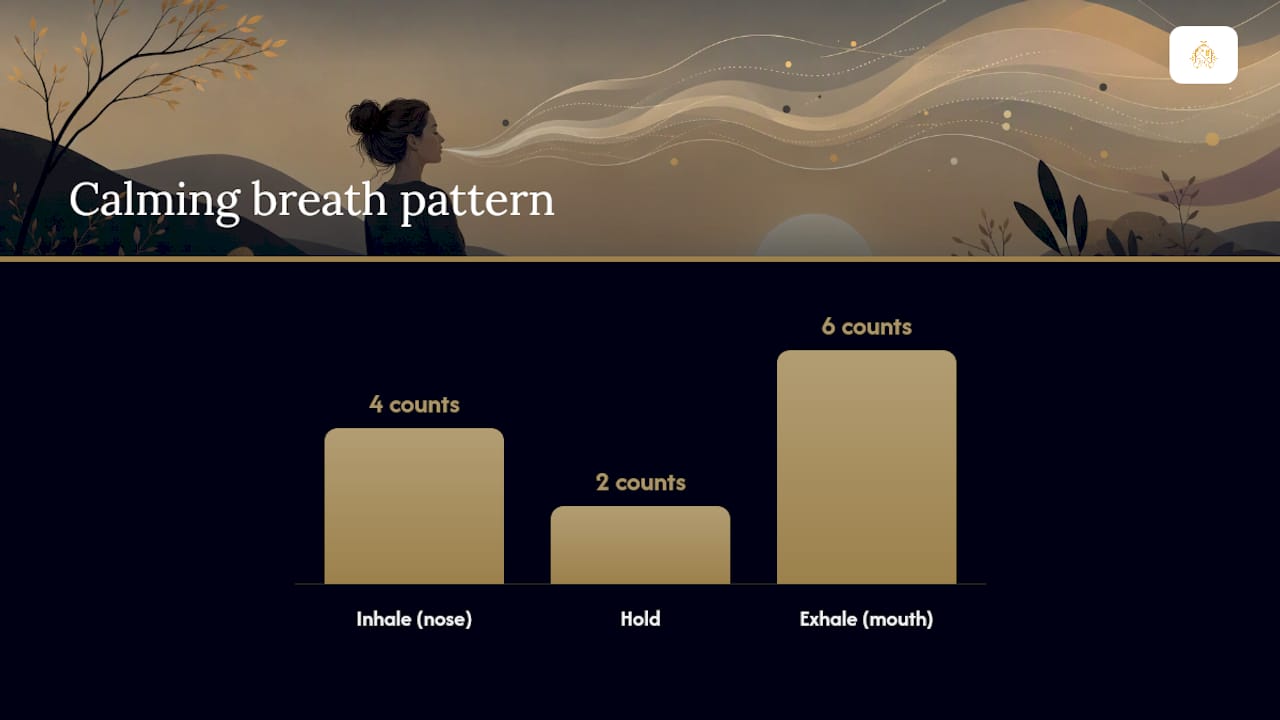
- Breathe in slowly through your nose for four counts, feeling your belly rise.
- Hold for two counts.
- Breathe out through your mouth for six counts.
- Repeat five times. Your breath is an anchor; it is always available.
For catastrophic thoughts, try a simple CBT-style reframe: name the thought (“I am going to lose control”), rate how likely it actually is out of 10, then ask what you would say to a friend who had that thought. Writing this down takes the thought out of your head and onto paper, where it tends to look smaller.
Pro Tip: If anxiety is worst at night, CBT-I (cognitive behavioural therapy for insomnia) is worth requesting specifically. Treating the sleep problem often reduces daytime anxiety significantly, sometimes more than treating the anxiety directly.
UK peer support: the Menopause Support network and Henpicked: Menopause in the Workplace both offer community and practical resources. If anxiety is affecting your work, you have the right to ask your employer for reasonable adjustments under the Equality Act 2010.
What UK guidance and 2026 research tell us
The clinical picture in the UK is clearer than it has ever been. The Royal College of Psychiatrists and NICE both recommend HRT and CBT as preferred options for perimenopause-associated mood disturbance, rather than antidepressants as a first resort. Yet the Royal College of Psychiatrists’ position statement also acknowledges that many clinicians still lack specific training to distinguish hormone-driven mood changes from primary anxiety disorders, which means women are sometimes treated for the wrong thing.
Recent 2026 research adds important nuance:
- A network meta-analysis of 131 RCTs involving 11,457 women found that combination therapies generally outperformed single-modality treatments across mood, anxiety, and sleep outcomes, though no single approach was uniformly superior for all women.
- Perceived stress emerged as a critical mediator of symptom severity, with social support and psychological distress both shaping how intensely women experience anxiety during this transition.
- Hormone-sensitive mood disorders are more common during perimenopause than at any earlier reproductive stage, reinforcing the case for hormonal context to be part of every assessment.
Clinical practice tip: When you see your GP, frame your symptoms in hormonal context from the outset. Say: “My anxiety began in my early forties, tracks with my sleep and hot flushes, and is new for me.” This framing helps your clinician consider HRT and CBT alongside or instead of antidepressants, which is what current UK guidance recommends.
Your two-week action plan and GP question list
You do not need to wait for a GP appointment to begin feeling more grounded. Here is a simple fortnight of first steps.
Two-week daily plan:
- Days 1–3: Begin your symptom diary. Note anxiety level, sleep hours, hot flushes, and cycle day each morning. Keep it brief; three minutes is enough.
- Days 4–7: Introduce one sleep hygiene change (consistent wake time or no screens after 9 PM) and one daily walk of at least 20 minutes.
- Days 8–10: Reduce or cut alcohol. Add a magnesium-rich food (pumpkin seeds, dark leafy greens, dark chocolate) or a magnesium supplement each evening.
- Days 11–13: Practise the breathing exercise above once daily, ideally at the same time each day to build the habit.
- Day 14: Review your diary. Book a GP appointment if you have not already, and bring the diary with you.
Questions to ask your GP:
- Could my anxiety be driven by hormonal changes rather than a primary anxiety disorder?
- Am I a suitable candidate for HRT, and which formulation would you recommend?
- Can you refer me to NHS Talking Therapies for CBT?
- If you are recommending an antidepressant, can we also discuss HRT?
- What is the follow-up plan, and when should I return if things are not improving?
Urgent UK contacts:
- Samaritans: 116 123 (free, 24 hours)
- NHS 111: 111 (urgent but non-emergency medical advice)
- Crisis text line: Text SHOUT to 85258
- A&E: For immediate risk to life
A note from Kate Grosvenor
What strikes me most, reading the research and hearing from women in this community, is how often anxiety in perimenopause is dismissed or misattributed. Women are told they are stressed, or anxious by nature, or simply need to slow down, when what is actually happening is a profound hormonal shift that deserves proper clinical attention. You are not imagining it. You are not falling apart. Your nervous system is responding to real biological change, and there is a great deal that can be done.
My strongest encouragement is this: bring your symptom diary to your GP, name the hormonal context clearly, and ask directly about HRT and CBT. Evidence-based care is your first priority. Alongside that, the lifestyle foundations, sleep, movement, nourishment, and connection, are not small things. They are the daily rhythms that hold you steady while the bigger clinical picture is being addressed.
Supportive supplements from Kate Grosvenor Lifestyle
Supplements are supportive tools, not a replacement for HRT, CBT, or prescribed medicines. If you are experiencing moderate to severe anxiety, please speak with your GP first.
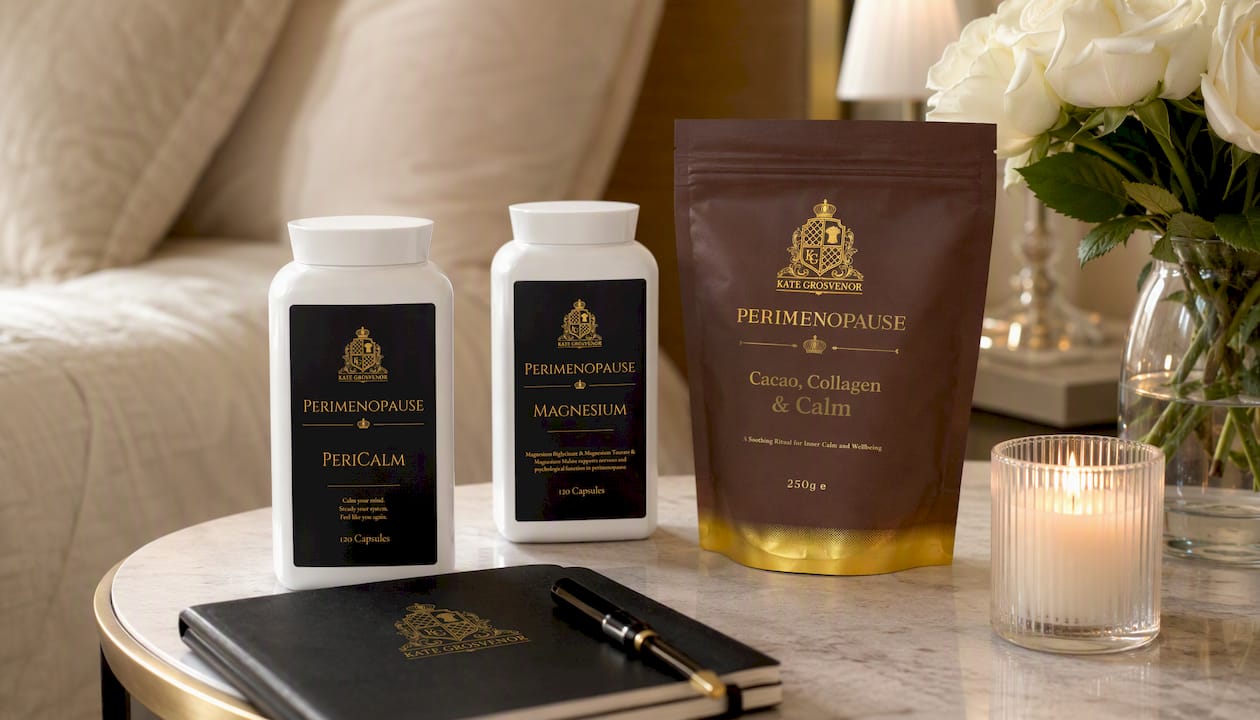
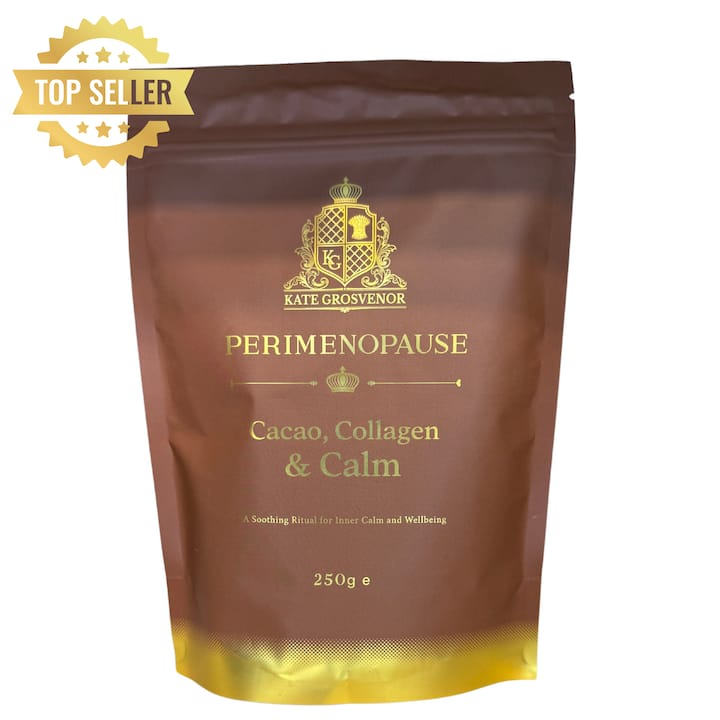
That said, thoughtfully chosen daily rituals can complement your clinical care beautifully. PeriCalm is formulated to support calm and nervous system balance during perimenopause, and works best as part of a consistent daily routine. The Magnesium Complex for Perimenopause supports sleep and relaxation, two of the most important levers for reducing anxiety. And for a grounding evening ritual, Perimenopause Cacao, Collagen & Calm offers a warm, nourishing moment of stillness at the end of the day.
You can also download the free Perimenopause Symptom Tracker from Kate Grosvenor Lifestyle to start logging your symptoms today, giving you and your GP a clearer picture of what is happening and when.
Sources
These resources are worth bookmarking and, where relevant, sharing with your GP or specialist.
- Perimenopause and Anxiety | Johns Hopkins Medicine
- Frontiers in Psychiatry (2026) — perceived stress and social support in perimenopausal women
- Symptoms of menopause and perimenopause | NHS
This article provides general information and is not a substitute for professional medical advice. Please consult your GP or a qualified clinician for guidance specific to your situation and health history.



Leave a comment
This site is protected by hCaptcha and the hCaptcha Privacy Policy and Terms of Service apply.