
Libido in perimenopause: what's changing and what helps
Libido in perimenopause often fluctuates and commonly dips because of shifting oestrogen and testosterone levels, disrupted sleep, and the sheer weight of midlife life-load — but practical steps recommended by the NHS can make a real difference. If you want somewhere to start right now, here are four grounded actions:
- Try a water-based lubricant for sex to reduce friction and discomfort immediately.
- Use a vaginal moisturiser every few days for ongoing daily comfort, not just during sex.
- Prioritise sleep and some moderate exercise most days — both support mood and desire.
- Book a GP appointment if symptoms are persistent, painful, or causing you distress; HRT and topical vaginal oestrogen are both supported by NHS Inform guidance as part of managing sexual wellbeing in midlife.
None of this means something is broken. It means your body is in transition, and there is a clear, well-mapped path forward.
Key takeaways
Libido in perimenopause most often responds to a combination of physical management (lubricants, vaginal oestrogen), lifestyle changes, and a GP conversation — not to any single fix.
| Point | Details |
|---|---|
| Hormones drive the shift | Fluctuating oestrogen and falling testosterone are the primary biological causes of reduced desire in perimenopause. |
| Physical barriers are treatable | Vaginal dryness and painful sex respond well to lubricants, moisturisers, and topical vaginal oestrogen prescribed by a GP. |
| Lifestyle changes matter | Improved sleep, regular exercise, and reduced alcohol measurably support mood, energy, and desire. |
| See your GP if distressed | Bring a symptom diary, medication list, and menstrual history; expect blood tests, a medication review, and possible referral. |
| Kate Grosvenor Lifestyle | The Maca Root Perimenopause Supplement supports energy and daily ritual as an adjunct to medical care, not a replacement for it. |
Table of Contents
- How do hormones affect libido during perimenopause?
- What happens to your body: vaginal dryness, pain and pelvic health
- Medications and health conditions that can lower your libido
- How stress, life-load and relationship dynamics affect desire
- Practical strategies to rebuild desire and pleasure right now
- What medical treatments are available through the NHS?
- When should you see your GP about low libido?
- Supplements and complementary approaches: what the evidence says
- A note on midlife, desire and what I have seen change
- Supporting your wellbeing with a daily ritual
- Sources
How do hormones affect libido during perimenopause?
The principal pattern is this: oestrogen fluctuates wildly before it falls, and bioavailable testosterone declines gradually across midlife. Both shifts matter for sexual desire, and observational research from the Seattle Midlife Women’s Health Study found that declines in sexual desire during the late menopausal transition were associated with these changing hormone levels.
Here is what each hormone does:
- Oestrogen supports genital tissue health, natural lubrication, and mood stability. When it fluctuates, you may notice dryness, reduced sensitivity, and the kind of low mood or anxiety that quietly dampens desire before you even notice the connection.
- Testosterone is the hormone most directly linked to sexual drive and energy. Women produce it in the ovaries and adrenal glands, and levels tend to fall gradually from the mid-thirties onward. By perimenopause, the drop can be enough to reduce spontaneous desire noticeably.
- Progesterone rises and falls unpredictably in perimenopause. High progesterone can bring fatigue and low mood; erratic cycles mean your body rarely settles into a predictable rhythm.
- DHEA is a precursor hormone that the body converts into both oestrogen and testosterone. Levels decline with age and can contribute to reduced genital sensitivity and lower overall vitality.
It is worth noting that hormonal contraception adds another layer. Some progestogen-dominant pills suppress testosterone and can reduce desire independently of perimenopause itself. If you are on hormonal contraception and noticing a shift, that conversation with your GP is worth having.
Poor sleep from night sweats compounds everything. When you are waking at 2 AM drenched and exhausted, desire is rarely the first thing on your mind the next morning. Sleep disruption affects cortisol, mood, and energy — all of which feed directly into how connected you feel to your own body.
What happens to your body: vaginal dryness, pain and pelvic health
Genitourinary syndrome of menopause (GSM) is the clinical term for a cluster of changes that affect the vagina, vulva, and urinary tract when oestrogen falls. Tissues become thinner, drier, and less elastic. Natural lubrication during arousal slows. Sex can become uncomfortable or painful — a condition called dyspareunia — and that pain, if left unaddressed, creates a cycle where anticipating discomfort reduces desire further. Mayo Clinic’s overview of GSM confirms that physical barriers like these are among the most treatable contributors to reduced desire.
The three main non-prescription options work differently, and choosing the right one depends on what you need:
| Option | How often | Prescription needed | Primary benefit |
|---|---|---|---|
| Water-based lubricant | During sex | No | Reduces friction immediately |
| Vaginal moisturiser | Every 2–3 days | No | Restores tissue hydration over time |
| Topical vaginal oestrogen | As directed (often nightly then twice weekly) | Yes (GP) | Rebuilds tissue health at the source |
A few practical do’s and don’ts:
- Do use a pH-balanced, fragrance-free lubricant — many high-street options contain glycerin or parabens that can irritate already-sensitive tissue.
- Do apply a vaginal moisturiser consistently, not just when you notice discomfort. Think of it like a face moisturiser: daily use prevents the problem rather than chasing it.
- Don’t use petroleum jelly or oil-based products with latex condoms — they degrade the latex.
- Don’t ignore persistent pain. A pelvic floor physiotherapist can assess whether muscle tension, scar tissue, or pelvic floor dysfunction is contributing to dyspareunia.
Pro Tip: Before your GP appointment, keep a two-week symptom diary noting when dryness or discomfort occurs, how it affects intimacy, and which products you have already tried. This gives your GP a clear picture and saves time in the consultation.
Medications and health conditions that can lower your libido
Sometimes the cause of reduced desire sits not in perimenopause itself but in a medication you are already taking or a condition that has crept up quietly alongside it.
Common medications associated with reduced libido include:
- SSRIs and SNRIs (antidepressants such as sertraline, fluoxetine, venlafaxine) — sexual dysfunction is one of the most frequently reported side effects, affecting both desire and the ability to reach orgasm.
- Some antihypertensives, particularly beta-blockers and certain diuretics, can reduce arousal and energy.
- Progestogen-dominant contraceptives, including some combined pills and the hormonal coil, can suppress testosterone and blunt desire.
Medical conditions worth discussing with your GP include thyroid disease (both under- and overactive thyroid affect mood and energy), type 2 diabetes, chronic pain conditions, and depression. These are not rare — thyroid dysfunction alone is more common in women over 40 than is often appreciated.
Never stop or change a prescribed medication without speaking to your GP first. If you suspect a medicine is affecting your libido, ask about alternatives, dose adjustments, or adjunctive strategies. For antidepressants specifically, switching to bupropion (where clinically appropriate) or adding a short course of psychosexual therapy can sometimes address sexual side effects without compromising mental health treatment. Your GP can refer you to a medication review or to psychosexual therapy through NHS pathways.
How stress, life-load and relationship dynamics affect desire
Desire does not exist in a vacuum. By the time many women reach their mid-forties, they are managing careers, ageing parents, teenagers, and the quiet grief of a body that feels unfamiliar. That accumulated weight — what clinicians sometimes call life-load — competes directly with sexual desire, and no amount of lubricant addresses it on its own.

There is also a shift in how desire tends to work at midlife. Spontaneous desire (the kind that arrives unbidden) becomes less common. Responsive desire — desire that emerges in response to touch, closeness, or the right conditions — becomes the norm for many women. This is not a dysfunction. Experts note that responsive desire is common in midlife and that sexual satisfaction remains entirely possible when physical barriers and life stresses are addressed. The Menopause Society confirms that sleep disruption, partner factors, and general health all interact with hormonal changes and benefit from combined approaches.
Body image is another quiet driver. Changes in weight distribution, skin texture, and the way clothes fit can affect how desirable you feel — and confidence is its own kind of foreplay. A gentle read on how perimenopause affects your body confidence can help normalise what you are experiencing.
A few ways to open the conversation with a partner:
- “I want us to stay close, and I need to tell you what’s been feeling different for me physically.”
- “Can we try being intimate without any pressure for it to go anywhere? I think that might help me relax.”
- “I’d like to see someone together — a counsellor who understands this stage of life.”
If you would like professional support, psychosexual therapy is available through NHS IAPT services (ask your GP for a referral) and through private practitioners registered with the College of Sexual and Relationship Therapists (COSRT).
Pro Tip: Sensate focus exercises — structured, non-goal-oriented touch sessions — are one of the most evidence-supported tools for rebuilding desire and reducing performance anxiety. Your GP or a psychosexual therapist can guide you through the approach.
Practical strategies to rebuild desire and pleasure right now
The good news is that behavioural changes — improved sleep, exercise, alcohol reduction, and stress management — often produce measurable benefits for libido by improving energy, mood, and body image, even when hormonal changes are present. Here is a grounded fortnight plan to begin with:
- Days 1–3: Stabilise sleep. Set a consistent sleep and wake time. If night sweats are disrupting you, try cooling bedding, a fan, and lighter nightwear. Reducing alcohol in the evening often helps more than people expect.
- Days 4–7: Move your body. Moderate aerobic or strength exercise several times a week. Exercise raises mood, reduces cortisol, and improves body image — all of which feed desire.
- Days 5–14: Start a daily moisturiser routine. Apply a vaginal moisturiser every few days. Consistency matters more than the specific product.
- Days 7–14: Schedule a short intimacy window. This sounds unromantic, but removing the pressure of spontaneity often makes connection easier. Twenty minutes of closeness with no expectation of sex can rebuild the sense of safety that desire needs.
- Throughout: Experiment with lubricants and, if you are curious, a vibrator. Vibration can increase genital sensitivity and arousal, particularly when natural lubrication is reduced. Many women find this a genuinely useful tool, not a last resort.
A few safety notes: silicone-based lubricants last longer than water-based ones but are not compatible with silicone toys. Always choose products free from fragrances, flavourings, and harsh preservatives.
Yoga and mind-body practices have shown modest improvements in sexual function in small studies, making them a low-risk addition to the plan above.
Pro Tip: Track one or two markers each week — quality of sleep, frequency of discomfort, and one moment of connection — rather than trying to measure desire directly. Gradual improvement over four to six weeks is a realistic and encouraging target.
What medical treatments are available through the NHS?
NHS and NICE guidance supports HRT for systemic menopausal symptoms and topical vaginal oestrogen for local vaginal symptoms; specialist input is usually needed for testosterone therapy. The options, briefly:
- Topical vaginal oestrogen (creams, pessaries, or a ring) — available on prescription from your GP, safe for most women including many with a history of breast cancer when discussed with an oncologist, and highly effective for GSM. This is often the first medical step for vaginal dryness and painful sex.
- Systemic HRT (patches, gels, tablets, or sprays) — addresses the broader hormonal picture, improving sleep, mood, and energy, which in turn supports desire. NICE guidance recommends it for menopausal symptoms where there are no contraindications.
- Testosterone therapy — not currently licensed for women in the UK, but it can be prescribed off-label by a specialist (menopause clinic or sexual health clinic). Short-term trials have shown improvements in desire in some studies, but long-term safety data remain limited and specialist monitoring is advised.
- Prasterone (Intrarosa) and ospemifene — prescription options for GSM and dyspareunia where other treatments have not worked or are not suitable; these require specialist assessment.
A note on testosterone: your GP may not be able to prescribe it directly. A referral to a menopause clinic or sexual health clinic is the usual route, and the British Menopause Society provides guidance on appropriate monitoring. NICE and NHS guidance consistently emphasises specialist oversight for hormonal treatments beyond standard HRT.
When should you see your GP about low libido?
See your GP if low libido is causing you distress, has persisted for more than a few weeks, or is accompanied by pain, unusual bleeding, or other symptoms that worry you. You do not need to wait until things feel unbearable.
What to bring to your appointment:
- A brief symptom diary (two weeks is enough) noting frequency, severity, and any triggers.
- A list of all current medications, including contraception and supplements.
- Your menstrual history — cycle length, regularity, and any recent changes.
- A note on whether your partner’s health or circumstances are a factor.
- A sense of how much distress the change is causing you — this helps your GP prioritise.
What your GP will typically do:
- Take a full history, including mental health, relationship factors, and medication review.
- Arrange basic blood tests: thyroid function, full blood count, and HbA1c if there is a diabetes risk.
- Discuss topical treatments or systemic HRT where appropriate.
- Refer to a menopause clinic, sexual health clinic, or psychosexual therapist if needed.
Timeline: most women notice some improvement within four to six weeks of starting topical vaginal oestrogen. Systemic HRT effects on mood and sleep often emerge within a few months. Follow up with your GP at twelve weeks to review progress and adjust the plan.
Supplements and complementary approaches: what the evidence says
Most supplements for libido have limited, mixed evidence. Some women report benefit, but the evidence is not strong enough to replace medical therapies — and NHS guidance on alternatives to HRT advises discussing any herbal remedy or supplement with a clinician before starting, given the potential for interactions.
A brief summary of commonly used options:
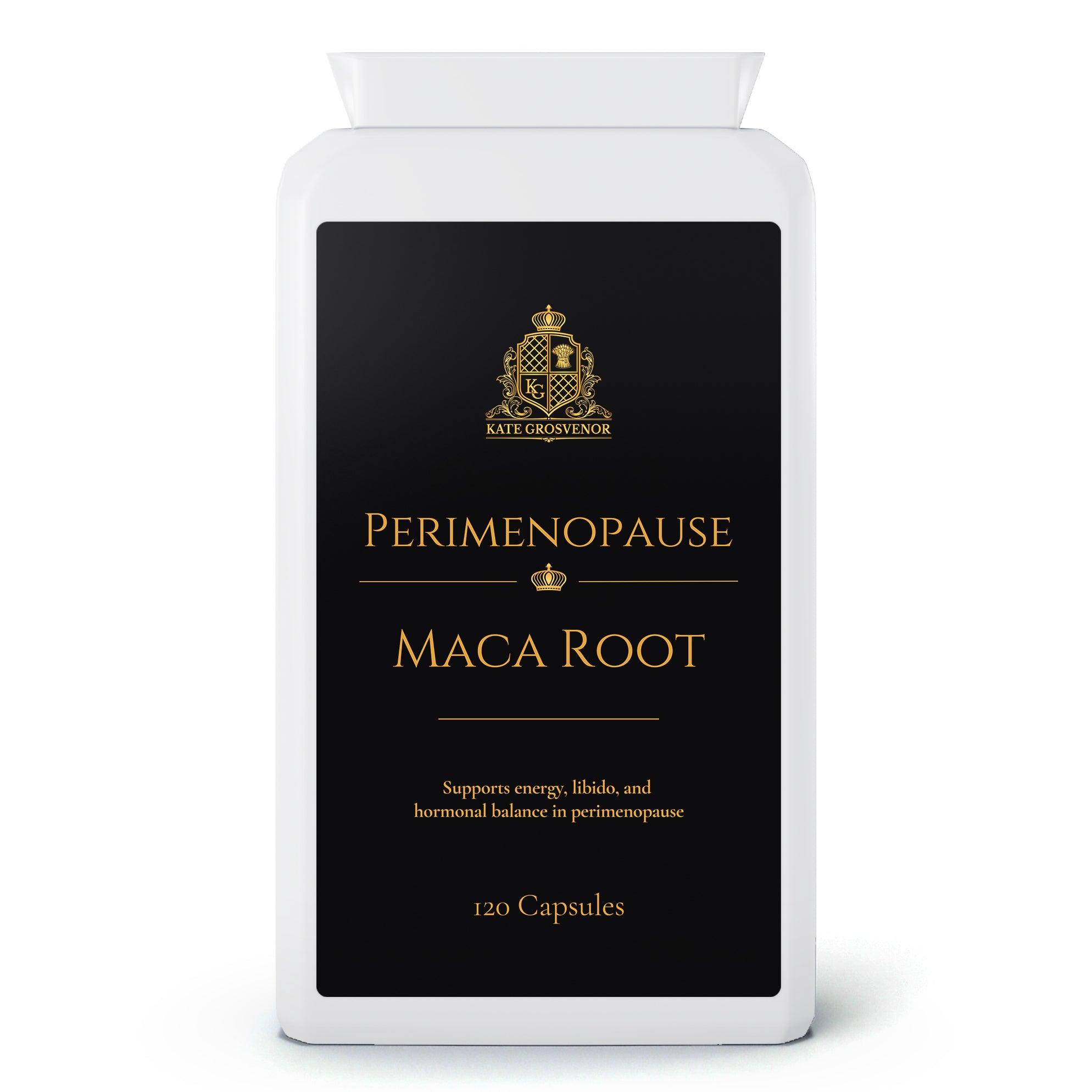
- Maca root — a Peruvian plant that has been studied for sexual function and energy in menopausal women. Some small trials suggest improvements in desire and wellbeing, though stronger studies are needed. It is generally well tolerated.
- Phytoestrogens (red clover, soy isoflavones) — may offer modest relief for some vasomotor symptoms; evidence for libido specifically is limited. Women with hormone-sensitive cancer histories should seek medical advice before using these.
- Omega-3 fatty acids — support mood, cardiovascular health, and inflammation, all of which have indirect benefits for energy and wellbeing. The omega-3 for perimenopause range from Kate Grosvenor Lifestyle is formulated with this stage of life in mind.
- Topical DHEA — available in some countries; evidence for vaginal use is growing, but UK availability and prescribing guidance varies.
Kate Grosvenor Lifestyle’s Maca Root Perimenopause Supplement is positioned as a supportive adjunct for energy and hormonal balance rituals — not as a treatment for low libido. It fits most naturally as part of a broader daily routine that also includes the lifestyle and medical steps described above.
Pro Tip: Always check any supplement against your current medications with a pharmacist before starting. Women with a history of hormone-sensitive cancers, and those who are pregnant or breastfeeding, should seek medical advice before taking maca, phytoestrogens, or DHEA-containing products.
A note on midlife, desire and what I have seen change
There is a particular kind of relief that comes when a woman realises that what she is experiencing is not the end of her sexual self — it is a shift, and shifts can be worked with.
What strikes me most, working with women in their Renewal Years, is how often libido concerns arrive wrapped in shame. Women apologise for raising it. They wonder if they are “past it” or if their partner will lose patience. The truth is that perimenopause is one of the most treatable phases of sexual change in a woman’s life. Physical barriers respond to physical solutions. Relationship strain responds to honest conversation and skilled support. And the combination of lifestyle grounding, medical care where needed, and a daily ritual that says I am worth tending to — that combination works.
The women who find their way back to a satisfying intimate life are not the ones who waited for desire to return spontaneously. They are the ones who addressed the dryness, talked to their GP, had the conversation with their partner, and gave themselves permission to approach intimacy differently. Responsive desire is not lesser desire. It is simply a different rhythm, and it is one you can learn to work with.
Supporting your wellbeing with a daily ritual
If you are looking for a calm, considered place to begin alongside your medical care, the Maca Root Perimenopause Supplement from Kate Grosvenor Lifestyle offers a gentle, daily ritual anchor for energy and hormonal balance support. It is not a replacement for a GP conversation or a prescription — it is the kind of quiet, consistent self-care that sits alongside those steps and reminds you, each morning, that you are actively tending to yourself.
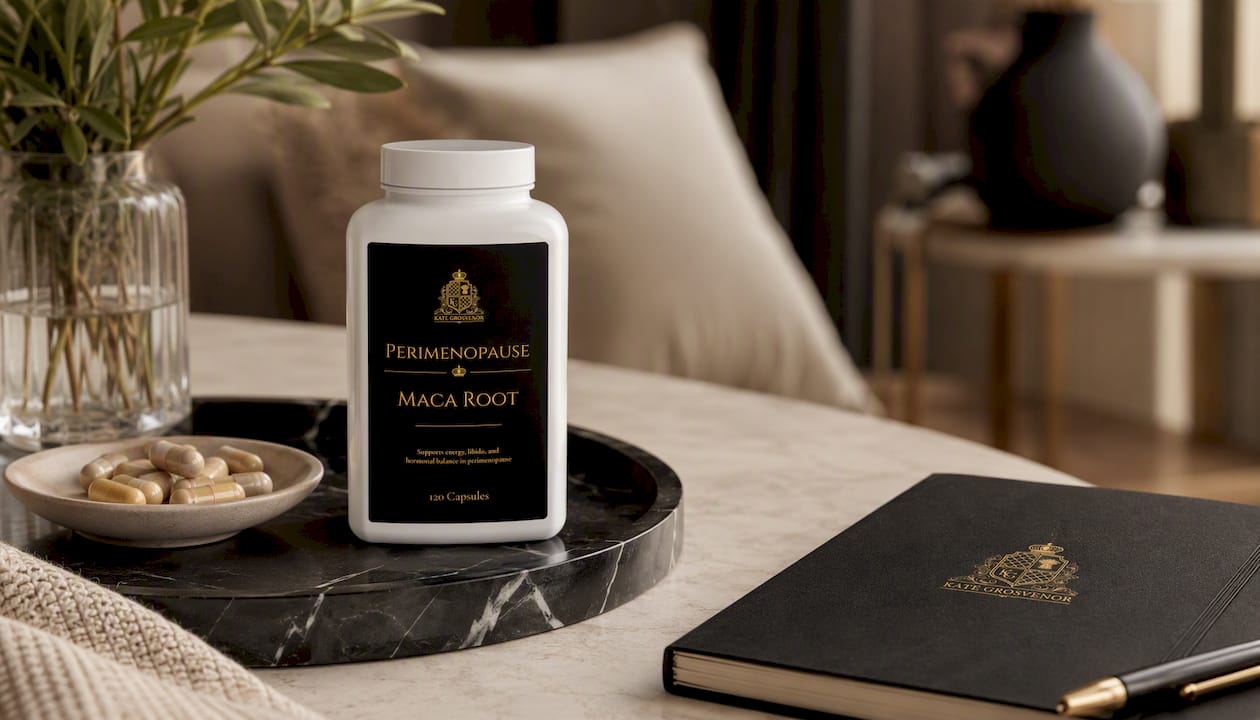
Formulated for women in their Renewal Years, it pairs well with the hormone balance and mood ritual for those who want a fuller daily routine. Women on medication, those with a history of hormone-sensitive cancer, and anyone who is pregnant or breastfeeding should speak to a GP or pharmacist before starting any new supplement. Visit the product page to read the full ingredient list and usage guidance, and bring any questions to your next GP or pharmacist appointment.
Sources
- Sexual wellbeing, intimacy and menopause — NHS Inform
- Loss of libido — NHS
- Sexual desire changes during the menopausal transition — PubMed
- Sexual health — The Menopause Society
This article is general information, not a substitute for advice from a qualified doctor. Consult a qualified healthcare professional about your own circumstances before acting on anything here.


Leave a comment
This site is protected by hCaptcha and the hCaptcha Privacy Policy and Terms of Service apply.