
Sleep problems in perimenopause: what to do first
If you are lying awake at 3am, drenched in heat and wondering what is happening to your body, the short answer is this: perimenopause is a very likely cause of your disrupted sleep, and the most effective first step is not a sleeping pill. Cognitive Behavioural Therapy for Insomnia (CBT-i) and consistent sleep hygiene are the clinically recommended starting points, and many women notice meaningful improvement within two to four weeks of applying them.
Population reviews estimate that 40–60% of women report poor sleep or significant sleep complaints during the menopausal transition. So if your nights have changed, you are not imagining it, and you are far from alone.
Here is where to begin this week:
- Set a fixed wake time and hold it every day, including weekends.
- Cool your bedroom to a comfortable temperature before bed.
- Cut caffeine after midday and alcohol in the evening.
- Write down your sleep pattern for two weeks so you can spot triggers.
- If sleep has been poor for more than three months and is affecting your days, book an appointment with your GP to discuss CBT-i access, vasomotor symptoms, and whether any other cause needs ruling out.
Pro Tip: CBT-i is available digitally through apps such as Sleepio when face-to-face access is limited. A digital programme still delivers the core techniques and tends to produce durable results.
Key takeaways
Sleep problems in perimenopause are common, physiologically grounded, and highly treatable when approached with the right combination of behavioural strategies and, where needed, targeted medical support.
| Point | Details |
|---|---|
| CBT-i is first-line | Cognitive Behavioural Therapy for Insomnia is the recommended starting point, producing durable results without the risks of long-term medication. |
| 40–60% prevalence | Population reviews estimate that 40–60% of women report significant sleep complaints during the menopausal transition. |
| Hormones and hyperarousal both matter | Falling oestrogen and progesterone disrupt sleep architecture directly, not only through hot flushes and night sweats. |
| Rule out OSA and RLS | Obstructive sleep apnoea and restless legs syndrome are underdiagnosed in midlife women and need their own treatment if present. |
| Kate Grosvenor Lifestyle | The Sleep & Calm Ritual, PeriCalm, and PeriCool offer supportive evening rituals designed to complement a behavioural sleep plan. |
Table of Contents
- What do sleep problems in perimenopause actually look like?
- Why does perimenopause disrupt sleep so deeply?
- What else can make sleep worse during this time?
- Why treating poor sleep now genuinely matters
- Evidence-based treatments: a stepped, practical approach
- Practical self-help: what to try tonight and over the next four weeks
- When should you see your GP or a sleep specialist?
- What recent research has clarified about perimenopausal sleep
- What I want you to know about this
- Supportive rituals to complement your sleep plan
- Sources
What do sleep problems in perimenopause actually look like?
Perimenopausal sleep disturbance rarely looks like one clean problem. More often it is a cluster of complaints that shift from night to night, which is part of what makes it so exhausting to live with.
The most common patterns include:
- Difficulty falling asleep, often with a racing mind or physical restlessness.
- Frequent awakenings, particularly in the second half of the night when sleep is naturally lighter.
- Early morning waking, sometimes as early as 4am, with an inability to drift back off.
- Non-restorative sleep, where you have technically slept but wake feeling as though you have not.
- Vivid dreams or increased nightmare recall, which many women find distressing and disorienting.
- Night sweats interrupting sleep, sometimes multiple times, leaving you cold and alert afterwards.
Longitudinal cohort data, including the SWAN study, confirm that awakenings after sleep onset increase during the menopausal transition and that objective sleep metrics show greater fragmentation than women typically experience before perimenopause begins.
The pattern matters because it points toward the likely cause. Trouble falling asleep alongside a busy mind often signals anxiety or hyperarousal. Frequent awakenings in the second half of the night, sometimes with heat, point more directly toward vasomotor symptoms or hormonal sleep architecture changes. Early waking with low mood can overlap with depression. Knowing your own pattern helps you and your clinician choose the right approach.
Pro Tip: Keep a two-week sleep diary before any GP appointment. Note the time you got into bed, roughly when you fell asleep, how many times you woke, what woke you (heat, thoughts, needing the bathroom), and how you felt in the morning. This single habit gives a clinician far more to work with than a verbal summary.
Why does perimenopause disrupt sleep so deeply?
The biology here is genuinely fascinating, and understanding it can make the experience feel less frightening. Sleep is not simply a passive state your body falls into. It is actively regulated by a network of hormones, brain circuits, and internal clocks, and perimenopause disrupts several of these at once.
Falling oestrogen and progesterone
Translational research shows that declining oestrogen and progesterone weaken the brain’s inhibitory control over wake-promoting systems. Progesterone, in particular, has a natural sedative quality, acting on GABA receptors in the brain in a way that promotes calm and deeper sleep. As levels fall and fluctuate unpredictably during perimenopause, that calming effect diminishes. Slow-wave sleep, the deepest and most physically restorative stage, reduces. The brain becomes more easily aroused during the night, which is why so many women describe sleeping lightly, as though one ear is always open.
KNDy neurons and the heat connection
A cluster of neurons in the hypothalamus, known as KNDy neurons (kisspeptin, neurokinin B, and dynorphin), plays a central role in both reproductive hormone signalling and body temperature regulation. When oestrogen falls, these neurons become overactive. The result is the sudden surge of heat you feel during a hot flush or night sweat, but the disruption does not stop there. The same neural instability affects the thermoregulatory system more broadly, making your core body temperature harder to regulate across the night. Since a slight drop in core temperature is what normally triggers and sustains sleep, this instability is directly disruptive to sleep architecture.
Circadian rhythm and melatonin
Melatonin production tends to decline with age, and the circadian rhythm, your body’s internal 24-hour clock, becomes less robust. This means the signal that tells your brain it is time to sleep arrives later, more weakly, or less consistently. Combined with the hormonal changes above, the result is a sleep system that is genuinely more fragile, not one that simply needs more willpower to manage.
Prevalence signal: Population reviews estimate that 40–60% of women during the menopausal transition report poor sleep or significant sleep complaints, making this one of the most common and under-addressed symptoms of perimenopause.
What else can make sleep worse during this time?
Hormones are rarely the whole story. Several other conditions and life factors commonly coexist with perimenopausal sleep trouble, and some of them need their own attention.
Vasomotor symptoms versus direct hormone effects
Hot flushes and night sweats (vasomotor symptoms) are the most visible disruptors, but a systematic review and meta-analysis confirms that hot flashes roughly double the odds of sleep complaints. What is less widely understood is that biological hyperarousal and changes to sleep architecture can cause fragmented sleep even in women who have few or no vasomotor symptoms. Both pathways matter.
Other conditions to consider
- Mood disorders. Anxiety and depression are both more prevalent during perimenopause and both independently disrupt sleep. The relationship is bidirectional: poor sleep worsens mood, and low mood worsens sleep.
- Obstructive sleep apnoea (OSA). OSA prevalence rises after menopause, and in women it often presents atypically as insomnia, fatigue, or cognitive fog rather than the classic loud snoring associated with men. This means it is frequently missed.
- Restless legs syndrome (RLS). An uncomfortable urge to move the legs, worse in the evening and at rest, can make falling asleep genuinely difficult and is more common in midlife women.
- Nocturia. Waking to use the bathroom, sometimes multiple times, is common during perimenopause and can fragment sleep even when hormonal disruption is mild.
- Medications and substances. Some antidepressants, beta-blockers, and corticosteroids affect sleep quality. Alcohol, though it may help you fall asleep initially, suppresses REM sleep and causes rebound awakenings in the second half of the night. Late caffeine has a longer half-life than most people realise, around five to seven hours.
- Life stressors. Carer responsibilities, shift work, relationship changes, and financial pressure all sustain insomnia independently of hormones. These factors often keep the sleep problem going long after the hormonal trigger has eased.
Red flags that need prompt medical review:
- Loud snoring, choking, or gasping during sleep (reported by a partner or heard on a recording).
- Excessive daytime sleepiness that is not explained by poor night sleep alone.
- Leg movements or jerking that wake you or your partner.
- Nocturia more than twice per night that is new or worsening.
Why treating poor sleep now genuinely matters
It is tempting to accept broken nights as an inevitable part of midlife. They are not, and the consequences of leaving them untreated extend well beyond feeling tired.
In the short term, disrupted sleep affects concentration, memory, reaction time, and emotional regulation. Many women describe a fog that makes work harder and patience thinner. Mood becomes more fragile. The capacity to cope with everyday stress shrinks.
Over the longer term, the picture becomes more serious. A narrative review of menopause-related sleep changes links chronic poor sleep in midlife women to increased cardiometabolic risk, including associations with elevated blood pressure, insulin resistance, and adverse lipid profiles. There are also emerging associations between midlife sleep disruption and cognitive health in later years.
- Chronic sleep loss raises inflammatory markers.
- Poor sleep worsens insulin sensitivity, compounding metabolic changes already underway in perimenopause.
- Sleep deprivation amplifies the perception of pain and heat, which can make vasomotor symptoms feel more intense.
- The mood-sleep cycle, once established, tends to deepen without intervention.
None of this is meant to alarm you. It is meant to make clear that addressing your sleep now is one of the most worthwhile things you can do for your health across the next decade.
Evidence-based treatments: a stepped, practical approach
The good news is that effective treatments exist at every level of severity, from simple behavioural changes to medical options for those who need them.
Step one: CBT-i and behavioural strategies
CBT-i is the recommended first-line treatment for insomnia in menopausal women, preferred over long-term medication. It works by addressing the thought patterns and behaviours that perpetuate poor sleep, even after the original hormonal trigger. Core components include sleep restriction (temporarily limiting time in bed to consolidate sleep), stimulus control (using the bed only for sleep and sex), cognitive restructuring (challenging unhelpful beliefs about sleep), and relaxation training.
CBT-i produces durable results. Unlike sleeping tablets, the benefits tend to persist after the programme ends because you have changed the underlying patterns, not simply suppressed the symptoms.
- Ask your GP about CBT-i referral or access to a validated digital programme.
- Commit to a fixed wake time for at least two weeks before assessing results.
- Avoid spending long periods awake in bed, which reinforces the association between bed and wakefulness.
Step two: menopausal hormone therapy (MHT/HRT)
MHT can meaningfully improve sleep, particularly when vasomotor symptoms are the primary driver of awakenings. By stabilising oestrogen and progesterone levels, MHT reduces hot flushes and night sweats and may restore some slow-wave sleep. The decision to use MHT is individual and should be made with a GP or menopause specialist after reviewing personal health history, including cardiovascular, breast, and clotting risk factors.
Step three: other medical options
Short-term hypnotics (prescription sleeping tablets) can be useful for acute, severe insomnia but are not recommended for long-term use due to tolerance, dependence risk, and residual daytime sedation. Low-dose melatonin may support circadian rhythm and sleep onset, particularly in women whose circadian disruption is prominent. Non-hormonal prescription options for vasomotor symptoms (such as certain antidepressants or gabapentin) can also reduce night sweats and indirectly improve sleep.
| Treatment | Timeframe | Primary benefit | Best suited to | Key safety note |
|---|---|---|---|---|
| CBT-i | 2–4 weeks | Reduces waking, improves sleep quality | All perimenopausal insomnia | No medical risks; requires commitment |
| MHT/HRT | 2–4 weeks | Reduces vasomotor symptoms, improves architecture | Women with prominent hot flushes | Individualised risk assessment needed |
| Low-dose melatonin | 2–4 weeks | Supports sleep onset, circadian rhythm | Circadian disruption, early waking | Generally well tolerated; short-term use |
| Short-term hypnotics | Days to weeks | Acute sleep relief | Severe short-term insomnia | Not for long-term use; dependence risk |
| OSA treatment (CPAP) | Ongoing | Eliminates apnoea-related awakenings | Confirmed OSA | Requires sleep study diagnosis |
When vasomotor symptoms and insomnia coexist, combining CBT-i with MHT often produces better outcomes than either alone. If RLS or OSA is identified, those conditions need their own targeted treatment alongside any sleep hygiene work.
Practical self-help: what to try tonight and over the next four weeks
You do not need to wait for a GP appointment to begin. These steps are grounded in the same evidence base as clinical guidance and many women find them genuinely transformative.
Tonight
- Lower your bedroom temperature to 16–18°C. A cooler room supports the drop in core body temperature that initiates sleep.
- Put devices away at least 45 minutes before bed. Blue light suppresses melatonin and the mental stimulation keeps the brain in alert mode.
- Begin a simple wind-down ritual: dim the lights, make a warm (not hot) drink, and do something quiet and absorbing for 20–30 minutes.
- If you wake in the night and cannot return to sleep within 20 minutes, get up, go to another room, and do something calm until you feel sleepy again. This is stimulus control, and it is one of the most powerful tools in CBT-i.
Over the next four weeks
Week one: Establish a fixed wake time. This is the single most powerful circadian anchor you have. Hold it even after a bad night.
Week two: Add a consistent wind-down routine and begin your sleep diary. Note patterns around heat, thoughts, and what time awakenings occur.
Week three: Review your caffeine and alcohol intake. Move caffeine to before noon. Notice whether alcohol is causing second-half-of-the-night waking.
Week four: Introduce a relaxation practice. A body scan, progressive muscle relaxation, or slow breathing (four counts in, six counts out) before sleep can reduce the physiological arousal that keeps the brain alert.
Managing night sweats in the bedroom
Breathable, moisture-wicking bedding makes a real difference. Natural fibres such as bamboo or linen regulate temperature better than synthetic materials. Keeping a cool flannel or a small fan nearby gives you something to reach for in the moment rather than lying there waiting for the heat to pass. PeriCool: Sage Leaf Cooling Support can be incorporated into your evening routine as a supportive measure alongside these environmental changes.
For broader sleep support, natural remedies for menopause sleep problems offers a practical overview of non-drug approaches worth exploring.
Supplements such as magnesium are often discussed in the context of sleep. A magnesium complex formulated for perimenopause may support relaxation as part of a wider evening ritual, though it works best alongside behavioural change rather than instead of it.
Pro Tip: Your sleep diary does not need to be elaborate. A simple notes app entry each morning, covering bedtime, estimated sleep onset, number of awakenings, wake time, and a one-word mood rating, gives you enough data to spot patterns within two weeks.
Pro Tip: Mindfulness-based stress reduction (MBSR) has a reasonable evidence base for perimenopausal sleep. Even ten minutes of guided body-scan meditation before bed can lower the physiological arousal that makes falling back to sleep so difficult after a night sweat.
When should you see your GP or a sleep specialist?
Some sleep problems respond well to self-help. Others need clinical input, and knowing the difference matters.
Seek a GP appointment when:
- Insomnia has persisted for more than three months and is affecting your work, mood, or relationships.
- You or a partner have noticed loud snoring, choking, or gasping during sleep.
- You feel excessively sleepy during the day despite spending adequate time in bed.
- You have an uncomfortable urge to move your legs in the evenings that is disrupting sleep onset.
- You are waking to use the bathroom more than twice per night and this is new.
- You are considering MHT and want a full discussion of benefits and risks.
What to bring to your appointment:
- Your two-week sleep diary.
- A list of all current medications, including supplements and over-the-counter remedies.
- A brief timeline of when sleep changed and whether it coincided with other perimenopausal symptoms.
- Written questions about CBT-i access, MHT suitability, and whether a sleep study might be appropriate.
Clinicians will typically screen for mood disorders, review medications that might be affecting sleep, consider whether OSA screening is warranted, and discuss whether CBT-i referral or a trial of MHT is appropriate for your situation. Johns Hopkins Medicine guidance notes that OSA in women often presents as insomnia or fatigue rather than snoring, so raising daytime sleepiness or cognitive fog with your GP is worth doing even if you do not fit the classic picture.
What recent research has clarified about perimenopausal sleep
The science here has moved meaningfully in recent years, and some of it corrects assumptions that have been unhelpful for women seeking answers.
Hot flushes are not the whole story. This is perhaps the most important correction. Many women assume that if their hot flushes are mild or infrequent, their sleep problems must have another cause. A systematic review and meta-analysis confirms that hot flashes significantly elevate the risk of sleep complaints, but biological hyperarousal and changes to sleep architecture occur independently of vasomotor symptoms. Women without prominent hot flushes can still experience significant hormonal sleep disturbance.
The KNDy neuron mechanism provides a clearer biological explanation. Translational research has identified that KNDy neurons in the hypothalamus become dysregulated as oestrogen falls, creating neuroendocrine instability that disrupts both thermoregulation and sleep-wake circuits. This is not a vague hormonal effect. It is a specific, biologically plausible pathway that explains why sleep fragmentation can occur even before vasomotor symptoms become prominent.
Polysomnography studies add objective weight. EEG data from women during the menopausal transition show elevated beta-wave activity during NREM sleep, a signature of physiological hyperarousal. This helps explain why hypnotics often feel insufficient: they may induce sleep but do not fully address the underlying arousal state that keeps the brain alert.
“Perimenopausal sleep problems are best understood as a multifactorial puzzle: hormones trigger instability, but psychological and behavioural factors frequently sustain insomnia long after the hormonal trigger has eased. Sleep aids are most effective as short-term supports while behavioural change is being implemented.” National Institute on Aging
The misconception about hypnotics. Sleeping tablets are widely used for perimenopausal insomnia, but the evidence base for long-term use is weak. They do not address the hyperarousal or the behavioural patterns that sustain insomnia, and tolerance develops relatively quickly. CBT-i, by contrast, produces benefits that persist because it changes the underlying patterns rather than suppressing symptoms.
What I want you to know about this
There is something that gets lost in the clinical language around perimenopausal sleep, and it is this: the exhaustion you are feeling is not a character flaw or a failure to cope. It is a physiological reality, and it deserves to be taken seriously, by your clinician and by you.
What I have seen, time and again, is that women arrive at this stage of life already running on empty, managing careers, families, and ageing parents, and then their sleep breaks down on top of everything else. The temptation is to push through or reach for the quickest fix. But the evidence is clear that the most durable path through perimenopausal insomnia is a stepped one: start with behavioural change, add targeted medical support where it is genuinely indicated, and give each step enough time to work.
The biology is real. The disruption is real. And so is the possibility of sleeping well again. You do not have to accept broken nights as your new normal. Understanding why perimenopause affects sleep is the first step toward doing something about it, and that step is always worth taking.
Supportive rituals to complement your sleep plan

Alongside the clinical steps above, a grounded evening ritual can make a quiet but real difference to how your body and mind settle toward sleep. Kate Grosvenor Lifestyle has formulated three products specifically for this transition.
The Sleep & Calm Ritual is a curated night-time bundle designed to support the wind-down process, bringing together the kind of calm, consistent routine that CBT-i practitioners recommend as a cornerstone of good sleep hygiene.

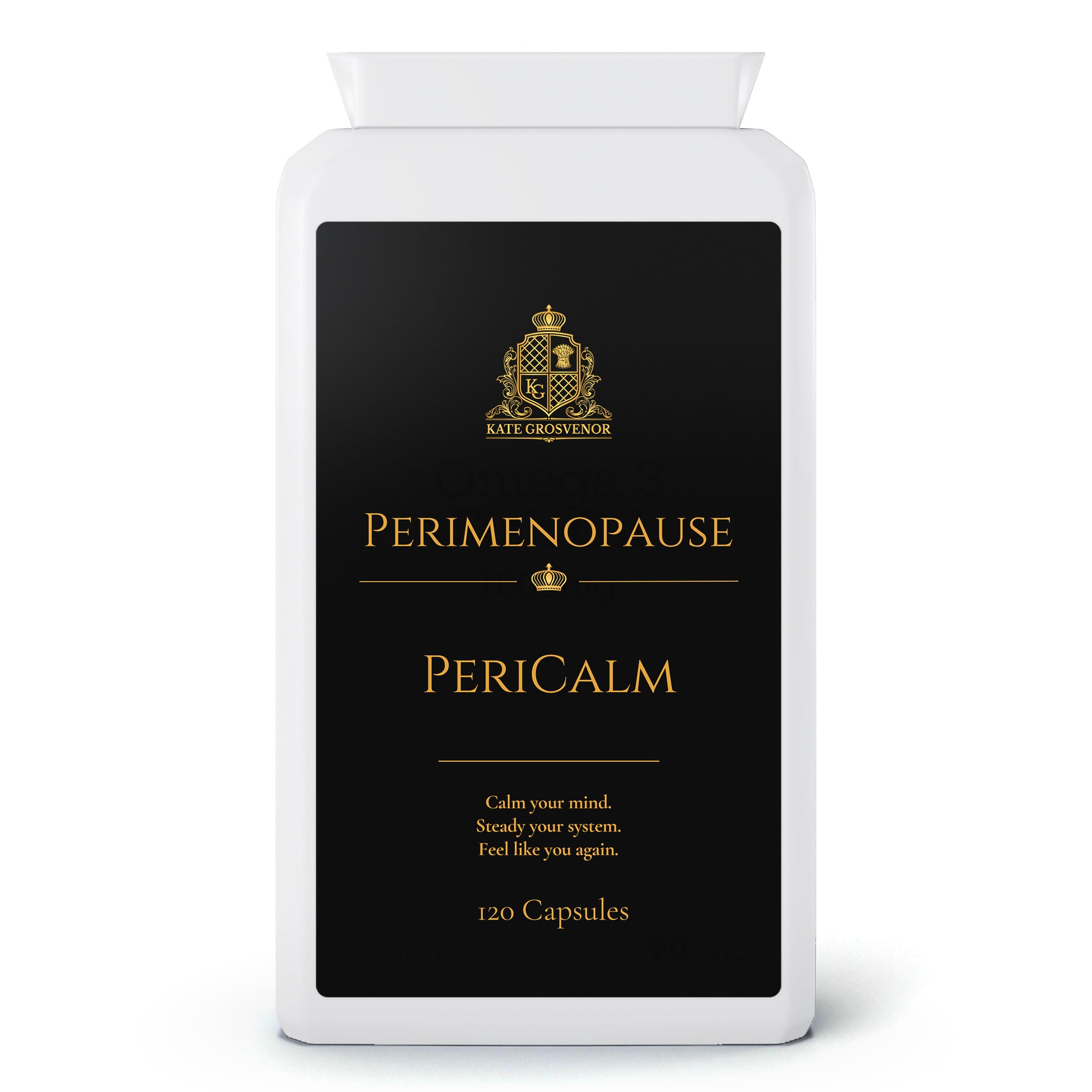
PeriCalm is a thoughtfully formulated supplement to support hormonal calm during the transition, intended as a daily adjunct to the broader lifestyle and behavioural strategies described in this article.
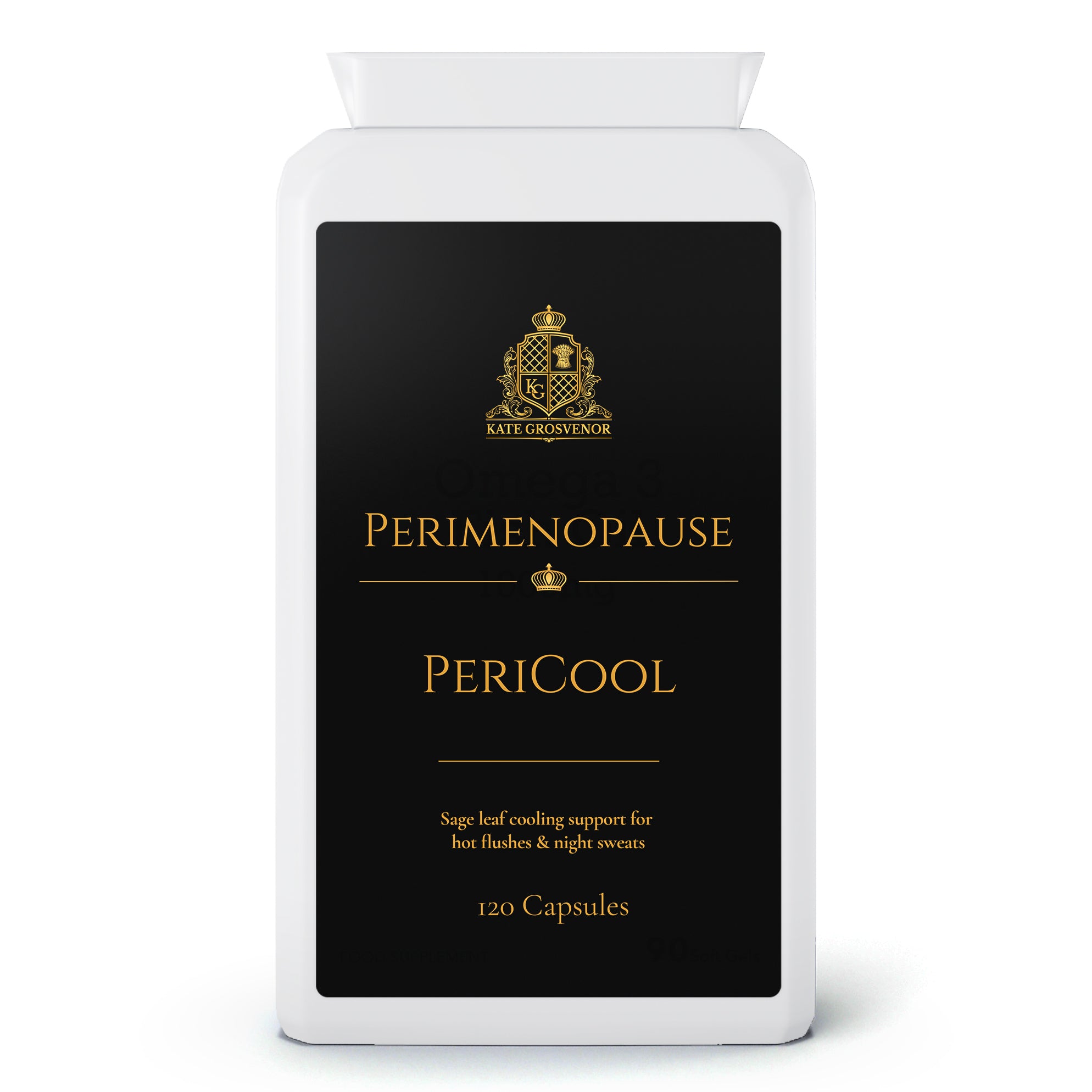
PeriCool: Sage Leaf Cooling Support draws on the traditional use of sage leaf to support comfort during hot flushes and night sweats, and fits naturally into an evening cooling routine alongside breathable bedding and a cooler bedroom.
These products are supportive adjuncts, not replacements for CBT-i or medical review when either is indicated. They are designed for women who want their daily rituals to feel as considered and nourishing as the rest of their care. Browse the full range at Kate Grosvenor Lifestyle and find the ritual that fits your evenings.
Sources
These are the sources that informed this article, along with a note on what each one offers for deeper reading.
- Sleep Problems and Menopause: What Can I Do? | National Institute on Aging
- Sleep Disturbances in Menopause: Neuroendocrine Mechanisms and Clinical Implications
- Menopause-related changes in sleep and the associations with cardiometabolic health: A narrative review - PMC
- How does menopause affect my sleep? | Johns Hopkins Medicine
This article is general information, not a substitute for advice from a qualified doctor. Consult a qualified healthcare professional about your own circumstances before acting on anything here.



Leave a comment
This site is protected by hCaptcha and the hCaptcha Privacy Policy and Terms of Service apply.