
Perimenopause and urinary tract infections: what to do
Yes, perimenopause raises your risk of urinary tract infections. Falling oestrogen thins the tissues lining your urethra and vagina, reduces the natural defences in your urinary tract, and shifts the vaginal microbiome away from the protective bacteria that keep pathogens at bay. The NHS recognises UTIs as a recognised symptom of perimenopause, so if you are finding yourself reaching for the cranberry juice more often than you used to, there is a clear physiological reason for it.
Three things to hold onto right now:
- Start today: drink plenty of water, avoid holding urine for long periods, and wear breathable cotton underwear. These measures will not reverse the hormonal cause, but they ease the burden on an already-sensitive system.
- Contact your GP if symptoms are burning, frequent urination, or cloudy urine, especially if they have not settled within 48 hours. A urine culture, not just a dipstick, gives the clearest picture and guides the right treatment.
- Seek urgent care if you develop a fever above 38°C, pain in your back or sides (flank pain), vomiting, or feel suddenly unwell. These signs may point to a kidney infection or, rarely, sepsis, and need same-day assessment.
Table of Contents
- What is a UTI, and how does it feel in midlife?
- Why perimenopause and urinary tract infections go hand in hand
- Recognising UTI symptoms during perimenopause
- How your GP diagnoses a UTI and when to make an appointment
- Acute treatment and NHS antibiotic guidance
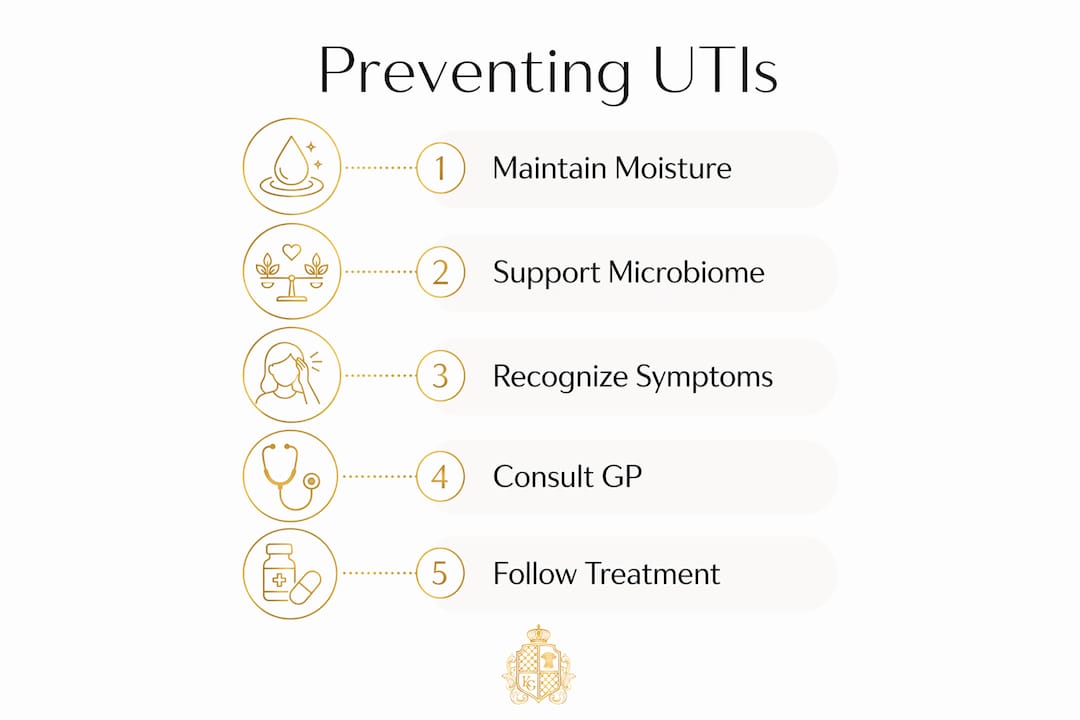
- How to prevent recurrent UTIs during perimenopause
- When UTIs become recurrent: the specialist pathway
- Conditions that can look like a UTI in perimenopause
- What the evidence says about cranberry, D-mannose, and probiotics
- Key takeaways
- What I want you to take away from all of this
- Supporting your vaginal health alongside medical care
- Useful sources for further reading
What is a UTI, and how does it feel in midlife?
A urinary tract infection happens when bacteria, most commonly Escherichia coli from the gut, enter the urethra and multiply in the bladder. In some cases the infection travels upward to the kidneys. The lower urinary tract (urethra and bladder) is the most commonly affected site, and most infections respond well to a short course of antibiotics.
In younger women, the signs tend to be unmistakable. In midlife, the picture can be quieter or stranger, which is one reason infections go unrecognised or are mistaken for other perimenopausal symptoms.
Classic UTI signs:
- Stinging or burning when passing urine (dysuria)
- Needing to urinate urgently or far more often than usual
- Cloudy, dark, or strong-smelling urine
- Blood in the urine (haematuria)
- Discomfort or pressure in the lower abdomen
Atypical signs more common in midlife:
- New or worsening urinary leakage (incontinence)
- Waking repeatedly at night to urinate (nocturia)
- Unusual fatigue or a general sense of feeling unwell
- Mild confusion or brain fog (more common in older women; worth noting as a warning sign)
The overlap with everyday perimenopause symptoms can make it genuinely hard to tell what is happening. That is not a failure of self-awareness; it is a reflection of how much this stage of life changes the body’s signals.
Why perimenopause and urinary tract infections go hand in hand
The connection is hormonal, and it is direct. Falling oestrogen is the primary reason perimenopausal women become more susceptible to UTIs. Here is how that chain of events unfolds:
Oestrogen fall → tissue thinning → reduced defences → easier bacterial entry
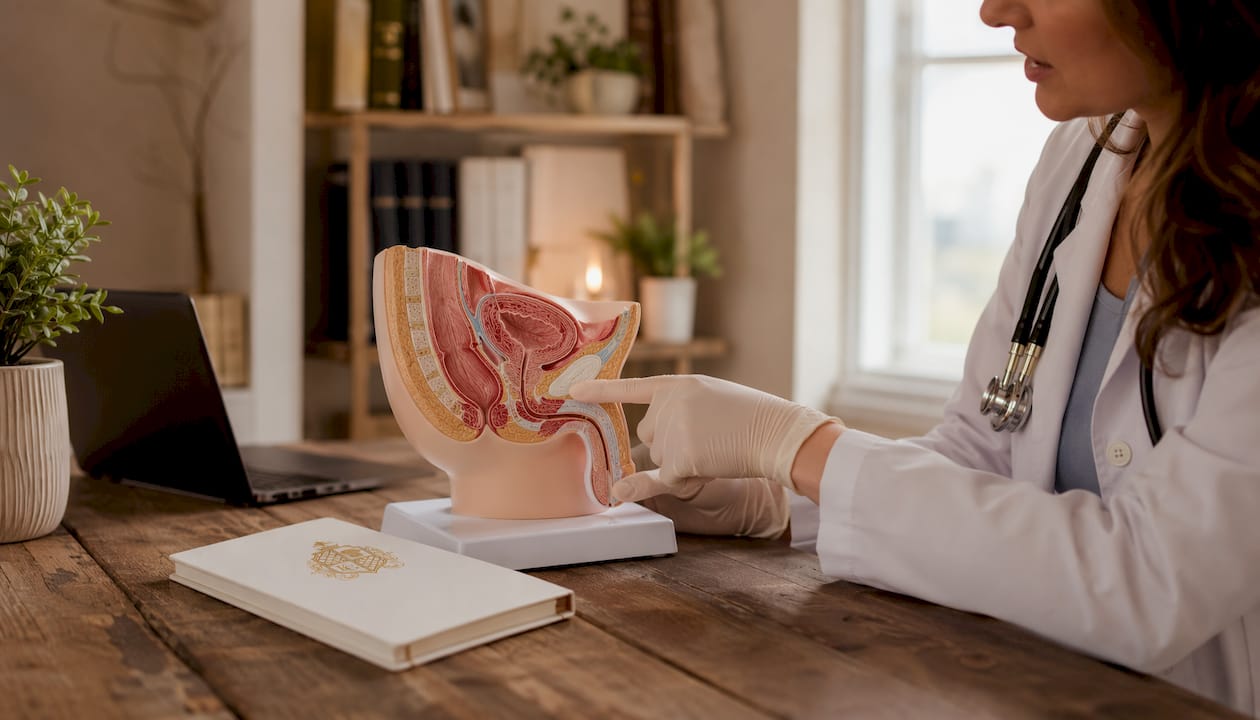
Oestrogen keeps the tissues of the vagina and urethra thick, moist, and resilient. As levels decline, those tissues thin and lose elasticity, a process called genitourinary syndrome of menopause (GSM). Thinner urethral tissue is easier for bacteria to colonise. At the same time, oestrogen supports the production of antimicrobial peptides and secretory IgA (sIgA), the immune proteins that line the urinary tract and act as a first barrier against infection. When oestrogen falls, so does that barrier.
The vaginal microbiome shifts too. A healthy vagina is dominated by Lactobacillus species, which produce lactic acid and keep the environment acidic and inhospitable to pathogens. After oestrogen declines, Lactobacillus abundance falls and microbial diversity increases, creating conditions where Enterobacterales (the family that includes E. coli) can colonise the periurethral area more easily.
Pro Tip: If you are experiencing recurrent UTIs in perimenopause, please do not blame your hygiene or your habits. The biology here is clear: this is a hormonal shift, not a personal failing. Clinicians increasingly recognise this, and the most effective treatments address the underlying physiology rather than lifestyle adjustments alone.
Recognising UTI symptoms during perimenopause
Because the symptom picture changes with hormonal status, it helps to know what to look for and what might be masking or mimicking an infection.

Survey data show that menopausal and perimenopausal women report more incontinence and nocturia, and fewer of the classic signs such as fever or lower abdominal pain, compared with younger women. This means an infection can feel less dramatic but still need treatment.
The table below pairs common conditions that mimic UTI symptoms with the clues that help distinguish them.
| Condition | Typical symptoms | Distinguishing clues |
|---|---|---|
| Genitourinary syndrome of menopause (GSM) | Vaginal dryness, burning, urinary frequency | No bacterial growth on urine culture; symptoms improve with vaginal oestrogen |
| Overactive bladder (OAB) | Urgency, frequency, leakage | No infection on dipstick or culture; symptoms are chronic, not episodic |
| Bladder pain syndrome / interstitial cystitis | Pelvic pain, frequency, pain relieved by voiding | Negative cultures; pain worsens with certain foods or stress |
| Bacterial UTI | Dysuria, urgency, cloudy urine | Positive dipstick (nitrites/leucocytes) or positive urine culture |
If you are unsure which category your symptoms fall into, a urine culture is the clearest starting point. Do not assume every episode of urgency or discomfort is an infection, and equally, do not dismiss symptoms as “just menopause” without checking.
How your GP diagnoses a UTI and when to make an appointment
Most UTIs in primary care are assessed through a combination of your symptom history and a urine test. Here is what to expect from the NHS pathway:
- Symptom review: your GP or nurse will ask about the nature, duration, and severity of your symptoms.
- Urine dipstick: a quick in-clinic test that checks for nitrites (a sign of bacterial activity) and leucocytes (white blood cells indicating inflammation). A negative dipstick in a symptomatic woman does not always rule out infection.
- Midstream urine (MSU) culture: the gold standard. A sample is sent to a laboratory to identify the specific bacteria and test which antibiotics will work. Results typically take 48–72 hours. For women with recurrent infections, a culture before starting antibiotics is particularly important.
- Imaging or referral: not routine for uncomplicated lower UTIs, but may be arranged if there are structural concerns or if infections recur frequently.
Red flags requiring same-day or urgent care:
- Fever of 38°C or above
- Pain in your back, side, or under your ribs (flank pain)
- Nausea or vomiting alongside urinary symptoms
- Feeling suddenly very unwell, shivery, or confused
- Symptoms that are not improving after 48 hours of antibiotics
One important note: a positive urine culture in the absence of any urinary symptoms is called asymptomatic bacteriuria. This is common in postmenopausal women and generally does not require treatment. Treating it with antibiotics can cause harm by disrupting the microbiome and contributing to resistance.
Some GP practices now offer remote prescribing or patient-held rescue antibiotics for women with well-documented recurrent UTIs. If you have frequent infections, it is worth asking your GP whether this approach is appropriate for you.
Acute treatment and NHS antibiotic guidance
For an uncomplicated lower UTI, a short antibiotic course is usually all that is needed. NHS prescribing follows local resistance patterns, but the most commonly used first-line options are:
| Antibiotic | Typical regimen | Notes |
|---|---|---|
| Nitrofurantoin | — | First choice where local resistance allows; avoid if kidney function is reduced |
| Trimethoprim | — | Alternative where nitrofurantoin is unsuitable; check local resistance data |
| Fosfomycin | 3 g single dose | Useful option where other antibiotics are not suitable |
These regimens are drawn from current clinical guidance and your GP will select based on your individual history and local susceptibility data.
While you wait for antibiotics to take effect, several measures can ease discomfort:
- Drink plenty of water to help flush the bladder.
- Take paracetamol for pain rather than ibuprofen if you have any kidney concerns.
- A warm heat pad on the lower abdomen can ease cramping.
- Urinate regularly rather than holding on.
On antibiotic stewardship: clinical guidance increasingly emphasises short, culture-guided courses over broad or prolonged prescribing. Completing the full course matters, but longer is not always better. If symptoms persist after completing treatment, return to your GP for a repeat culture rather than requesting a second course without testing.
How to prevent recurrent UTIs during perimenopause
Prevention is where the most meaningful progress happens, and the options have expanded considerably beyond the old advice about wiping technique and cranberry juice.
Evidence-based prevention options
-
Topical vaginal oestrogen is the most evidence-supported non-antibiotic option. Applied locally as a cream, pessary, or ring, it restores mucosal thickness and increases Lactobacillus abundance without the systemic effects of HRT. Many women and clinicians are unaware that vaginal oestrogen is considered safe for long-term use by most women, including those with a history of hormone-sensitive conditions (always discuss with your GP). It can reduce UTI recurrence substantially and is often recommended before long-term antibiotic prophylaxis.
-
Antibiotic prophylaxis (continuous low-dose or postcoital) is an option for women with frequent recurrences where other measures have not been sufficient. It is effective but carries risks of resistance and microbiome disruption, so it is typically reviewed after six to twelve months.
-
Methenamine hippurate is a prescription, non-antibiotic option that converts to formaldehyde in urine, reducing bacterial growth. Some trials have shown it to be non-inferior to daily antibiotics for prevention, making it a useful alternative for women who want to avoid long-term antibiotic use.
-
Vaginal probiotic pessaries targeting Lactobacillus species show promise for restoring protective flora, though evidence remains variable. Oral probiotics have limited and inconsistent evidence for UTI prevention specifically.
-
Behavioural measures (voiding after sex, cotton underwear, staying well hydrated) are widely recommended but evidence for their effectiveness in menopausal women is inconsistent. They are low-risk and worth maintaining, but they are unlikely to be sufficient on their own when the underlying cause is hormonal.
Questions to take to your GP appointment
- “Can I have a urine culture before starting antibiotics?”
- “Would topical vaginal oestrogen be appropriate for me?”
- “Is antibiotic prophylaxis an option, and what are the risks for me specifically?”
- “Should I be referred to a specialist given how often these are recurring?”
A trial of vaginal oestrogen typically runs for three to six months before its full effect on UTI frequency is apparent. Antibiotic prophylaxis is usually reviewed after six to twelve months, with the aim of stepping down where possible.
When UTIs become recurrent: the specialist pathway
Recurrent UTI is defined, in line with European Association of Urology guidance, as two or more infections within six months, or three or more within twelve months. If you meet this threshold, a referral to a specialist clinic is appropriate and worth requesting.
In secondary care, investigations may include:
- Repeated MSU cultures to map which organisms are involved and whether resistance is developing.
- Renal and bladder ultrasound to check for structural issues such as incomplete bladder emptying or kidney abnormalities.
- Cystoscopy (a camera examination of the bladder) where there is blood in the urine or symptoms suggesting bladder pathology.
- Urodynamics if there is significant bladder control difficulty alongside infection.
Specialist UTI clinics often use multidisciplinary approaches, combining culture review, imaging, bladder diaries, and targeted non-antibiotic prevention strategies. The goal is a personalised plan rather than an indefinite antibiotic prescription.
Conditions that can look like a UTI in perimenopause
Not every episode of urgency, burning, or frequency is a bacterial infection. Three conditions in particular are worth knowing about.
Genitourinary syndrome of menopause (GSM) causes vaginal dryness, thinning, and urinary symptoms including frequency and discomfort, all without any bacterial infection. A negative urine culture alongside these symptoms points strongly toward GSM. Vaginal oestrogen is the primary treatment.
Overactive bladder (OAB) produces urgency and frequency that is chronic rather than episodic, and again, cultures come back negative. Bladder training, pelvic floor physiotherapy, and medication are the usual routes.
Bladder pain syndrome (BPS), also called interstitial cystitis, causes pelvic pain and urinary frequency with consistently negative cultures. Symptoms often worsen with certain foods, stress, or a full bladder. Diagnosis usually requires specialist input.
Useful tests to help separate these conditions include:
- Midstream urine culture (to rule in or out bacterial infection)
- Vaginal swabs (to check for other infections)
- A bladder diary kept over three to seven days
- Pelvic examination by your GP or a gynaecologist
If you have been treated repeatedly for UTIs but cultures are consistently negative, raise this pattern with your GP. Treating a non-bacterial condition with antibiotics is not only ineffective; it adds unnecessary antibiotic exposure.
What the evidence says about cranberry, D-mannose, and probiotics
Over-the-counter options are popular, and some have a degree of evidence behind them, though none are as well-supported as vaginal oestrogen.
- Cranberry (juice or capsules): evidence is mixed. Some studies show a modest reduction in recurrence for women prone to UTIs; others show no significant benefit. It is safe to try for a period of three months, but it is not a substitute for medical treatment.
- D-mannose: a naturally occurring sugar that may prevent E. coli from adhering to bladder walls. Evidence is limited and mostly from small trials. Worth discussing with your GP, particularly if you prefer to avoid antibiotics for mild recurrences.
- Oral probiotics: evidence for UTI prevention is inconsistent. Strains matter, and most commercially available products have not been tested in rigorous UTI-specific trials.
- Vaginal probiotic pessaries containing Lactobacillus crispatus or Lactobacillus rhamnosus show more promise than oral routes for restoring local flora, though evidence is still building.
- Methenamine hippurate: a prescription option rather than an over-the-counter supplement, but worth knowing about. It is non-antibiotic and has shown meaningful results in prevention trials.
If you are taking HRT or antibiotics, discuss any supplement with your clinician before starting, particularly those affecting the microbiome or urinary pH.
Pro Tip: When trialling any non-prescription option, give it a minimum of eight to twelve weeks and keep a simple symptom diary. This makes it far easier to assess whether it is genuinely helping, and gives your GP useful information at your next review.
The broader picture of antioxidant and supplement evidence is a useful reminder that not all supplements are equal in quality or research backing. Choosing products with transparent ingredient sourcing and evidence-informed formulations matters.
Key takeaways
Perimenopause raises UTI risk through a clear hormonal mechanism, and the most effective responses address that biology directly rather than relying on lifestyle adjustments alone.
| Point | Details |
|---|---|
| Oestrogen is the root cause | Falling oestrogen thins urogenital tissues and reduces Lactobacillus, making bacterial colonisation easier. |
| Symptoms can be atypical | Midlife women may experience incontinence or nocturia rather than classic burning, so a urine culture is the clearest diagnostic step. |
| Vaginal oestrogen is first-line prevention | Local vaginal oestrogen restores mucosal health and reduces recurrence; it is distinct from systemic HRT and safe for long-term use in most women. |
| Recurrent UTI has a clear threshold | Two or more infections in six months, or three or more in twelve months, qualifies for specialist referral. |
| Kate Grosvenor Lifestyle Intimate Flora | Intimate Flora for Women in Perimenopause supports vaginal ecology as an adjunct to medical care, not a replacement for GP treatment. |
What I want you to take away from all of this
There is something quietly exhausting about recurring infections when you are already navigating so much change. The disrupted sleep, the discomfort, the sense that your body is doing things you did not sign up for. What I want you to hold onto is this: the physiology here is well understood, and the solutions are real.
The most important shift in how clinicians approach this is moving away from the idea that repeated antibiotics are the only answer. Vaginal oestrogen, microbiome-aware strategies, and specialist referral for recurrent cases are all part of a more considered, kinder approach to your urinary health. You deserve a GP conversation that goes beyond a prescription pad, one that asks about your hormonal status, considers topical oestrogen, and takes your pattern of symptoms seriously.
If you have not yet found a clinician who frames it this way, a menopause clinic, either through your GP practice or via the British Menopause Society’s directory, can be a grounding place to start. Bring the checklist from the prevention section. Ask specifically about vaginal oestrogen. You are not asking for too much.
Supporting your vaginal health alongside medical care
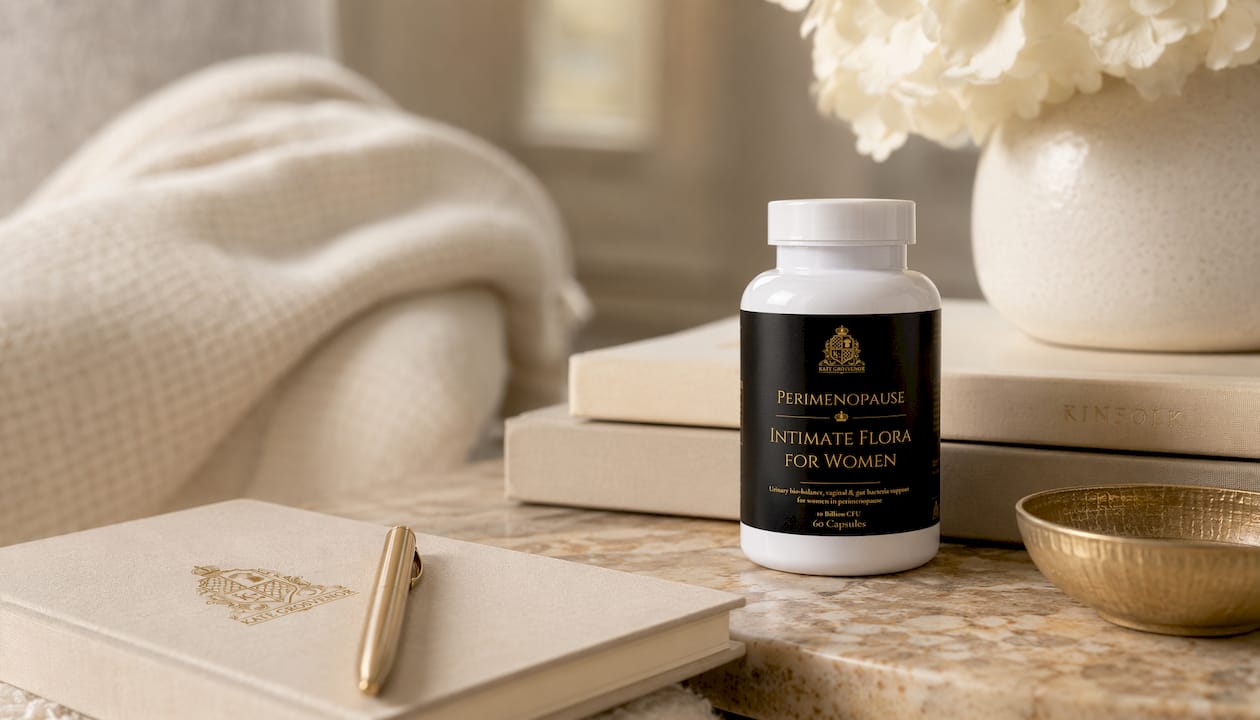
For women in perimenopause who want to support their vaginal ecology between GP appointments, Intimate Flora for Women in Perimenopause from Kate Grosvenor Lifestyle is formulated with this specific stage of life in mind. It is designed to complement, not replace, the medical care your GP provides, offering microbiome-aware support as part of a broader daily ritual.
Supplements like this work best as part of a considered approach that includes medical assessment for any active infection. If you are currently symptomatic, please contact your GP first. If you are on HRT, antibiotics, or other medications, check with your clinician before adding any new supplement to your routine.
When you are ready to explore what daily support looks like for your body right now, Intimate Flora is a gentle, thoughtful place to begin.
Useful sources for further reading
These are the sources worth bookmarking for your own research and for conversations with your GP.
- NHS: Menopause and perimenopause symptoms — the NHS patient page covering the full range of perimenopausal symptoms, including urinary changes. A clear starting point for understanding what is medically recognised.
- NHS: Vaginal oestrogen — plain-language guidance on how vaginal oestrogen works, who it is suitable for, and how to use it. Useful to read before a GP appointment.
- NHS: Cystitis — the NHS patient information page on cystitis, covering self-care, when to see a GP, and treatment options.
- PMC: Urinary tract infections after menopause — a peer-reviewed clinical review covering mechanisms, diagnosis, treatment regimens, and prevention strategies including vaginal oestrogen and antibiotic prophylaxis.
- Harvard Health: UTI in older women — an accessible clinician-authored overview of why UTI risk rises after oestrogen decline, with practical prevention guidance.
- International Urogynecology Journal: The vaginal microbiome and recurrent UTI — a specialist review of how microbiome changes after menopause drive UTI recurrence, and what interventions may restore protective flora.
For urgent symptoms, including fever, flank pain, or feeling suddenly very unwell, call NHS 111 or go to your nearest urgent treatment centre. Do not wait for a GP appointment if you feel acutely unwell.
This article is general health information, not medical advice. Please discuss your individual symptoms and treatment options with your GP or a qualified clinician.


Leave a comment
This site is protected by hCaptcha and the hCaptcha Privacy Policy and Terms of Service apply.