Natural Skincare for Perimenopause: Xenoestrogens and Cooler Nights
In perimenopause your skin asks for gentler care, and what you put on it, and what you sleep against, starts to matter more. Choose simple, thoughtfully formulated natural skincare that supports the skin barrier, avoid ingredients linked with hormone disruption (xenoestrogens) where you can, and sleep in breathable fabrics so night sweats don’t leave your skin damp and irritated. This guide takes you through all three, including a comparison of breathable sheets, because the skin you care for by day is the skin that spends the night against your bedding.
TL;DR
-
Xenoestrogens are man-made chemicals that can mimic oestrogen in the body. Many women choose to reduce them in skincare during perimenopause, when hormones are already shifting.
-
Your skin barrier often feels drier and more reactive at this stage, so fragrance-free, simple routines tend to feel kinder than long lists of actives.
-
Natural does not have to mean ineffective: peptides, hydration and barrier-friendly textures can sit comfortably in an anti-ageing routine.
-
Night sweats can leave skin damp, so breathable sheets and nightwear (linen, cotton, Tencel and bamboo-derived fabrics) make a real difference to comfort.
-
Build a gentle evening ritual: cool room, breathable fabrics, a calm cleanse and a nourishing moisturiser.
Table of Contents
What xenoestrogens are, and why they come up in midlife
The word sounds technical, but the idea is simple. “Xeno” means foreign. Xenoestrogens are synthetic substances from outside the body that can behave a little like oestrogen. They turn up in some plastics, pesticides and, in certain formulations, personal care products.
Why talk about them now? Because perimenopause is a time when your own oestrogen rises and falls unpredictably before it settles at a lower level. Many women in their Renewal Years reasonably want to stop adding extra hormone-like signals from outside. It is a gentle, precautionary choice rather than a cause for alarm, and it is one you can make through small swaps rather than a whole new life.
If you want to act on it, the practical steps are modest:
-
Read the ingredient list as well as the front of the pack.
-
Favour shorter lists with ingredients you recognise.
-
Choose fragrance-free where your skin is sensitive, since “fragrance” can cover a blend of undisclosed components.
-
Replace products one at a time, as they run out, rather than throwing everything away.
If you have a hormone-sensitive condition, or you are unsure about any ingredient, your GP or pharmacist is the right person to ask.
Why your skin feels different in perimenopause
Many women notice that skin becomes drier, thinner or more easily irritated as oestrogen fluctuates. Products that suited you for years can start to sting. Fine lines feel more visible, and your face may flush and sweat in ways it never did before.
This is why the skin barrier deserves attention. Think of it as the soft, protective outer layer that holds in moisture and keeps irritation out. When it is well cared for, skin feels comfortable and looks more even. When it is stripped by harsh cleansers, heavy fragrance or too many strong actives, it can feel tight, red and fragile.

So the aim of a midlife routine is not to do more. It is to do less, more kindly, with formulas designed for the way your skin now behaves.
Natural can still mean effective and anti-ageing
There is an old idea that gentle skincare is a compromise: kind to your skin, but not really doing anything. We don’t agree. A well-made natural routine can hydrate, smooth and support firmness without reaching for harsh ingredients.
Here is how a simple routine can look, using what we make at Kate Grosvenor Lifestyle:
-
Morning: a calm cleanse, then a light layer of our Peptide Anti-Ageing Serum, designed to support the look of firmer, smoother skin.
-
Daytime comfort: our Sensitive Skin Moisturiser (Fragrance-Free), made for skin that has become more reactive.
-
Evening: cleanse, then a soft layer of moisturiser, and the Smoothing Eye Cream around tired eyes.
Our approach is to develop skincare specifically for women in perimenopause and menopause, avoiding hormone-disruptive chemicals and respecting the skin barrier. Our range is available in the Perimenopause Skincare & Spa collection, priced from £26 to £36.
A few gentle principles hold whatever products you use:
-
Introduce one new product at a time, and wait a week or two before adding another.
-
Keep the routine to a few steps you will actually enjoy.
-
Protect your skin from the sun every day, since sun is a major driver of visible ageing.
-
Pair your skincare with hydration from within. Our Perimenopause Hydration range supports a daily rhythm of drinking well.
Where night sweats meet your skin
A beautiful evening routine can be undone by a night of damp, clinging bedding. Night sweats leave skin warm and moist for hours, which can feel itchy and uncomfortable, and they interrupt the deep sleep your skin and body use to restore themselves.
The NHS suggests that to help with hot flushes and night sweats you can keep your bedroom cool, use a fan and reduce triggers such as caffeine and alcohol. NHS patient information from University Hospital Southampton also suggests wearing layers of natural fabrics, such as cotton. Good Housekeeping goes as far as calling breathable cooling bedding a must-have if you are going through menopause or tend to run hot.
If broken nights are your biggest struggle, our guides on why you can’t sleep in perimenopause and what to try tonight are a soft place to start.
Which sheet fabric breathes best?
There is no single winner. Sleep Foundation says there is no one best sheet material overall, though linen offers excellent breathability and moisture-wicking, and bamboo-derived sheets offer excellent breathability too. The Guardian’s bedding guide agrees that no one material is best, and adds that weave matters: percale is crisper and cooler than sateen.
Here is how the main fabrics compare, based on The Standard’s night-sweat guide:
| Fabric | How it behaves at night | Feel |
|---|---|---|
| Linen (flax) | Adapts to body temperature | Textured, softens with washing |
| Bamboo-derived | Wicks sweat and absorbs moisture and is thermo-regulating | Silky and smooth |
| Tencel (lyocell) | Wicks sweat and regulates moisture | Soft, cool to the touch |
| Cotton percale | Breathable | Crisp and light |
One useful detail: “bamboo” on a label is not always the same thing. Sleep Set Up UK notes that bamboo is not necessarily bamboo lyocell, so check the fibre composition, and confirm the mattress depth and fitted sheet pocket size before you buy.
Breathable sheets compared: UK options and prices
We make nightwear rather than sheets, so these are the bedding options UK reviewers have recommended for hot sleepers. Prices are as listed in The Independent’s July 2026 roundup of the best bamboo sheets, and they change, so check the retailer for today’s price.
| Option | Best for | Price listed |
|---|---|---|
| Dusk bamboo 300 thread count cotton duvet cover | Budget buy | £50 |
| Belledorm bamboo bedding | Best overall | £108 |
| Sloth London bamboo bedding (100% bamboo rayon) | Moisture-wicking | £115 |
| Panda London signature+ bamboo lyocell bedding | Softness | £175 |
A few things to weigh up as you choose:
-
Budget: a lower price can still be a good start. Add one layer at a time rather than replacing everything.
-
Weave: if you like a cool, crisp feel, look for percale. If you love silkiness, sateen-style bamboo and lyocell feel gentler on the skin.
-
Fit: some bedding is sold as separates, so check whether you are buying a fitted sheet, a duvet cover or a full set.
-
Care: read the fibre content and the care label so your sheets keep their feel wash after wash.
It is worth being realistic, too. Sheets help you feel more comfortable, but, as Sleep Set Up UK points out, they cannot cool a room by a set number of degrees. Duvet weight, mattress protector and room temperature all play their part.
Cooling beyond the sheet
Research into cooling products is early but encouraging. A randomised phase II trial of a cool pad pillow topper found it improved sleep efficiency compared with standard care alone, and reduced depression scores, although the difference in hot flush reduction was not significant. A small pilot study of an eight-week cooling mattress pad in perimenopausal and postmenopausal women reported a 52% reduction in the frequency of vasomotor symptoms and better sleep quality scores. These are small studies, so we treat them as signs that the sleep environment matters rather than as promises.

If you sleep on your side, your pillow matters too. Simple pillow changes for side sleepers can ease the neck and shoulder strain that often goes with a restless night.
A gentle evening ritual for skin and sleep
Put the pieces together and you have a calm routine that supports your skin overnight.
-
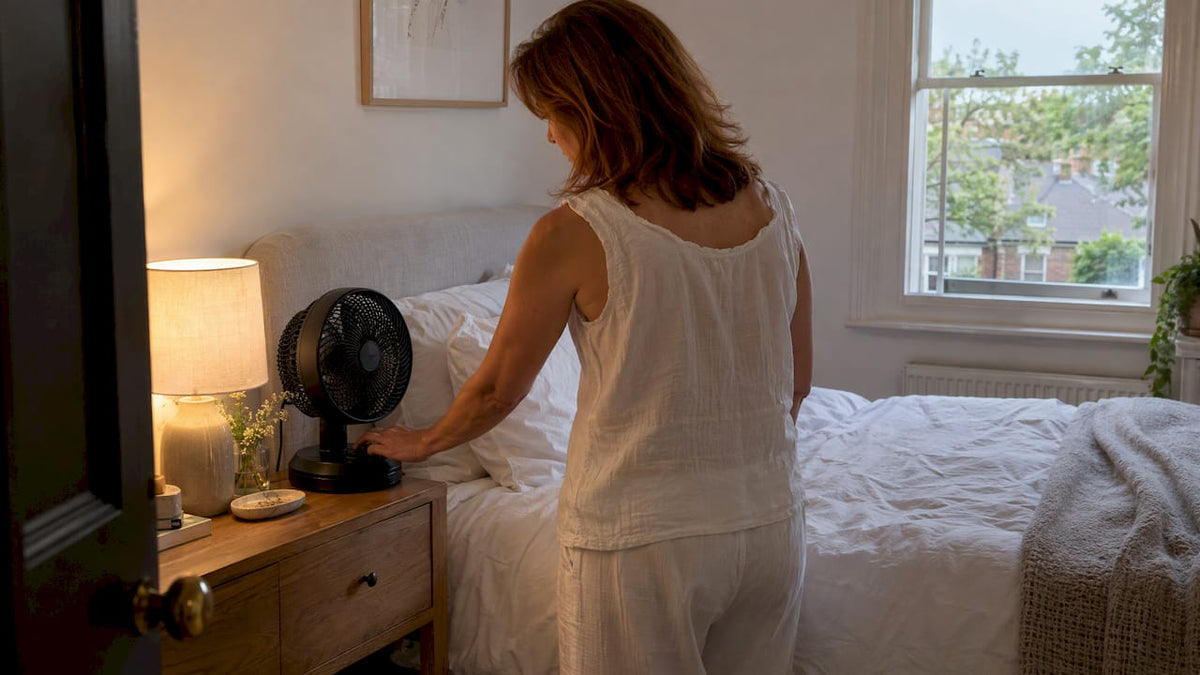
Cool the room. Open a window or use a fan before bed.
-
Dress your bed in breathable layers. Linen, cotton percale, Tencel or bamboo-derived fabric, in a weight you can throw off easily.
-
Change into soft nightwear. Our Bamboo Nightwear is designed for comfort on warm nights. Our guide to bamboo nightwear alternatives for menopause explains the options.
-
Cleanse softly. Warm, not hot, water. Pat dry.
-
Nourish. A fragrance-free moisturiser, then eye cream.
-
Slow your breath. Let the exhale be a little longer than the inhale, and let your shoulders drop.
-
Keep a cool drink by the bed for the moments you wake warm.
If you also notice hot feet when the covers go on, our piece on hot feet in menopause offers some ideas.
Our perspective
We built Kate Grosvenor Lifestyle because women in their Renewal Years told us the same thing: most products felt made for someone else.
We believe your skin deserves to be looked after as gently as you look after everyone else. That means formulas created for perimenopause and menopause, avoiding hormone-disruptive chemicals wherever we can, and protecting the skin barrier rather than stripping it. We also believe natural, thoughtfully made skincare can be effective and anti-ageing, without asking you to choose between kindness and results.
And we believe in the whole evening, not just the jar. A cool room, soft fabrics against your skin and a quiet ritual before bed all help you feel more like yourself again. Start small, choose one swap this week, and let the calm build from there.
Kate Grosvenor
Begin with one gentle swap
If you would like to start with your skin, our Perimenopause Skincare & Spa collection brings together natural formulas designed for this chapter, from £26 to £36. Pair them with our Bamboo Nightwear, from £20 to £62, for a cooler, calmer night.

For a fuller ritual, our Sleep & Calm Ritual and the wider Signature Collection are there when you are ready.
FAQ
What is the most breathable fabric for bed sheets?
There is no single best fabric. Linen is excellent for breathability and moisture-wicking, and bamboo-derived fabrics such as lyocell are also very breathable. Cotton percale feels crisp and light, so choose by the feel you prefer.
Do I need to avoid all xenoestrogens?
No. They are widespread, and avoiding every one is not realistic. Many women simply reduce them where it is easy, starting with the products that stay on the skin, and swap gradually. If you have a hormone-sensitive condition, speak to your GP or pharmacist.
Can natural skincare really be anti-ageing?
Yes. Ingredients such as peptides and good hydration can support the look of smoother, firmer skin while keeping the routine gentle. Our formulas are designed to do this without compromising the skin barrier.
How can I cope with night sweats at night?
The NHS suggests keeping the bedroom cool, using a fan, and cutting back on triggers such as caffeine, hot drinks and alcohol. Breathable bedding and nightwear help you feel more comfortable. If night sweats are disrupting your life, talk to your GP about other support.


Leave a comment
This site is protected by hCaptcha and the hCaptcha Privacy Policy and Terms of Service apply.