Body odour and menopause: what's really happening
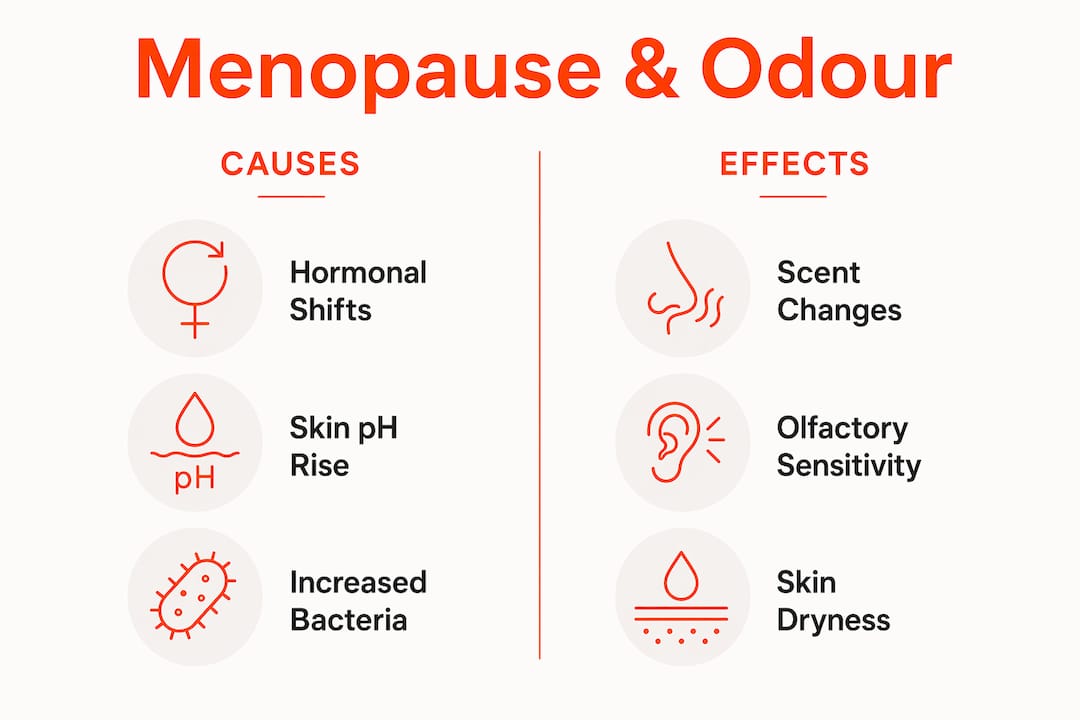
Menopause-related body odour is defined as a change in personal scent caused by hormonal shifts that alter sweat production and the bacteria living on your skin. Up to 80% of women going through menopause experience hot flushes or night sweats, both of which increase perspiration and create the conditions for stronger odour. The core driver is declining oestrogen combined with relatively higher testosterone, a combination that changes sweat composition and feeds odour-causing bacteria. Understanding this biology is the first step toward managing it with confidence.
How do hormonal changes during menopause influence body odour?
Declining oestrogen and relatively elevated testosterone alter sweat composition and increase bacterial growth on the skin, producing a stronger or different scent. This is not a hygiene failure. It is a direct physiological consequence of hormonal change.
Oestrogen helps regulate the activity of apocrine sweat glands, the glands concentrated in the armpits and groin. As oestrogen falls, these glands become less regulated and more reactive. The result is sweat that is richer in proteins and fats, exactly the compounds that skin bacteria feed on to produce odour.

Testosterone, which remains at a relatively higher level as oestrogen drops, plays a specific role here. It stimulates the production of androstenol, a musky compound released through sweat. This is why many women notice their natural scent shifts toward something more pungent or unfamiliar during perimenopause and beyond.
The skin microbiome also changes distinctly during this period. Odour-causing bacteria thrive in skin folds and areas of increased sweating, colonising more aggressively when the hormonal environment shifts. This is not random. It is a predictable biological response that you can work with once you understand it.
- Oestrogen decline reduces regulation of apocrine sweat glands
- Higher relative testosterone increases androstenol production
- Altered sweat composition provides more fuel for odour-causing bacteria
- Skin folds and high-sweat areas see the greatest bacterial change
- Hot flushes and night sweats amplify perspiration and odour intensity
Pro Tip: If you notice your scent changing most noticeably at night, night sweats are likely the primary trigger. Keeping your bedroom cool and wearing loose, breathable cotton nightwear can reduce the intensity significantly.
What skin changes during menopause affect body odour?
Healthy skin maintains an acidic pH of 4.8–5.5, a range that keeps odour-causing bacteria in check. Menopause raises skin pH toward a more alkaline state, and that shift creates an environment where harmful bacteria multiply faster.
This pH change does not happen in isolation. Menopause also reduces the skin’s production of ceramides, natural lipids that maintain the skin barrier and retain moisture. As the barrier weakens, skin becomes drier, more sensitive, and less able to regulate its own microbial environment. The combination of higher pH and a compromised barrier is what makes menopausal skin particularly vulnerable to odour changes.
| Skin factor | What changes during menopause | Effect on odour |
|---|---|---|
| Skin pH | Rises above 5.5, becoming more alkaline | Promotes odour-causing bacterial growth |
| Ceramide levels | Decline, weakening the skin barrier | Reduces skin’s ability to regulate bacteria |
| Moisture retention | Decreases, leading to dryness | Increases skin sensitivity and irritation |
| Sweat gland activity | Becomes less regulated | More frequent and heavier perspiration |
Many women reach for strongly fragranced products to mask the change, but this approach backfires. Perfumes and fragranced deodorants disrupt the skin barrier, cause irritation, and can actually intensify odour over time. The same applies to alkaline soaps with a pH of 8–10. Over-cleansing with high-pH soaps strips the skin’s acid mantle and creates the exact conditions bacteria need to thrive.
Pro Tip: Switch to a pH-balanced, fragrance-free cleanser and follow with a moisturiser containing ceramides or hyaluronic acid. This supports the skin barrier directly and helps restore the acidic environment that keeps bacteria in check.
How does smell perception change during menopause?
Menopause can heighten olfactory sensitivity, meaning you may perceive your own scent as stronger even when no objective change has occurred. Women often confuse increased odour awareness with an actual increase in odour, which causes unnecessary distress and can lead to over-washing or over-applying products.
This distinction matters enormously. If your scent has genuinely changed due to hormonal shifts, the strategies in this article will help. If your perception has sharpened but the odour itself has not significantly changed, the same hygiene habits you have always used remain appropriate.
Common misconceptions worth addressing directly:
- Stronger odour during menopause does not mean poor hygiene
- Over-washing strips the skin’s protective acid mantle and worsens the problem
- Fragranced products feel like a solution but frequently make odour worse
- Not every perceived change in scent is measurable or objective
- Anxiety about body odour can itself trigger stress sweating, creating a self-reinforcing cycle
Stress-induced cortisol release activates sweat glands independently of hot flushes. This means that worrying about body odour can directly cause more sweating, which then produces more odour. Breaking that cycle starts with understanding the biology rather than reacting to it with more products.
What lifestyle practices can manage body odour during menopause?
A practical approach combining diet, clothing, skincare, and stress management produces the most consistent results for managing menopausal body odour. No single change works in isolation, but together these steps address the problem at multiple levels.
-
Choose pH-balanced, fragrance-free cleansers. Use them daily on high-sweat areas, but avoid scrubbing aggressively. The goal is to remove bacteria without stripping the skin’s acid mantle.
-
Moisturise with ceramide-rich or hyaluronic acid formulas. These restore the skin barrier and reduce the dryness that makes skin more reactive to bacterial colonisation.
-
Wear natural fibres. Cotton, linen, and bamboo allow air circulation and wick moisture away from the skin. Synthetic fabrics trap sweat and heat, accelerating bacterial growth.
-
Adjust your diet. Spicy foods, alcohol, and caffeine all stimulate sweat production and can alter sweat composition. Reducing these, particularly in the evening, can noticeably reduce nighttime odour.
-
Stay well hydrated. Adequate water intake dilutes sweat, which reduces the concentration of compounds that bacteria convert into odour.
-
Manage stress actively. Cortisol-driven sweating is real and measurable. Techniques such as breathwork, yoga, and regular walking lower cortisol levels and reduce stress-triggered perspiration.
-
Change damp clothing promptly. Bacteria multiply rapidly in warm, moist environments. Changing out of exercise clothes or damp nightwear quickly removes the conditions they need.
A diet and lifestyle approach that includes pre- and probiotics also supports the skin and gut microbiome, which has a direct positive impact on odour. Fermented foods such as kefir, live yoghurt, and sauerkraut are practical starting points.
Pro Tip: Air-dry skin folds thoroughly after washing before applying any product. Trapped moisture in skin folds is one of the most common and overlooked contributors to localised odour during menopause.
For women exploring how hormonal shifts connect to broader energy and cellular health, the perimenopause and NAD+ relationship is worth understanding as part of the wider picture.
When should you consider medical treatment for menopause odour?
Menopause hormone therapy (MHT), also known as HRT, is the most direct medical treatment for restoring hormonal balance. MHT reduces temperature-related sweating and addresses the root hormonal cause of odour changes, rather than managing symptoms at the surface level. For women with moderate to severe vasomotor symptoms, it is worth discussing with a GP or menopause specialist.
Non-hormonal options also exist for women who cannot or prefer not to use MHT. Certain antidepressants, particularly SSRIs and SNRIs, are prescribed off-label to reduce hot flushes and associated sweating. Clinical-strength antiperspirants containing aluminium chloride can be prescribed for excessive sweating in specific areas.
Before attributing all odour changes to menopause, a medical review is advisable. Thyroid disease, iron deficiency, and allergies can all produce similar symptoms and need to be ruled out. A GP can run straightforward blood tests to check thyroid function and iron levels alongside a menopause assessment.
Specific symptoms require urgent medical attention rather than self-management:
- New or rapidly worsening symptoms that appear suddenly
- One-sided symptoms accompanied by fever or unexplained weight loss
- Significant changes in skin colour, texture, or the appearance of a rash
- Sweating that is disproportionate to temperature or activity level
These red flags should prompt a GP visit promptly. Menopause is a common and well-understood cause of odour changes, but it is not the only one, and assuming it is can delay diagnosis of something else.
Understanding how the skin barrier and menopause interact can also help you have a more informed conversation with your healthcare provider.
Key takeaways
Body odour during menopause is a direct result of hormonal shifts that alter sweat composition and skin bacteria, and it responds well to targeted lifestyle changes and, where needed, medical treatment.
| Point | Details |
|---|---|
| Hormonal cause is primary | Declining oestrogen and higher relative testosterone change sweat and feed odour-causing bacteria. |
| Skin pH matters | Menopause raises skin pH above 5.5, creating conditions where odour-causing bacteria multiply faster. |
| Perception can mislead | Heightened olfactory sensitivity during menopause may make odour seem worse than it objectively is. |
| Lifestyle changes work | pH-balanced cleansers, natural fibres, hydration, and stress management all reduce odour measurably. |
| Medical options exist | MHT addresses the root hormonal cause; non-hormonal alternatives and medical review are also available. |
What I’ve learned about body odour and menopause that most articles miss
The conversation around menopause and smell tends to focus almost entirely on hygiene products. Switch your deodorant, use a different soap, and you’ll be fine. That advice is incomplete, and for many women it actively makes things worse.
What I’ve found, both personally and through years of working with women in their Renewal Years, is that the emotional weight of this symptom is disproportionate to how openly it gets discussed. Women feel embarrassed about something that is entirely physiological. They over-wash, reach for strongly fragranced products, and then wonder why the problem persists. The fragrance disrupts the skin barrier. The over-washing strips the acid mantle. The bacteria thrive. The cycle continues.
The most useful shift is understanding that your skin has its own intelligence. It maintains a pH, a microbiome, and a barrier that all work together. Menopause disrupts that system, but it does not destroy it. Supporting it with the right products and habits, rather than fighting it with harsh cleansers and perfume, produces results that feel genuinely different within weeks.
The other thing worth saying plainly: if your scent has changed and it bothers you, that is a legitimate reason to speak to your GP. You do not need to wait until symptoms are severe. Menopause care in the UK has improved significantly, and a good menopause specialist will take this seriously. You deserve that conversation.
— Kate
Supporting your wellbeing through every stage of menopause
Body odour changes are one piece of a much larger picture. Managing them well means supporting your skin, your stress levels, and your daily routines in ways that feel sustainable rather than reactive.

At Kategrosvenorlifestyle, the Self Love Daily Journal Insert is designed to build the kind of mindful daily routine that supports stress reduction, a key factor in cortisol-driven sweating. The Natural Body Brush supports skin circulation and exfoliation, helping maintain the skin health that underpins odour management. Both sit within a wider range of tools at Kategrosvenorlifestyle created specifically for women navigating perimenopause and menopause with clarity and care.
FAQ
Why does my body odour change during menopause?
Declining oestrogen and relatively higher testosterone alter sweat composition and increase bacterial activity on the skin, producing a stronger or different scent. Up to 80% of women experience vasomotor symptoms that increase perspiration and compound this effect.
Can menopause make me more sensitive to my own smell?
Yes. Menopause can heighten olfactory sensitivity, meaning you may perceive your scent as stronger even without an objective change. Women frequently confuse increased smell awareness with increased odour, which can lead to unnecessary over-washing.
What skincare products help with perimenopause body odour?
pH-balanced, fragrance-free cleansers and moisturisers containing ceramides or hyaluronic acid are the most effective choices. Fragranced deodorants and alkaline soaps disrupt the skin barrier and worsen odour over time.
Does HRT help with menopause-related body odour?
MHT (HRT) is the most direct treatment because it addresses the hormonal root cause rather than surface symptoms. It reduces sweating and restores hormonal balance, which in turn reduces the conditions that produce stronger odour.
When should I see a doctor about menopause and smell changes?
See your GP if symptoms are new, rapidly worsening, or accompanied by fever or unexplained weight loss. A medical review can also rule out thyroid disease or iron deficiency as contributing causes.



Leave a comment
This site is protected by hCaptcha and the hCaptcha Privacy Policy and Terms of Service apply.